Languages
Friday, October 23, 2026



News and Views from the Global South
Projects
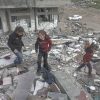
Children at the Center
Creativity and innovation are essential to finding extraordinary solutions to abnormal problems. Now more than ever we must continue finding creative solutions to protect the world’s most vulnerable children from the excruciating pain of war, dispossession and destruction of their last hope: a quality education. The current humanitarian and development funding levels are falling. However, with creativity we can prevent further deterioration and instead turn towards an upward direction.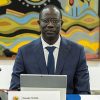
Hooves Vs. Habitats: Striking a Sustainable Balance Between Livestock and the Environment Is Crucial to Africa’s Future
In my country, Senegal, almost 70 percent of our land is used to graze livestock. Here and across Africa, pastoralists and livestock keepers sustain herding systems which are closely bound up with our landscapes and crucial to nationwide food security, economic growth, and ecological balance.
Reflections on CGIAR’s Week-Long Discussions on Food System Science
More than 13,600 participants from around the world registered for the inaugural CGIAR Science Week at the UN Complex, Nairobi, April 7-12, 2025. Dr. Ismahane Elouafi, the organization’s Executive Managing Director, said, “This is a testament that people are thirsty for science and for good news.”
How to Put the ‘Sexy’ Back into Agriculture – Thoughts From CGIAR Science Week
This week presented a beacon of hope for young people so that the “girl from the South and the boy, of course” could stay in the developing world, Dr Ismahane Elouafi, Executive Managing Director of CGIAR, said during a press conference on the final day of the CGIAR Science Week.
CGIAR Gender Impact Platform Needs a ‘Bold Approach’ in Agriculture Research
Women farmers face structural issues that prevent them from realizing their full potential, from societal perceptions that dictate their limitations to poor land. However, CGIAR's Gender Impact Platform Director, Nicoline de Haan, argues that leaning into a "victim" narrative does not serve them, especially when women are demonstrably more involved in agriculture.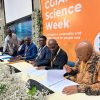
Partnerships Expected to Enhance Agricultural Development
Two crucial partnerships were signed at the CGIAR Science Week in Nairobi today (April 9, 2025), aimed at delivering research for development at scale across Africa.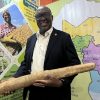
Farmers Need Science Solutions in Their Hands Sooner Than Later
Climate change is outpacing science and farmers are paying the price. Agricultural research innovations need to reach farmers before it is too late.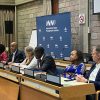
Science-Backed Solutions Buoying Water Security in East Africa
In East Africa, climate change has made water a lifeline and threat. In a region highly dependent on rainfall for growing crops, climate change is threatening water security but science-backed solutions are helping turn the tide.
Behind the Feeding of the 5,000 (or Should That Be 10,000) at CGIAR Science Week
Good Food for All is the motto of The Chef's Manifesto, a project that brings together more than 1,500 chefs from around the world to explore how to ensure the food they prepare is planet-friendly and sustainable.
A Long and Winding Path to Revitalize Passenger Trains in Mexico
Retired blacksmith and mechanic José Hernández nostalgically recalls the passenger trains that once passed through his hometown of Huamantla in the state of Tlaxcala, southeastern Mexico.
Healthy Beginnings, Hopeful Futures
Education is an essential investment in providing health to those left furthest behind. On World Health Day, we must connect the dots between education and health in humanitarian crisis settings. A child attending school gets vaccinations and healthcare, a nutritious meal and mental health and psychosocial services. By funding education, we optimize our investments to cover multiple sectors in one investment, such as health.
Welcoming Science: CGIAR Week-Long Focus on Innovation for Food, Climate-Secure Future
The world’s leading scientists and decision-makers in agriculture, climate, and health are meeting in Nairobi this week to promote innovation and partnerships towards a food, nutrition, and climate-secure future. As current agrifood systems buckle under multiple challenges, nearly one in 11 people globally and one in five people in Africa go hungry every day.
In Central America’s Dry Corridor, Farmers Find Ways to Harvest Water and Food – VIDEO
 In Central America’s Dry Corridor, climatic conditions hinder water and food production because rainfall in this ecoregion—from May to December—is less predictable than in the rest of the isthmus.
CGIAR Science Week Seeks Solutions for a Food-Secure, Climate Resilient Future
CGIAR and the Kenyan Agricultural and Livestock Research Organization (KALRO) are bringing together the world’s leading scientists and decision-makers in agriculture, climate, and health for the first CGIAR Science Week. This gathering will be a key moment to advance research and innovation, inspire action, and establish critical partnerships that can secure investment in sustainable food systems for people and the planet.
‘Energy Transfer’s Lawsuit Against Greenpeace Is an Attempt to Drain Our Resources and Silence Dissent’
CIVICUS speaks with Daniel Simons, Senior Legal Counsel Strategic Defence for Greenpeace International, about the lawsuit brought by an oil and gas company against Greenpeace and its broader implications for civil society. Greenpeace is a global network of environmental organisations campaigning on issues such as climate change, disarmament, forests, organic farming and peace.

Education Cannot Wait Interviews Sigrid Kaag, Chair of the ECW High-Level Steering Group
Sigrid Kaag is the new Chair of Education Cannot Wait’s High-Level Steering Group. Kaag brings a wealth of experience in political, humanitarian and development affairs, as well as in diplomacy. In 2025, she was appointed by United Nations Secretary-General António Guterres as the UN Special Coordinator for the Middle East Peace Process, a.i. Kaag has just concluded her mandate as Senior Humanitarian and Reconstruction Coordinator for Gaza, a role she held since 2024. She served as the first Deputy Prime Minister and first female Minister of Finance in the Dutch government starting in January 2022. Prior to this, she was Dutch Minister for Trade and Development Cooperation from October 2017 until May 2021, and Minister for Foreign Affairs until September 2021.[related_articles]

Global Climate Action Progressing, but Speed and Scale Still Lacking
2025 marks the tenth anniversary of the Paris Climate Agreement. One of its chief architects, Christiana Figueres, says the world is heading in the right direction but warns that urgent action is needed to close critical gaps. The pact, adopted in 2015 by 195 nations, set out to limit global warming to "well below 2°C" above pre-industrial levels, striving for 1.5°C. But in 2024, the world shattered records as the hottest year ever, surpassing that crucial threshold.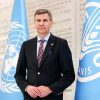
Water and Food Security in Europe and Central Asia: A Shared Challenge for a Sustainable and Just Future
Degrading soil, air pollution, vanishing biodiversity, emerging plant and animal health issues and more are coming together in the current situation of multiple crisis. Ensuring water security is just one, among the many challenges individuals, countries, and the world faces. Yet, we shouldn’t forget that water makes up the largest percentage of our bodies and the same applies to animals, plants and the planet’s surface. The threat of water insecurity is, as we all see, not a petty problem, but one of the greatest challenges of our century.
Latin America & the Caribbean in 2024: Renewable Energy and Early Warning Systems Offer Hope Amid Climate Extremes
Hope in the face of climate extremes. That is the overarching message about the State of the Climate in Latin America and the Caribbean in 2024.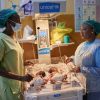
UNICEF Report Warns of Rising Rates of Child Mortality without Proper Funding
Despite levels of child mortality and stillbirths having significantly decreased since 2000, increasingly unequal and limited access to basic services around the world endangers millions of children around the world, a new report finds.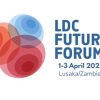
Building Resilience in Least Developed Countries – A Pathway to Sustainable Transformation
As the world grapples with overlapping crises—climate change, economic instability, and food insecurity—the 44 Least Developed Countries (LDCs) face existential threats that demand urgent, collective action.« Previous Page — Next Page »





The Week with IPS

NEXT STOP - SDGs
Tracking global progress towards a sustainable world
Tracking global progress towards a sustainable world
