Languages
Friday, September 18, 2026



News and Views from the Global South
Projects

Inside Kenya’s Seed Control Battle: Why Smallholder Farmers Want to Share Indigenous Seeds
A group of 15 smallholder farmers in Kenya petitioned the country’s High Court, seeking to compel the government to review sections of a law that bans the sharing and exchange of uncertified and unregistered seeds.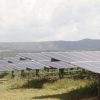
Phasing out from Fossil Fuels: An Imperative for Climate Justice
Climate change made 2023 the warmest year on record. As urgency mounts to address this worldwide crisis, phasing out the use of fossil fuels is a necessary step that all nations must take. This is because fossil fuels—coal, oil and gas -- are the primary drivers of the climate crisis accounting for over 75% of global greenhouse gas emissions and nearly 90% of all carbon dioxide emissions.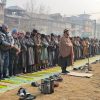
Snowless Winter and a Climate Crisis: Kashmir’s ‘Unprecedented’ Weather
Abdul Gani Malik, a 75-year-old goldsmith living in Kashmir’s capital, Srinagar, has witnessed eras of tranquility and turbulence in the Himalayan region. What he has not seen, however, is a snowless Kashmir during the winter.
Women Biomass Producers: Energy’s Largest and Largely Invisible Workforce
The International Energy Agency (IEA) held its annual ministers meeting last week in Paris, marking the 50th anniversary of the world’s leading energy organization. Critical topics on the agenda included energy security issues linked to Russia’s invasion of Ukraine and geopolitical tensions in the Middle East, as well as advancing a clean energy transition to meet global climate change goals.
Inequality Also Afflicts Clean Energy in Latin America
The specter of blackouts hovers over the Mexican city of La Paz, the capital of the state of Baja California Sur in Mexico's far northwestern corner, as summer approaches, due to increased electricity demand from air conditioning and insufficient capacity in the local grid.
Educate an Africa Fit for the 21st Century
As we lead into the Africa Year of Education, and under the leadership of Africa, world leaders have an opportunity to solidify commitments to ‘Educate an Africa Fit for the 21st Century’. That means to empower Africa to deliver on the goals outlined in the 2030 Agenda for Sustainable Development, Paris Agreement and Convention on the Rights of the Child, and to invest in an end to inequity through the power of quality education and lifelong learning.
Tracking Global Development in Child Benefits Through New Monitoring and Information Platform
Inclusive social protections for children would be a positive signifier of social development in a time where 1.4 billion children globally are denied them. A step towards realizing this has been taken through a new monitoring tool on current social protection and child poverty statistics.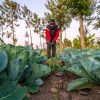
Start-ups Powering up Africa’s Solar Energy Ecosystem
Often referred to as the “Sun continent,” Africa receives more hours of bright sunlight than any other continent. But even with 60 per cent of the world’s solar resources, Africa has only one per cent of solar generation capacity, according to the International Energy Agency (IEA).
Drought Narrows the Panama Canal, Delays Shipping
At the bar that Sandra manages in Panama City's central financial district, the variety offered on the menu has shrunk due to delays in ship traffic through the Panama Canal, one of the world's major shipping routes.
Cubans Are Waiting for a Major Boost to Low Emissions Transport
Jorge Sarmientos said he made a good investment when he bought an electric motorcycle to get around and avoid the anxiety suffered by the users of Cuba's deficient public transportation system or the high prices of private alternatives.
Solar Energy Gives Important Boost to Small-scale Farmers in Chile
The installation of photovoltaic panels to use solar energy to irrigate small farms is expanding quickly in Chile because it lowers costs and optimizes the use of scarce water resources.
Nuclear Disarmament: A Natural Buddhist-Catholic Alliance, says Japanese Leader
At the United Nations headquarters in New York City, on the third floor, a solemn statue of St. Agnes, holding her namesake lamb, stands as a disturbing reminder of nuclear destruction.
How Soil Microbes Could save the World
The 500 per cent increase in global agricultural productivity over the past 60 years has largely been made possible by the scientific advances of the “Green Revolution” – from the ability to breed higher yielding varieties to improvements in farm inputs, especially fertiliser.
In-Depth Interview with Yasmine Sherif, Executive Director, Education Cannot Wait: Getting to Know Her
Counsel Hope Yasmine Sherif is the Executive Director of Education Cannot Wait (ECW). A lawyer specialized in International Humanitarian Law and Human Rights Law (LL.M), she has over 30 years of experience with the United Nations and international NGOs.
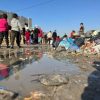
Funding for UN Palestinian Relief Agency is Threatened While Investigations Continue
The consequences of the investigation into the 12 United Nations Relief and Works Agency for Palestine Refugees in the Near East (UNRWA) staffers allegedly linked to the October 7 Hamas attack in Israel have led to major donor countries pulling their support from the UN agency. However, the agency has appealed to the governments to continue the aid in the face of the humanitarian crisis in Gaza.
Under the Scorching Sun Kenyan Farmers Find New Ways to Beat Climate Change
In the tranquil village of Kotiang, perched on the shores of Lake Victoria in Kenya's lakeside region, Yvonne Atieno, a dedicated mother in her early thirties, tends to her fish pond under the relentless equatorial sun. Her young daughter eagerly joins her mother in this nurturing endeavor. Yvonne, a certified accountant by profession, reflects on how her decision to embrace regenerative farming has not only enriched her life but also imparted invaluable life lessons.
Beyond the Farm: How Empowering Women Farmers Drives Change in Jordan and Beyond
Dr. Zeinab Al-Momany, a prominent social entrepreneur, sheds light on the journey of empowering women farmers in Jordan and the Arab world, where women often work long hours for low pay and lack labour recognition.
Learning for a Lasting Peace
Education is the bedrock of peace, the foundation of strong societies, and the building block for a better world. This year, as we celebrate the Sixth International Day of Education under the theme of ‘learning for a lasting peace’, we call on world leaders to end wars and armed conflicts and focus on our common humanity to embrace the vast potential learning offers in uniting our world.
The Ghost of Oil Haunts Mexico’s Lacandona Jungle
The Lacandona jungle in the southern Mexican state of Chiapas is home to 769 species of butterflies, 573 species of trees, 464 species of birds, 114 species of mammals, 119 species of amphibians and reptiles, and several abandoned oil wells.
Climate Change Is Taking a Major Toll on Agriculture. Here’s How to Support Farmers
Half the world eats rice. In Bangladesh, everyone eats it. The small, densely-populated nation is the third-highest rice-producing country in the world.
New Era: Unlocking Africa’s Agriculture Potential Through CGIAR TAAT Model
As hunger and food insecurity deepen, Africa is confronting an unprecedented food crisis. Estimates show that nearly 282 million people on the continent, or 20 percent of the population, are undernourished. Numerous challenges across the African continent threaten the race to achieve food security; research and innovative strategies are urgently needed to transform current systems as they are inadequate to address the food crisis.« Previous Page — Next Page »


The Week with IPS

NEXT STOP - SDGs
Tracking global progress towards a sustainable world
Tracking global progress towards a sustainable world
