Languages
Thursday, September 17, 2026



News and Views from the Global South
Projects

Pioneering Digital Initiative Empowers Pacific Islands to Tackle Climate Disasters
Winning a battle for survival requires understanding the opponent. And, for the peoples of 22 island nations and territories scattered across more than 155 million square kilometres of Pacific Ocean, the volatility and wrath of the climate are their greatest threats.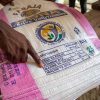
Food Security and Food Safety in Africa Must Go Hand in Hand
Russia’s invasion of Ukraine has restricted international exports and sent food costs soaring – particularly for vulnerable populations still experiencing shocks from the pandemic and who can least afford to pay more to feed their families. Two years on, global food supply chains are still just as susceptible to serious disruptions caused by war, disease, and climate change. Those inevitable disruptions are leaving those on the African continent particularly vulnerable.
The US Must Address More Than LNG To Mitigate Climate Change
Earlier this year, the Biden administration paused action on pending approvals for U.S. liquefied natural gas exports to countries without a U.S. free-trade agreement, with President Biden citing ”the urgency of the climate crisis.” The decision was hailed by climate activists and criticized by oil and gas industry representatives.
Education Either Makes Us or Breaks Us
There is a fork in the road before us. We have to choose who we are as human beings and as a human family. Do we break humanity or do we make it?
Can Preserving Goa’s Khazans Address Climate Threats?
Growing up in a khazan ecosystem, the traditional agricultural practice followed in the south-western Indian state of Goa, Elsa Fernandes would love sitting in a koddo, a woven bamboo structure for storing paddy. Her family members would pour paddy around her and with the growing pile, she would rise to the top and then jump down with joy.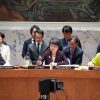
UN Security Council Holds Rare Nuclear Disarmament Debate
Japan chaired a rare, high-level UN Security Council meeting on nuclear disarmament and nonproliferation on March 18. Although the meeting underscored the urgency of addressing the growing threats posed by nuclear weapons, it also highlighted the chronic divisions among key states on disarmament and nonproliferation issues.
Food Security Issues in Asia
Asia has about 60% of the World’s population but only about a third of the world’s arable land. This region additionally has some of the most economically active countries with increasing urbanisation and a growing middle class. Asia is also home to some of the most affected countries by climate change. For these and other reasons, food security in Asia affects global food security through many inter-links. A new book, “Food Security Issues in Asia”, edited by Paul Teng and with multiple authors, explicates many of the key issues continuing to cause food insecurity in Asia as well as discourses on exciting developments. Through its twenty-seven chapters, the book, published by World Scientific Publishers Singapore was launched on 27 March 2024 in Singapore by Ambassador Ong Keng Yong, former ASEAN Secretary General.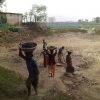
Revival of Hope: How a Remote Indian Village Overcame Water Scarcity
The people of Patqapara Village, a hamlet in India's West Bengal State, were until recently reeling under absolute distress due to water scarcity. The lack of irrigation facilities in this far-flung and inaccessible hamlet had resulted in a steady decline in agricultural activities. With a population of around 7,000, as per government estimates, the village primarily depends on agriculture for its livelihood. However, in recent years, drastic changes in weather patterns, including unseasonal rainfall, delayed monsoons, and soaring temperatures above normal levels, led to the drying up of irrigation canals and wells in the village. This left the local population in chaos, as their cultivable fields were bereft of any irrigation facilities.
Ahead of UN Summit of the Future, Mobilizing Youth for Change
In a significant precursor to the United Nations Summit of the Future slated for September, the "Future Action Festival" convened at Tokyo's National Stadium on March 24, drawing a crowd of approximately 66,000 attendees and reaching over half a million viewers via live streaming. The event, a collaborative effort by youth and citizen groups, aimed to foster a deeper understanding and proactive stance among young people on nuclear disarmament and climate change solutions.
Grassroots Venezuelan Initiative Aims to Combat Electricity Crisis with Solar Energy
Sweating profusely, unable to sleep because of the heat, fed up with years of blackouts several times a day, many residents of Venezuela's torrid northwest want to cover the roofs and balconies of their homes with solar panels, and are asking the government to import them massively and cheaply from China.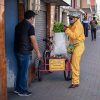
Fall-out from Ecuador’s Crises Highlights Need to Invest in Grassroots Resilience
Shocking and ongoing levels of violence in Ecuador since the New Year followed by flooding caused by El Niño landed a double blow for those in the country who live day to day and are most vulnerable to instability.
Fueling Future: Dabaa Nuclear Project Offers Light in Egypt’s Economic Gloom
Egypt’s economy continues to face significant challenges, but amidst these, the Dabaa Nuclear Power Plant project emerges as a beacon of hope.
Biogas Is Key to Harmony Between Agribusiness and Environment in El Salvador – VIDEO
 Faced with the recurring problem of environmental pollution caused by the poultry industry in rural communities in El Salvador, some companies are responding by producing biogas from organic waste from their chicken farms and processing plants, and using the gas to generate clean electricity.
Education Cannot Wait Interviews Professor Mohammed Belhocine, Commissioner for Education, Science, Technology and Innovation within the African Union
Professor Mohammed Belhocine is an Algerian national. Former Head of the Department of Internal Medicine, he held various positions in Algeria, at the Faculty of Medicine and the Ministry of Health, before joining the international civil service in 1997. Former Director of the Division of Non-Communicable Diseases at the WHO Regional Office for Africa (in Harare, then in Brazzaville), he was also WHO Representative in Nigeria and Tanzania. He ended his career as UN System Coordinator and UNDP Resident Representative in Tunisia from 2009 to 2013. From June 2015 to February 2016, at the request of the WHO Regional Director, he returned to duty as WHO Representative in Guinea, playing an active role in providing technical support and expertise to the country's response to the Ebola epidemic. In October 2021, supported by his country, he was elected to the position of Commissioner for Education, Science, Technology and Innovation within the African Union. Professor Belhocine is the father of three children and has six grandchildren.

Brazil’s Biofuel Potential Set to Expand Thanks to Sustainable Aviation Fuel
Brazil is counting on biofuels to assert itself as an energy powerhouse in the near future, as a decisive supplier of low-carbon jet fuel, a requirement of the climate crisis. The electrification of automobiles has tended to curb the strong ethanol and biodiesel agribusiness developed in the country since the 1970s. But demand for sustainable aviation fuel (SAF) now offers the possibility of significant new expansion for many decades to come.
LPG, a Useful “Transitional” Fuel for the UN’s Clean Cooking Effort
One of the key efforts under the United Nations (UN) Sustainable Development Goals is to provide poor households with access to clean cooking technologies to replace, in particular, the burning of solid biomass (e.g., fuelwood and charcoal) in traditional open stoves that kills millions of women and children.
Building Popular National Economic Alternatives*
Viable, popular national economic alternatives require conditions to help build and sustain them. An independent, accountable government can ensure supportive institutions, including laws.
From Gas to Ash: The Struggle of Nigerian Women Amidst Surging Cooking Gas Prices
One sunny mid-morning in Omu-Aran village, a community in Kwara State, North Central Nigeria, Iyabo Sunday sat beside a firewood stand observing her pot of beans with rice (a combination enjoyed by many in Nigeria). The 52-year-old widow used her plastic dirt parker to fan the flames, occasionally blowing air through her mouth for speed and frantically shielding her face from the wisps of smoke that curled from the firewood.
Salvadoran Poultry Farms Produce Biogas, Easing Socio-environmental Conflicts
In a win-win relationship, a segment of El Salvador's agribusiness industry is taking steps to ease the tension of the historic socio-environmental conflict caused by poultry and pig farms, whose waste has caused concern and anger in nearby communities.
‘I Haven’t Forgotten Where I Came From,’ says Yvonne Pinto, Incoming IRRI Chief
Growing up on a small farming station in Holetta (Ethiopia), Yvonne Pinto would accompany her agriculturist father to the farm, where she would spend her time cross-fertilizing plants. Her tiny fingers making the task easier, as she would marvel at the end product of a prospective new and higher yielding variety. These formative years laid the foundation for her career in agricultural science.
Call for Scaled Up Funding for Much-Needed, Successful Joint Program in Nigeria
Nigeria is home to 15 percent of the world’s out-of-school children. More than 7.6 million girls are not in school, and only nine percent of the poorest girls in the country are in secondary school. The Boko Haram insurgency and other armed groups fuel the out-of-school crisis in northeast Nigeria, disrupting the education of nearly two million school-age children.« Previous Page — Next Page »


The Week with IPS

NEXT STOP - SDGs
Tracking global progress towards a sustainable world
Tracking global progress towards a sustainable world
