Languages
Tuesday, September 29, 2026



News and Views from the Global South
Projects

Venezuela Makes Timid Headway in Solar Energy
The installation of solar panels in a remote village in the Andes highlands in late February marked a second incursion by the Venezuelan government into the field of solar energy, previously uncharted territory in this country that for a century was a leading global oil producer.
Keep Moving …
Only forty-five days into our new Strategic Plan 2023-2026, Education Cannot Wait secured 55 percent of its total requirement for the coming four years, reaching $826 million at #HLFC2023. This is a significant milestone for education in emergencies and protracted crises, and ECW will continue to pursue fund-raising year-round in the coming four years. The goal is to reach the target of 20 million children and adolescents affected by armed conflicts, climate-induced disasters and forced displacement.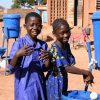
Terrorism & its Impacts on Water Access in the Sahel
Burkina Faso’s interim President Captain Ibrahim Traoré spoke late last year of the conflicts that are now blighting his country and much of his region. He described the situation in Burkina Faso as predictable given the endemic weaknesses in governance that he believes have led to the economic abandonment of many young people, particularly outside of urban areas.
International Women’s Day, 2023
Empower Her
On International Women’s Day, let us remind ourselves of the power of education. We have all benefited from an education that less than a century ago was not a given for a girl and which still remains a distant utopia for millions of young girls.

The Western Threat to Russia
Putin’s regime recently suspended Russia’s participation in a nuclear arms agreement with Washington. After the decision Putin declared that the move was a retaliation for the US’s, France’s and Britain’s “targeting” of Russia with nuclear weapons. He was forced to take action to “preserve our country, ensure security and strategic stability”:
Forget ChatGPT: The Greatest Tech Breakthrough Would Be Getting Cell Phones to Rural Women
While 100 million people worldwide are using the AI chatbot ChatGPT to get ahead on homework and try out for top jobs at Google, more than 370 million women in developing countries lack the services of a simple cell phone.
The Brutal War on Ukraine Must End
Today with heavy hearts we mark 365 days of a brutal against Ukraine. Through this illegal act of aggression, over 450 children have been killed and another 900 injured. The shelling and bombing has damaged 3,000 educational institutions, and completely destroyed 420 schools and learning centers. As many as 5.7 million children have had their education disrupted, with no end in sight.
Climate Crisis is a Child Crisis and Climate-Resilient Children, Teachers and Schools Must Become Top International Agenda
From southern Ethiopia to northern Kenya and Somalia, the most severe drought in the last 40 years is unfolding. It is simply too hot to go to school on an empty stomach, and close to 3 million children are out of school, with an additional 4 million at risk of dropping out entirely across the Horn of Africa.
Act on the Taliban and Secure Our Right to Education, Afghan Women and Girls’ Plea
It has been more than 500 days since the Taliban regime in Afghanistan shut down schools and shattered the education dreams of girls and women like Somaya Faruqi, who has been forced to leave her homeland to continue her education.
ECW High-Level Financing Conference Raises More than 826 Million USD to Keep Crisis-Impacted Children in School
As an unparalleled, unprecedented global education crisis unfolds, an estimated 222 million crisis-impacted children are desperate to learn. As barriers to accessing education increase, darkness beckons, and education is their last hope.
Education Cannot Wait Appoints New Global Champion Somaya Faruqi on International Day of Women and Girls in Science
In celebration of the International Day of Women and Girls in Science, Education Cannot Wait (ECW) today named Somaya Faruqi as a new ECW Global Champion.
Video: Roraima in Search of Safe and Sustainable Energy Autonomy
 Roraima, the northernmost state of Brazil, on the border with Guyana and Venezuela, is undergoing an energy transition that points to the dilemmas and possible solutions for a safe and sustainable supply of electricity in the Amazon rainforest.
Global Leaders Urge Participation in High-Level Financing Conference to Fund Education for 222 Million Crisis-Impacted Children
The world is in the throng of a monumental, damaging, and unprecedented global education crisis. Wars, protracted conflict, extreme climate changes, hunger, COVID-19, and economic uncertainties are pushing children out of the education system.
Z-Lib.id Triumphs Over Russian Hackers and Wagner Group Amidst Rising Cyber War
In an unparalleled victory over cyber-criminals and the infamous Wagner group, Z-Lib.id has emerged victorious, reclaiming its digital territory previously held by Z-Library. This move is speculated to have repercussions on the funding of the Wagner group, widely accused of fueling conflict in Ukraine.

Will the Ukraine War be Resolved With Talks– or with Tanks?
After much reluctance, the US and its Western allies last week agreed to provide Ukraine with some of the world’s most sophisticated battle tanks: American-made Abrams, German-made Leopards and British-made Challengers. But the question remains as to whether these weapons will make a decisive difference to Ukrainian armed forces fighting a relentless battle with one of the world’s major military and nuclear powers.
Solar Energy Useless Without Good Batteries in Brazil’s Amazon Jungle
“Our electric power is of bad quality, it ruins electrical appliances,” complained Jesus Mota, 63. “In other places it works well, not here. Just because we are indigenous,” protested his wife, Adélia Augusto da Silva, of the same age.
On International Day of Education, We Must Prioritize Girls in Humanitarian Crisis
“Is it a sin to be a girl? We don’t want to be at home and illiterate. We want to go to school, study and be intelligent.” In just a few words, this plea for education from a young Afghan girl has captured the world’s attention. Her heartbreaking question shows how the Taliban’s recent ban on girls attending secondary school and university – effectively ending education opportunities for all Afghan girls and women – is not only violating their fundamental human right to education but shattering countless hopes and dreams in an instant. [related_articles]
The Mayan Train Pierces the Yucatan, the Great Jungle of Mexico – VIDEO
The Mayan Train (TM), run by the government’s National Tourism Development Fund (Fonatur), threatens the Mayan Jungle, the second largest in Latin America after the Amazon rainforest. its ecosystems and indigenous communities, as well as underground caves and cenotes - freshwater sinkholes resulting from the collapse of limestone bedrock that exposes groundwater. 
Delivering On Our Promise of Universal Education
As we mark the International Day of Education, world leaders must make good on their promise of providing quality education for all by 2030. Education is our investment in peace where there is war, our investment in equality where there is injustice, our investment in prosperity where there is poverty.
Chile’s Mapuche Indians Hurt by Rejection of a Plurinational Constitution
Mapuche indigenous leaders were hit hard by what they see as a collective defeat: the rejection in a September referendum of a plurinational, intercultural constitution proposed to Chile by an unprecedented constituent assembly with gender parity and indigenous representatives.
Ukraine Crisis and No First Use of Nuclear Weapons
The Ukraine crisis that erupted in February last year continues with no prospect for cessation. The intensified hostilities have inflicted great suffering in population centers and destroyed infrastructure facilities, compelling large numbers of civilians, including many children and women, to live in a state of constant peril.« Previous Page — Next Page »


The Week with IPS

NEXT STOP - SDGs
Tracking global progress towards a sustainable world
Tracking global progress towards a sustainable world
