Languages
Friday, October 2, 2026



News and Views from the Global South
Projects

AGRA Gets Make-Up, Not Make-Over
Despite its dismal record, the Gates Foundation-sponsored Alliance for a Green Revolution in Africa (AGRA) announced a new five-year strategy in September after rebranding itself by dropping ‘Green Revolution’ from its name.
End Violence Against Women and Girls
As we now have entered the 21st century, we must end violence against girls and women. Attacking and abusing girls and women as a means of warfare, the war-machinery or domestic violence as a result of crisis, is absolutely abhorrent and unacceptable. Exposing half of the world’s population to the risks of violence because of their gender is not only a violation of international and domestic laws, but a disgraceful and brute breach of our very own humanity.
Every Child Has a Right to Realize the Human Potential
On World Children’s Day, we must remember what it means to be a child born with a right to reach the human potential. Nothing is more precious, more priceless, than a child growing towards that potential. And nothing is more despicable than to ignore the innocence and learning needs of a child in the process of becoming…
Food Systems Crucial for Pacific Islands at COP27
Food is everything to the culture and identity of the Pacific island countries. Climate change impacts of rising sea levels and higher temperatures threaten islanders’ food security, which is largely dependent on fisheries and subsistence agriculture. Almost 70 percent of islanders rely on agriculture for their livelihood.
COP27: Africa’s Agri-food Systems Losses Ignored in Global Climate Negotiations
At a time when sustainable farming approaches such as agroecology have been removed from the text at ongoing global climate negotiation (COP27) taking place in Sharm El Sheikh, Egypt, activists are urging African governments to explore new steps to integrate agriculture into the UN climate agreement.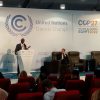
Will the Global Energy Crisis Accelerate the Energy Transition? The Big Question at COP27
COP27 is unlikely to produce new commitments to reduce emissions of climate-changing gases, but the global energy crisis will eventually prompt more action by countries to move away from fossil fuels. That is the positive feeling that many observers are taking away from the annual climate summit being held in Egypt.
Climate Change is No ‘Future Scenario’ for Pacific Island Nations; Climate Change is ‘Real’
Pacific island countries are highly vulnerable to climate change, and several have disappeared – and more could sink under the sea owing to a rise in water levels.
COP27: Cyclone Nearly Washed Away All My Dreams, says Vanuatu Youth Activist
The only thing Taren Chilia remembers about Cyclone Pam was that it flattened his school in Vanuatu, washing away books, equipment, and – well, almost his dreams too.
Former War Zones in El Salvador Obtain Water with the Help of the Sun – VIDEO
 Several community-run water projects powered by solar energy have improved the quality of life of thousands of rural families in areas that were the scene of heavy fighting during El Salvador's civil war in the 1980s.
We Own Our Choice to Finance Education
There is a stillness to the tent as I enter. This is a place of loss and pain, yet also a place of resilience and hope; everything coming together all at once.
Education Cannot Wait Interviews Theirworld President Justin van Fleet
Justin van Fleet, Ph.D, is President of Theirworld and Executive Director of the Global Business Coalition for Education. Justin previously served as the Director of the International Commission on Financing Global Education Opportunity and Chief of Staff to the United Nations Special Envoy for Global Education and prior to that as a Fellow at the Brookings Institution’s Center for Universal Education.
‘Tactical’ Nuclear Weapons Could Unleash Untold Damage, Experts Warn
Since the start of Russia’s invasion of Ukraine, the conflict’s potential to escalate to the use of nuclear weapons has been highlighted by political analysts and military experts alike.
Energy: Why Africa Must Be Part of Nuclear Energy Appetite
The search for energy diversification has taken a more frantic pace amidst the global energy transition debate.
Pacific Islands: Climate Finance Action a Priority at COP27
Today, the window of opportunity for scaled-up global climate action to prevent disastrous global warming and build resilience in the most vulnerable nations is closing fast. And a major impediment to reducing emissions and accelerating climate adaptation is both lack of financial investment and major bureaucratic hurdles to accessing those funds that are available.
Solar Power Brings Water to Families in Former War Zones in El Salvador
The need for potable water led several rural settlements in El Salvador, at the end of the 12-year civil war in 1992, to rebuild what was destroyed and to innovate with technologies that at the time seemed unattainable, but which now benefit hundreds of families.
Counting the Massive Financial Costs of Illegal Fishing
As a new report lays bare the massive financial costs to developing states of illegal fishing, campaigners are hoping that drawing attention to the practice’s devastating economic effects will help push governments to greater action against the illicit trade.
Mexican Environmental Prosecutor’s Office Dodges Charges against Mayan Train
A beige line slashes its way through the Mayan jungle near the municipality of Izamal in the southeastern Mexican state of Yucatán. It is section 3, 172 kilometers long, of the Mayan Train (TM), the most important megaproject of President Andrés Manuel López Obrador's administration.
Education Cannot Wait Director Calls on Donors to Expand Support for Successful Programme Bringing Girls and Boys Back to Learning in Post-Conflict Areas of the Democratic Republic of the Congo
The Director of Education Cannot Wait (ECW), Yasmine Sherif, launched a strong call for public and private donors to step up funding, asking them to “show the same courage” she saw in the children she met during her week-long visit to the Democratic Republic of the Congo (DRC).
Russian Dispute Over Drones Threaten to Escalate World Food Crisis
A war of words between Russia on the one hand, and the US, Britain, France and Germany on the other—specifically on the deployment of drones in Ukraine -- has triggered an unintended consequence: a new world food crisis. The Western powers last week asked the UN to verify whether Iranian drones were being used “illegally” in violation of the 2015 Security Council resolution 2231 which endorsed the Joint Comprehensive Plan of Action (JCPOA) on Iran’s disputed nuclear programme.
Education Cannot Wait and UNICEF, with Partners, Call for Substantial Increase in Funding for Crisis-Affected Children in the Democratic Republic of the Congo
The Director of Education Cannot Wait (ECW), Yasmine Sherif, and the UNICEF Representative, Grant Leaity, called on donors worldwide to provide US$45 million in urgent, additional funding to support ECW’s Multi-Year Resilience Programme in the Democratic Republic of Congo (DRC), a country facing one of the world’s most overlooked crises.
Indian Village Unlocks Treasure of Organic, Indigenous Farming
At Jhargram, a far-flung village in India’s West Bengal state, a group of farmers sit together in one of the open fields. They debate, deliberate, and confabulate about the marketing strategy they should use when selling their harvest on the open market.« Previous Page — Next Page »


The Week with IPS

NEXT STOP - SDGs
Tracking global progress towards a sustainable world
Tracking global progress towards a sustainable world
