Languages
Sunday, November 8, 2026



News and Views from the Global South
Projects

“If Only the Fighting Would Stop “ A Sudanese Woman’s Wish
With her bare hands, Roda clears debris and forages scraps from her wrecked teashop after attackers scorched Gumuruk, a town in the Greater Jonglei region where conflict frequently disrupts daily life and stifles progress.
Bridging the Gap and Crossing the Bridge
It may be a challenge, but it is also an absolute necessity: bridging the gap between international law and reality and quickly crossing the bridge to reach all crisis-affected children and youth left furthest behind. Inclusive and equitable quality education is the right of every girl and boy and the objective of Sustainable Development Goal 4.
Q&A: UN Food Systems Summit Opportunity for the World to Unite on Healthy, Fair & Sustainable Food Systems
Before the COVID-19 pandemic upended every sphere of life, the world was lagging on a goal to end hunger by 2030. According to the United Nations, more than 820 million people had already been categorised as food insecure, meaning they lacked access to reliable and sufficient amounts of affordable, healthy food.
Calls to Halt Construction of Massive Oilfield in One of Africa’s last Wildernesses
Wildlife and environmental campaigners have called for international action as concerns grow over a project to create a massive oilfield in one of Africa’s last wildernesses.
Agroecology as the Centrepiece of Sustainable Food Systems
In three weeks, the United Nations will bring together farmers, scientists, policymakers and civil society for the last major event ahead of the September UN Food Systems Summit.
Threat of Blackouts in Brazil Highlights Climate Crisis
Twenty years after the blackout that prompted nine months of rationing to keep the power grid from collapsing, Brazil may see a repeat of the traumatic situation, this time with a more obvious climate change undertone.
ECW Interviews Jan Egeland, Secretary General of the Norwegian Refugee Council
Jan Egeland has been the Secretary General of the Norwegian Refugee Council since August 2013, a role which oversees the work of the humanitarian organisation in over 30 countries affected by conflict and disaster.
New COVID-19 testing equipment deployed in Tonga
Last week, the Tonga Laboratory Services completed the installation of a 4 module GeneXpert testing equipment used for diagnosis of COVID-19 infection and to increase SARS-coV-2 testing capacity.
Education Cannot Wait Develops Groundbreaking Curriculum for Crisis-Affected Adolescents – Derived from Viktor Frankl’s Seminal Work ‘Man’s Search for Meaning’
Education Cannot Wait (ECW) – the United Nations global fund for education in emergencies – is developing a curriculum derived from the seminal work of world-renowned psychiatrist and Holocaust survivor Viktor Frankl’s “Man’s Search for Meaning”, and its related branch of psychotherapy, Logotherapy. The curriculum, which has been preliminary field-tested in Uganda, aims to fully tap into the resilience of girls and boys living in crisis settings.UN Food Systems Summit Releases Potential Solutions for Local, Regional and Global Action
The UN Food Systems Summit has revealed the 15 action areas with more than 50 solution clusters that will inspire discussions at the Pre-Summit in Rome from July 26-28.
Why Pacific Island Nations, like the Federated States of Micronesia, need Climate Change Finance for Food Security Now
Robby Nena is one of the many farmers and fishermen on the frontline of climate change in the Federated States of Micronesia (FSM), where coastal flooding and erosion, variable and heavy rainfall, increased temperature, droughts and other extreme weather events are becoming all too common.
Weaponizing Science in Global Food Policy
In July, the United Nations will convene “Science Days”, a high-profile event in preparation for the UN Food Systems Summit later this year. Over the course of two days, the world will be treated to a parade of Zoom sessions aimed at “highlighting the centrality of science, technology and innovation for food systems transformation.”
Southeast Asia and Food Price Inflation: Double Whammy
In 2020, Southeast Asian countries were already facing varied challenges that affected the region’s food supplies and prices. The onset of the Covid-19 pandemic later in the year exacerbated the region’s food insecurity and poverty. Southeast Asian countries need to take a hard look at food security, even as the double challenges — climate change and the Covid-19 pandemic — continue to fester.
Ivanancy Vunikura: Navigating the Waves of Change
In April 2021, the Pacific Community (SPC) coordinated the 14th Triennial Conference of Pacific Women and the 7th Meeting of the Pacific Ministers for Women, hosted by the Government of French Polynesia. The conference brought together decision-makers, development partners, research institutions and civil society organisations. Following this landmark event, SPC will continue to publish portraits of inspiring gender champions who are at the heart of Pacific development programmes.
Water Harvesting Strengthens Food Security in Central America
At the school in El Guarumal, a remote village in eastern El Salvador, the children no longer have to walk several kilometers along winding paths to fetch water from wells; they now "harvest" it from the rain that falls on the roofs of their classrooms.
The Importance of Being Listed: Why Politics Threaten the Protection of Children in Armed Conflict
Frontline workers who document and respond to violations against children have faced a particularly challenging last year, from the impact of Covid-19 on operations and child protection to the record levels of displacement worldwide to the ever-worsening threats from militaries and non-state armed groups.
Sowing Water: A Cuban Farm’s Bid for Sustainability
Cuban farmer José Antonio Casimiro found in the ageold technique of sowing water an opportunity to meet his farm's water needs and mitigate the increasingly visible effects of climate change.
The Dictator’s Daughter or the Farmer’s Son?
Peru’s first round of elections on 11 April saw voters choosing between 18 presidential candidates with no one candidate leading by an impressive margin.
Education Cannot Wait for Refugee Children in Crisis, says Yasmine Sherif
With financing, the number of out-of-school refugees could be reduced to zero, Yasmine Sherif, Director of Education Cannot Wait (ECW) says, as the world commemorates World Refugee Day.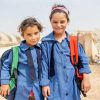
World Refugee Day
"Education will prepare refugee children and youth for the world of today and of tomorrow. In turn, it will make the world more resilient, sustainable and peaceful." ~ Filippo Grandi, UN High Commissioner for Refugees
To Fund Grand Inga Using Green Hydrogen, Equity and Ethics Matter
Visions of Grand Inga, a proposed massive hydropower plant in the Democratic Republic of Congo (DRC) powering much of Africa, have excited energy experts, investors, and governments for decades. The announcements this week by the Australian company, Fortescue Metals Group, and its chairman, billionaire Andrew Forrest, of their plans to develop Inga for green hydrogen exports brings this vision a little closer to reality.« Previous Page — Next Page »





The Week with IPS

NEXT STOP - SDGs
Tracking global progress towards a sustainable world
Tracking global progress towards a sustainable world
