Languages
Saturday, October 17, 2026



News and Views from the Global South
Projects

Justice Delayed Is Justice Denied: Their Education Cannot Wait
The right to an inclusive quality education is not a privilege. It is a human right. Delaying or ignoring the right to an education equals failing to protect human rights. The longer we wait, the less we contribute to justice.
Preventing Hunger While Building Peace
Acute hunger is expected to soar in over 20 countries in the next few months, warns a recent report on global “hunger hotspots” from the UN’s Food and Agriculture Organization (FAO) and the World Food Programme (WFP). An estimated 34 million people are “one step away from starvation”, pushed to the brink by climate shocks, conflict, and the Covid-19 pandemic.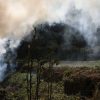
From Climate Change to Covid, Are We Ready to Deal with Disasters?
In the last 20 years, disasters affected over 4 billion people. At global level we witness on average one sweeping disaster a day, the majority of which are floods and storms. From the Covid-19 pandemic to climate change, calamities are taking new shapes and sizes, infiltrating every dimension of society. From the emotional to the political, how do we deal with disasters? How can we create a whole-of-society approach to disaster risk reduction?
Inclusivity Is My Key to Success
In three cycles I spent all together more than 15 years in Rome, at the Permanent Representation of Hungary to the Food and Agriculture Organization of the UN (FAO) and between my last two assignments in Rome my responsibilities in Budapest included FAO related issues. This made it possible for me to witness the development of this organization under the leadership of four Directors-General. Edouard Saouma, Jacques Diouf, Jose Graziano da Silva and Qu Dongyu. This long association and “historic” view of FAO would definitely help me in fulfilling the role of the Independent Chairperson of the Council of FAO (ICC). As conventional wisdom suggests, in order to make good decisions for the future we need to know, understand and learn from the past. The Independent External Evaluation, commissioned by the FAO Council in 2004, was an important milestone in this regard. It was followed by inclusive discussions among FAO Members about the recommendations and finally an Immediate Plan of Action was adopted by the FAO Conference. It was the most significant reform in FAO and I had the privilege to contribute to this process.
The 21st Century Nuclear Arms Race
A new report by the International Campaign to Abolish Nuclear Weapons (ICAN)—focusing on nuclear weapons spending-- following on the Bulletin of the Atomic Scientists recent decision that their Doomsday Clock, should be set as close as it has ever been to nuclear catastrophe. should serve as a wake up calls for humanity.
Education Cannot Wait Investments Transform Children’s Lives in Somalia
Ten-year-old Sabah Abdi from Ali Isse, a small rural village on the Somaliland-Ethiopian border, scored well in her recent exams, placing third overall in her local village school of 400 students. Yet is was just three years ago Sabah spent her days helping with household chores and herding goats, rather than studying because her pastoralist family could not afford her school fees.
Infrastructure Expands in Brazil Despite Crises
Health, fiscal, environmental and political crises have not prevented Brazil from attracting private capital to expand infrastructure, according to the sector's minister, Tarcísio de Freitas.
ECW Interviews Save the Children Uk’s Chief Executive Kevin Watkins
Kevin Watkins is the Chief Executive of Save the Children UK. Kevin joined Save the Children in September 2016, after spending three years as Executive Director of the Overseas Development Institute.
Sowing Water by Restoring Ancient Ditches in the Peruvian Highlands
In the highlands near the capital of Peru, more than 3,000 metres above sea level, ageold water recovery techniques are being used to improve access to water for 1,400 families, for household consumption and for crops and livestock.
Africa’s Forgotten Crisis
A few weeks ago, I traveled with the UN High Commissioner for Refugees Filippo Grandi to the Modale refugee site in the Nord-Ubangi province of the Democratic Republic of the Congo (DRC). What we witnessed there was a profound humanitarian crisis that has left 4.7 million children and youth in need of urgent, life-saving, life-changing educational support.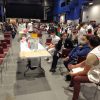
Latin America’s Challenge of Financing Energy Recovery
Hit by the pandemic's socioeconomic and health impacts, Latin America is facing the challenge of financing an economic recovery based on a sustainable energy sector and a transition to clean sources of energy.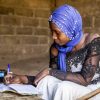
Radio-Based Learning Gets Its Day in the Sun in Mali
Persistent insecurity in central and northern Mali has helped fuel a protracted humanitarian crisis, disrupting access to education, health and other services, and displacing more than 300,000 people – more than half of them children.
– Indonesia’s Climate Villages Where Communities Work Together to Mitigate Climate Change –
On the occasion of World Environment Day, 5 June 2021, drawing from IPS’s bank of features and opinion editorials published this year, we are re-publishing one article a day, for the next two weeks. The original article was published on April 7 2021
– Conserving Tigers, Elephants and Bison, One LPG Stove at a Time –
On the occasion of World Environment Day, 5 June 2021, drawing from IPS’s bank of features and opinion editorials published this year, we are re-publishing one article a day, for the next two weeks. The original article was published on April 1 2021
Why Latin America is the Middle East of Biofuel
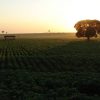
Latin America has lots of natural advantages for the coming energy transition. It already has the greenest power matrix in the world. While having the planet’s largest reserves of copper make it a key provider for international electrification programmes.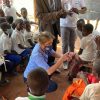
Q&A: Reflecting on Five Years of Educating Children in the Throes of Crises, Emergencies and Displacement
Education Cannot Wait (ECW), the global fund that brings teaching and learning to children in emergencies and protracted crises, is observing five years of reaching boys and girls in some of the world’s hardest-hit conflict and disaster zones.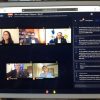
Energy Transition Evolves in Central America and the Caribbean
The situation of the energy transition in Central America and the Caribbean was the main issue debated this Friday 21st in the sessions at the XXX La Jolla Energy Conference, which is attended virtually by high officials, business delegates and analysts from the region.
China’s Firms Gain a Foothold in South America as Energy Providers
Over the past decade, state-owned enterprises (SOEs) from China have carved out a niche as owners and operators of electric utilities in South American countries through acquisitions of energy grids. As SOEs shift from their previous role as mostly builders to investors in large energy assets, policymakers in South America and in Washington should consider the implications of having these companies at the helm of such services.
International Cooperation Gives Biogas a Boost in Rural Cuba
Yunia Cancio cooked with firewood until a few years ago, when a biodigester was built on her family’s El Renacer farm in Cabaiguán, a municipality in the central Cuban province of Sancti Spíritus, under the Biomass Cuba project. That change meant a lot for her family’s quality of life, but it was not the only one.
– Successful Crop Innovation Is Mitigating Climate Crisis Impact in Africa –
On the occasion of World Environment Day, 5 June 2021, drawing from IPS’s bank of features and opinion editorials published this year, we are re-publishing one article a day, for the next two weeks. The original article was published on February 17 2021

Women Leading Somalia’s Health System
Somalia is one of the most complex regions of the world, with threats and political instability, extreme weather conditions, movement of internally displaced people (IDPs), decades of conflict, poverty-related deprivation, poor health and communicable diseases that are killing people. There is a constant risk of gender violence making women, children and members of minority groups particularly vulnerable, and more so during displacement or while seeking work. Three decades of civil war and instability have weakened Somalia’s health system and contributed to it having some of the lowest health indicators in the world. The COVID-19 pandemic has added yet another strain on its tremendously fragile infrastructure presenting unexpected challenges and dilemmas.« Previous Page — Next Page »





The Week with IPS

NEXT STOP - SDGs
Tracking global progress towards a sustainable world
Tracking global progress towards a sustainable world
