Languages
Saturday, October 17, 2026



News and Views from the Global South
Projects

South America’s Gas Dreams
The gas producing countries of South America are debating on how to make better use of the resource and how to integrate the sector, amid geographical and infrastructural barriers.
Reimagining Education with Imagination
The month of May marks mental health awareness month or mental health awareness week in several countries around the world. Many people will be reading posts and blogs about the importance of getting more sunshine and exercise to avoid the blues, about ways to deal with the stress of the pandemic, about dealing with everyday challenges that disrupt our striving for happiness.
Biogas in Argentina: Turning an Environmental Problem into a Solution
"Until five years ago, we didn't know about the circular economy, but today our waste generates environmentally neutral products that also offer a return,” says José Luis Barrinat, manager of a cooperative that brings together some 550 small farmers in Monje, Argentina.
Kenya’s Dryland Farmers Embrace Regenerative Farming to Brave Tough Climate
It is an uncommon occurrence to see farms with flourishing healthy crops in Kenya’s semi-arid Makueni County. But in Kithiani village, Justus Kimeu’s two-acre piece of land stands out from the rest. After embracing the regenerative agriculture (RA) technique, the 52-year-old farmer is looking forward to a bumper harvest of maize as all his neighbours count their losses following this year’s failed season.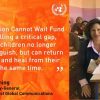
ECW Interviews Melissa Fleming, United Nations Under-secretary-general for Global Communications
Melissa Fleming is the United Nations Under-Secretary-General for the Department of Global Communications – taking up her functions as of 1 September 2019 – and oversees operations in 60 countries and platforms that reach millions of people in multiple languages.
CORRECTED VERSION: Struggle for the Future of Food
Producers and consumers seem helpless as food all over the world comes under fast growing corporate control. Such changes have also been worsening environmental collapse, social dislocation and the human condition.
Latin America Bets Heavily on Hydrogen
Several Latin American countries are stepping up the pace to generate hydrogen for various uses in transportation and industry, but they must first resolve several questions.
20 Million More People Face Food Crises, As Acute Hunger Rates Rise to a 5-Year High
The COVID-19 pandemic, protracted conflicts and climate change have created an untenable situation for the most vulnerable, with 155 million people across 55 territories suffering from severe food insecurity, sending acute hunger figures to a 5-year high.
Education Cannot Wait Enhances Mental Health and Psychosocial Support for Crisis-affected Children and Youth in the Middle East and North Africa
Approximately 100 million children are out of school in the Middle East and North Africa as a result of the COVID-19 pandemic, armed conflicts and protracted crises. To provide these girls and boys with the mental health and psychosocial support they need to deal with the trauma and stress of these multiplying crises, Education Cannot Wait (ECW) announced today US$250,000 in new funding to support the Norwegian Refugee Council’s Better Learning Programme in the Middle East.
Youth Voice and Action Critical to Reforming the World’s Food Systems
Global youth advocates have been told that they play a crucial role in ensuring that the world produces and consumes food with greater attention to nutrition, food security, equality and sustainability. As the United Nations prepares to host the inaugural Global Food Systems Summit in September, the organisation is hosting a series of dialogues to correct flaws in the way food is grown, processed, packaged and marketed, hoping to tackle growing world hunger, water scarcity and climate change.
Brazil Relies on Rainfall that Depends on the Forests
"Rainfall is fundamental; the streams and rivers we have would not suffice for irrigation, even if they were the Amazon River," said Dirceu Dezem, referring to the amount of water required for the extensive crops in Brazil’s midwest.
Refugee Children Explain How Education Helped Put Their Trauma Behind Them
Eighteen-year-old Chuol Nyakoach lives in the Nguenyyiel Refugee Camp in Gambella, Ethiopia. Chuol is grateful that despite the trauma she has already experienced in her young life, she is able to continue her education in the refugee camp. Learning has given her a reason to wake up every day.
The Complex Energy Transition of Chile’s “Sacrifice Zones”
Standing on Punta Ventanilla, Carlos Vegas, 65, looks across at the industrial park which has been there most of his life. He looks at the impact of the 15 industries spread around the bay that connects the towns of Quintero and Puchuncaví, in central Chile.
Diversification of Media Content Can Break Gender Stereotypes
 A renowned Pacific gender equality champion and Technical Advisor of Shifting the Power Coalition, Sharon Bhagwan Rolls, believes that gender equality is about men and women working together and this can be achieved by diversifying media content to break gender stereotypes.

US-China Cold War Could Lead to a More Dangerous Nuclear Stand-off
Despite the negotiation of the Treaty on the Prohibition of Nuclear Weapons (TPNW), we are confronted by the increasing dangers of great power war, even nuclear war.
World Military Spending Rises to a Hefty $2.0 Trillion Despite UN Pleas for Cutbacks
The United Nations-- which is desperately seeking funds to help developing nations battling a staggering array of socio-economic problems, including extreme poverty, hunger, economic inequalities and environmental hazards-- has continued to be one of the strongest advocates of disarmament.
Education Cannot Wait Calls on World Leaders to Urgently Fund Education in the Democratic Republic of the Congo with US$45.3 Million
Education Cannot Wait (ECW) Director Yasmine Sherif today called on world leaders to urgently support the children and youth in desperate need of education support in the Democratic Republic of the Congo (DRC), affected by new emergencies and multiple protracted crisis.
Pacific Women Triennial – Flashback
SPC hosted the first triennial conference of Pacific women more than 40 years ago with the purpose to create a space where Pacific women could meet, share their experiences and identify measures for the advancement of women.

Another False Start in Africa Sold with Green Revolution Myths
Since the Alliance for a Green Revolution in Africa (AGRA) was launched in 2006, yields have barely risen, while rural poverty remains endemic, and would have increased more if not for out-migration.
Kenya’s Poor Need Different Lockdown Restrictions to Survive, Scientists Urge
After Joseph Mandu lost his job because of the country’s coronavirus lockdown, he would still wake every morning and leave his home in the City Carton slum in Kenya’s capital, Nairobi. But instead of heading to the restaurant he worked at as a pool-table attendant, he would walk around City Carton searching for odd jobs to earn an income so he could pay for the food his family needed to survive.
Invest in the Humanity of Those Left Furthest Behind
“To deny people their human rights is to challenge their very humanity,” Nelson Mandela once said. Today, the humanity of 128 million children and adolescents living in countries is impacted by armed conflicts, forced displacement and climate-induced disasters, where virtually every single one of their human rights are being challenged. The most central one, and in all too many cases, their only hope - their inherent right to an inclusive quality education, as enshrined in international human rights conventions - is brutally challenged, if not also willfully ignored or denied.« Previous Page — Next Page »





The Week with IPS

NEXT STOP - SDGs
Tracking global progress towards a sustainable world
Tracking global progress towards a sustainable world
