Languages
Sunday, October 18, 2026



News and Views from the Global South
Projects

Ecological Cookstoves Help Preserve El Salvador’s Coastal Mangroves
 A score of coastal communities in El Salvador are staking their bets on sustainable development as a form of life that does not overexploit natural resources diminished by years of government neglect and a lack of environmental awareness, using instruments ranging from ecological cookstoves to mangrove reforestation.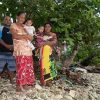
COVID-19 Teaches Us to Better Manage Global Systemic Risks
Millions of lives lost. Trillions of dollars in economic damage. Over 120 million more people pushed into extreme poverty. The human and economic toll of the COVID-19 pandemic is almost unimaginable – a once-in-a-century catastrophe.
New Report Calls for Improved Eating Habits in a World of Extremes
With the two extremes of global hunger and obesity on the increase, a new report suggests a radical reset for food and nutrition to ensure the long-term sustainability of livelihoods and the environment.
Barilla Foundation Brings Health and Climate Together in New Double Pyramid
Following an extensive scientific review, the Barilla Center for Food and Nutrition Foundation (BCFN) is preparing to launch a new food systems model which incorporates nutrition and climate.
Farmers in Brazil Benefit as Biogas Replaces Firewood
"Biogas is worth gold to us, we can no longer live without it," Claudete Volkswey, a poultry farmer in the municipality of Toledo, in the southwestern state of Paraná, Brazil, said enthusiastically about the new source of energy that has allowed her to get a good night’s sleep again, because she no longer has to get up to stoke the fire every two hours.
Education Cannot Wait Interviews Afghanistan’s Minister of Education Rangina Hamidi
H.E. Rangina Hamidi is the first female Minister of Education of Afghanistan in the last 30 years. Minister Hamidi was born in Kandahar, Afghanistan, fled with her family to Pakistan in 1981 during the Soviet Occupation and eventually immigrated to the United States. She attended high school in the United States and received her B.A. degree with a double major in Religion and Gender Studies at the University of Virginia.
Rohingya Children Find Refuge in Education
Although learning centres in Cox’s Bazar Kutupalong Refugee Camp are closed because of the COVID-19 pandemic, Mariom Akhter, a Rohingya mother of four, is grateful not only for the schooling her children have had but the training sessions she as a parent was able to attend. The skills she learnt has helped her assist her children with their education at home in a crisis. It’s something she’s likely needed to help her children with over the last few weeks after a Mar. 22 fire spread through the camp, destroying the shelters of at least 45,000 people as well as important infrastructure, including hospitals, learning centres, aid distribution points and a registration centre. At least 15 people were reported dead and 400 missing.
The Invisible Women in Energy: Biomass Producers Who Deserve More Recognition
As the world looks to address issues of gender equity, development and climate change, the importance of increasing the participation of women in the energy sector is gaining attention. To date, this topic has generally been framed around the underrepresentation of women in the energy workforce.
Helping Youth Agribusiness Keep Pace with Fast Growing Africa
From small towns to big cities, sub-Saharan Africa has the fastest urban growth rate in the world. The continent’s population is expected to double by 2050 with the youth representing 60% of the overall population. The UN Department of Global Communication, for example, projects that for the next 15 years urban growth is set to double for several African cities: Dar es Salaam will reach over 13 million inhabitants and Kampala will exceed seven million.
Indonesia’s Climate Villages Where Communities Work Together to Mitigate Climate Change
Residents of Ngadirejo village in Sukaharjo regency, Central Java province, had often found themselves helpless when their wells dried up or water flooded through their homes. But thanks to a national campaign called Program Kampung Iklim, known by its acronym ProKlim, they now have solutions to this flooding that generally occurs because of a lack of adequate water catchments.
Transforming Global Food Systems
Jose Graziano da Silva on the Path to Zero Hunger
The battle for the future of food has grown contentious, and José Graziano da Silva has become a lightning rod for criticism. In 2014, as Director General of the United Nations Food and Agriculture Organization (FAO), he presided over the institution’s first International Agroecology Symposium, opening what he called “a new window in the Cathedral of the Green Revolution.” The FAO has since then formalized support for “Scaling Up Agroecology” while continuing to promote the kinds of chemical-intensive agriculture associated with the Green Revolution.

Mexico Looks to the Heavens for a Solution to Its Water Crisis
In neighbourhoods like Tehuixtitla in southern Mexico City, rain brings joy, because it provides water for showering, washing dishes and clothes, and cooking, by means of rainwater harvesting systems (RHS).
Fulfilling the Right to Education for Children Left Furthest Behind in Burundi’s Crisis
On 5 December 2019, heavy rainfall triggered landslides in Cibitoke province in northwestern Burundi. Twenty-seven people were killed and almost 2,000 were forced to relocate. Along with the lives and homes lost, the school in the Nyamakarabo village was also destroyed. Today, some children in the village walk over two hours a day to attend an over-crowded school in a neighboring village. Others have yet to step back in a classroom.
Pandemic Accentuates Need for Caribbean Countries to Improve Food and Nutrition Security
Last year, Jaxine Scott was off work as a caregiver at a primary school as a result of the pandemic. One day, she noticed a green shoot emerging from some garlic in her fridge. She decided to plant it, and to her surprise, it thrived. “I thought ‘It looks like I have a green thumb, let me plant something else,’” Scott says. She now has a backyard garden, including cucumber, pumpkin, melon, callaloo, cantaloupe, pak choy and tomatoes. “It makes me feel good,” she says. “I can help my family members and neighbours. It has saved me money. I’m not going to stop, I’m going to continue,” she says.
Conserving Tigers, Elephants and Bison, One LPG Stove at a Time
As the sun sets over the canopy of Albizia amara trees, a thin blanket of fog begins to descend over the forests of the Malai Mahadeshwara Hills Wildlife Sanctuary, which lies roughly 150 km south of the Indian city of Bangalore. Not so long ago, plumes of smoke would rise from the hamlets dotting the forests as women busily cooked dinner for their families over wood stoves. But tonight, dinner will be a smokeless affair in dozens of villages as communities have opted for the use of liquefied petroleum gas (LPG), a clean burning fuel that has given a boost to the health and safety of both the forest and its people thanks to a unique conservation project.
Farming-Specific Loans Help Tanzania’s Smallholders Increase Productivity
Small agricultural loans, disbursed through mobile phones and targeting specific farming activities at different phases of production, have more than doubled food productivity among thousands of smallholder farmers in southern and central parts of Tanzania over the past three years, improving their livelihoods.
Recipes with a Taste of Sustainable Development on the Coast of El Salvador
Salvadoran villager Maria Luz Rodriguez placed the cheese on top of the lasagna she was cooking outdoors, put the pan in her solar oven and glanced at the midday sun to be sure there was enough energy for cooking.
Tech Savvy Youth with High Social-Emotional Skills Succeed in Agriculture – Study Shows
Saheed Babajide, a young animal production graduate and a manager at a national milk production company in Iseyin, Nigeria, is a beneficiary of the government's youth agriculture intervention programme. But he feels he received almost no training during the three years he participated.

The UN Food Systems Summit: How Not to Respond to the Urgency of Reform
Global food systems have been failing most people for a long time, and the COVID-19 pandemic has made a critical situation even worse. 265 million people are threatened by famine, up 50% on last year; 700 million suffer from chronic hunger; and 2 billion more from malnutrition, with obesity and associated diet-related diseases increasing in all world regions.
Indigenous Communities in Mexico Fight Energy Projects
Indigenous farmers on communally owned lands have blocked since 2016 a private solar farm in the southeastern Mexican state of Yucatan by means of legal action, due to the company’s failure to hold consultations with local native communities and the risk of environmental damage.« Previous Page — Next Page »





The Week with IPS

NEXT STOP - SDGs
Tracking global progress towards a sustainable world
Tracking global progress towards a sustainable world
