Languages
Friday, October 2, 2026



News and Views from the Global South


“The Trend in the Western World is the Dissolution of Cities”
An area where people only go to sleep is the antithesis of a city, says Spanish urban planner Jordi Borja in this interview.Ecobreves – VENEZUELA: Women Entrepreneurs Learn to Recycle
Some 200 women in eastern Caracas will benefit from a program that will provide them with training in recycling and the manufacture and sale of clothing, bags, ornaments, cards and various crafts.Ecobreves – CHILE: Pascua Lama Announcement Criticized
Chilean environmentalists have criticized an announcement by the Canadian mining company Barrick Gold that it will postpone the execution of the Pascua Lima binational mining project by one year and increase initial investment by three billion dollars.Ecobreves – HONDURAS: Government to Build Aerodrome in Maya Archeological Area
The government of Honduras plans to build an aerodrome near Copán Archeological Park, but will ensure that it has no environmental impacts on the Amarillo River, which flows through the area.Ecobreves – CUBA: Promoting Wind Energy
Cuba is striving to develop wind power and contribute to its expansion in the rest of the Caribbean, said energy specialist Conrado Moreno, organizer of a world conference on this energy source to be held for the first time ever in Latin America.
Q&A: Hospitals Working to Reduce Their Ecological Footprint
Medical care is associated with images of cleanliness and good health. Today’s hospitals, however, are major sources of pollution and consume large amounts of valuable resources, like energy.Biopolymers and the Dream of a Green Petrochemical Industry
Brazil leads global production of biopolymers, an industry that generates fewer greenhouse gas emissions than fossil fuel-based plastic manufacture. But “green plastics” made from sugarcane have a sour aftertaste.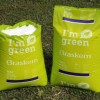
Biopolymers and the Dream of a Green Petrochemical Industry
Brazil leads global production of biopolymers, an industry that generates fewer greenhouse gas emissions than fossil fuel-based plastic manufacture. But "green plastics" made from sugarcane have a sour aftertaste.Ecobreves – MEXICO: Promoting the Right to Mobility
Civil society organizations in Mexico City are promoting the right to mobility, which involves social, economic and environmental policies.Ecobreves – HONDURAS: First Solid Waste Plant Opening Soon
The municipality of Marcovia, in southern Honduras, will be the first in the country with a plant for treating and recycling solid wastes, which will enter into operation in September. The recycled material will be sold to companies in El Salvador and Guatemala.Ecobreves – ARGENTINA : Agrochemical Suit Could Set Precedent
The relatives of victims affected by aerial spraying of toxic agrochemicals in the central Argentine province of Córdoba hope the lawsuit filed against two farmers and a fumigator will set a legal precedent.Ecobreves – BRAZIL: Biofilter Reduces Landfill Pollution
Researchers at the University of São Paulo have developed a biofilter that uses bacteria to reduce the amount of polluting gases released by sanitary landfills.
Fishing Communities in Brazil Fight for Survival
His father and other fishermen fought back with sickles, hoes and other work tools against the armed men sent by the purported owner of the land where they lived in order to evict them. But then the military police came and knocked down eight of their houses.
Discovering the Ancient Green Past of Argentina’s Arid Puna Plateau
The arid high Andean Puna plateau in northwest Argentina was much greener thousands of years ago. Climate changes forced the local inhabitants to develop adaptation strategies that could offer lessons for today, researchers say.
Brazilian Fisherfolk Fight for Survival
Fisherfolk cannot be forced into becoming fish farmers, maintains the leader of a campaign to establish protected areas for artisanal fishing in Brazil. “I am a fisherwoman, I don’t know how to do anything else and I don’t want to,” she declared.Ecobreves – CHILE: FAO Promotes Bioenergy
The Latin America regional office of the Food and Agriculture Organization of the United Nations (FAO) has recommended that Chile incorporate bioenergy into its energy mix.Ecobreves – HONDURAS: Approval of Mining Operations to be Decided Through Plebiscites
The use of plebiscites has been included in the bill for a new mining law that is expected to be passed by the end of the year in Honduras.Ecobreves – BRAZIL: Joint Assessment of Amazon Hydropower Dams Demanded
There is an urgent need for an in-depth analysis of the impacts of the construction of 30 hydroelectric dams in the Amazon region given the scale of public and private investment involved, maintains the Amazon Investment Observatory of Brazil.Ecobreves – VENEZUELA: Used Notebooks Recycled
The government of the northern Venezuelan state of Miranda has launched campaign through which schoolchildren are encouraged to donate their used notebooks in order for them to be recycled.
Peru Working to Reform Environmental Impact Assessment System
A random review by the Peruvian government of 205 environmental impact assessments approved between 2001 and 2010 revealed that 86 percent lacked complete information on how they had received the green light from the authorities.Ecobreves – BRAZIL: Indirect Energy Consumption Is Double Household Electricity Bill
The monthly light bill paid by Brazilians represents only 32 percent of what they actually spend on electricity. All of the rest is paid for through the goods and services they consume, according to the Economic Research Institute Foundation at the University of São Paulo.« Previous Page — Next Page »


Tierramérica is the main communications platform on sustainable development and the environment in Latin America and the Caribbean. It is produced by IPS Noticias, the agency’s Spanish-language service, which created it jointly with the United Nations Development Programme (UNDP) and the United Nations Environment Programme (UNEP), with later support from the World Bank. The weekly editions of Tierramérica are published in Spanish, Portuguese and English and are picked up and printed by dozens of media outlets in the region. Follow us on Facebook and Twitter.

From the Frontline of Environment
Supported by

Tierramérica en Español

Terramérica em Portuguese

