Languages
Friday, October 2, 2026



News and Views from the Global South

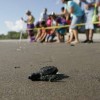
Salvadoran Bay Breeds Hope for Sea Turtles
El Salvador’s Jiquilisco Bay, a tiny hidden corner of the Pacific Ocean, is becoming a haven for endangered sea turtles.Ecobreves – BRAZIL: New Regulations for Batteries
Manufacturers of batteries in Brazil will now be responsible for their products throughout their entire lifecycle, from production, transportation and storage until their final safe disposal, in accordance with new regulations adopted by the national environment authority.Ecobreves – ARGENTINA : Conservationists Concerned Over Fate of Guanacos
The possible declaration of the guanaco (Lama guanicoe) as a “harmful species” to cattle farming in the southern Argentine region of Patagonia could lead to its extinction, warn conservationists and academics.Ecobreves – MEXICO: Consultations on New Motor Vehicle Efficiency Standards Completed
New standards for motor vehicle efficiency will enter into effect in Mexico in 2013. The public consultations on the proposed new rules, which began in July, ended on Sep. 9.
Indigenous Consultations in Peru to Debut in Amazon Oil Region
Peru will debut a new mechanism for prior consultation with indigenous peoples by seeking their approval for a new stage of oil drilling operations in the infamous Lot 1AB in the northeastern Amazon region of Loreto.
Ruling Against Thermoelectric Plant Sparks Debate
A Chilean Supreme Court decision ordering a halt to the construction of the Castilla thermoelectric power plant has sparked a debate over the country’s energy security.
Declaration of War in Mato Grosso do Sul
The land conflict between the Guaraní-Kaiowá indigenous people and large landowners in the southwestern Brazilian state of Mato Grosso do Sul is a powder keg ready to explode, say observers.
Ruling Against Thermoelectric Plant Sparks Debate
By 2020, copper mining in Chile will require almost double the electricity consumed in 2011, say the authorities.Ecobreves – VENEZUELA: Environment Affected by Refinery Fire
The air, water, flora and fauna on the peninsula of Paraguaná, in northwestern Venezuela, will be affected by the smoke produced by more than 200,000 barrels of fuel that burned for three days after a gas explosion at the Amuay refinery, one of the largest on the planet.Ecobreves – CHILE: Incidental Capture of Sharks Denounced
A new scientific study reveals high rates of incidental capture of sharks along the coasts of Chile, as a result of swordfish fishing.Ecobreves – BRAZIL: Pollution Poses Health Risks to Transport Workers
Workers whose jobs place them in direct contact with air pollution face a higher possibility of health problems involving the eyes and lungs, as well as a higher risk of cancer.Ecobreves – HONDURAS: Communities Reject Open-Pit Mining Project
Residents of some 15 municipalities in El Triunfo, in southern Honduras, have rejected an open-pit mining project proposed by a Canadian company.
Spain Hit by Epidemic of Despair
Rising rates of depression and suicide are among the most obvious signs of the increase in mental illness resulting from the economic crisis in Spain.
In Uruguay, the Answer Is Blowing in the Wind
Uruguay needs to reinforce and expand its electric power grid to absorb the 1,200 megawatts of wind energy that it plans to generate by 2015.Ecobreves – LATIN AMERICA: Network Against Short-Lived Climate Pollutants
Environmental organizations in Mexico, Chile, Argentina, Brazil and Paraguay and a group of scientists have created a network against short- lived climate pollutants, such as black carbon, methane, tropospheric ozone and hydrofluorocarbons.Ecobreves – BRAZIL: Environmental Awareness Growing
The percentage of Brazilians who believe that the country has no environmental problems fell from 47 percent in 1992 to 11 percent in 2012.Ecobreves – HONDURAS: Weather Disturbances Foster Dengue
Health authorities in Honduras have attributed the upsurge in dengue to weather variations, such as unusually high daytime temperatures and heavy rain at night, in addition to the accumulation of garbage in different neighborhoods.Ecobreves – ARGENTINA : Immediate Ban on Endosulfan Demanded
An environmental organization in Argentina is calling for an immediate ban on the import, manufacture and sale of endosulfan, a highly toxic insecticide that the country plans to eliminate in July 2013.
Q&A: “The Trend in the Western World Is the Dissolution of Cities”
The prevailing trend in much of “the Western capitalist world is the destruction and dissolution of cities,” which represents a threaten to democracy, “because the city is the place where public freedoms were born,” warns urban planner Jordi Borja in an interview with Tierramérica*.Argentine Locals Want Power Transformers Out of Neighborhoods
Scientific uncertainty about the health impacts of electromagnetic fields is fueling worries among people in the Argentine capital who are demanding that energy power transformers be located far from their neighborhoods.
Argentine Locals Want Power Transformers Out of Neighborhoods
Scientific uncertainty about the health impacts of electromagnetic fields is fueling worries among people in the Argentine capital who are demanding that energy power transformers be located far from their neighborhoods.« Previous Page — Next Page »


Tierramérica is the main communications platform on sustainable development and the environment in Latin America and the Caribbean. It is produced by IPS Noticias, the agency’s Spanish-language service, which created it jointly with the United Nations Development Programme (UNDP) and the United Nations Environment Programme (UNEP), with later support from the World Bank. The weekly editions of Tierramérica are published in Spanish, Portuguese and English and are picked up and printed by dozens of media outlets in the region. Follow us on Facebook and Twitter.

From the Frontline of Environment
Supported by

Tierramérica en Español

Terramérica em Portuguese

