Languages
Friday, October 2, 2026



News and Views from the Global South

Ecobreves – BRAZIL: Industrial Waste Used to Produce Concrete
Researchers at the Institute of Architecture and Urban Planning at the University of São Paulo have developed a type of concrete made with recycled materials.
Uruguayan Schools Slowly Say Goodbye to Junk Food
Uruguayan schoolchildren are learning that cookies, candy, potato chips and soft drinks are bad for their health. Some schools have taken the initiative and banned junk food from school snacks.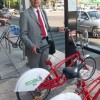
Bicycles Defend Their Place in Mexico City’s Concrete Jungle
Juan Longueira, 56, uses the bicycles of the Ecobici system three times a day, to commute to and from work and to exercise along the Paseo de la Reforma, a central Mexico City avenue.Ecobreves – HONDURAS: Indigenous Community Exports Squash to U.S.
An indigenous community has managed to place some 5,800 kilos of high-quality squash on the market in the U.S. city of Miami, with the support of an international cooperation project.Ecobreves – BRAZIL: Football World Cup Will Emit 11 Million Tons of CO2
The Brazil 2014 Football World Cup will emit more than 11 million tons of carbon dioxide, according to a study conducted by the consulting firm Personal CO2 Cero.Ecobreves – ARGENTINA : Communities to Monitor Clean-Up of Riachuelo River Basin
Residents of the Matanza-Riachuelo river basin, the most polluted in Argentina, situated south of the country’s capital, will monitor the clean-up of the area through a community participation program.
Ocean Acidification Leaves Mollusks Naked and Confused
Climate change will ruin Chilean sea snails' ability to sniff out and avoid their archenemy, a predatory crab, according to Chilean scientists who presented their findings at an international science symposium here.Ecobreves – BRAZIL: Eighty Percent of Coral Reefs Lost
Over the last 50 years, Brazil has lost 80 percent of the coral reefs along its coasts, according to a study carried out between 2002 and 2010 by the Federal University of Pernambuco and the Ministry of Environment.Ecobreves – HONDURAS: Communities Win the Battle Against Drought
Three peasant farmer communities in the southern Honduran department of Choluteca have been recognized for the good practices they adopted, through a program sponsored by the United Nations Food and Agriculture Organization (FAO), to withstand drought and adapt to climate change.Ecobreves – URUGUAY: High Quality of Olive Oil Recognized Internationally
Although the production of extra virgin olive oil in Uruguay dates back less than a decade, the country’s olive oil has managed to earn a place among the ten best in the world, according to a quality ranking of companies participating in international competitions.
Stevia, a Flourishing Business in Spain
On a parcel of land a few kilometres outside the southern Spanish city of Málaga, unemployed activists are growing 2,000 seedlings of stevia, a plant used by the Guaraní indigenous people for centuries as a natural sweetener that is awakening ever greater interest in Spain.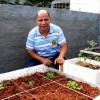
Urban Agriculture Sprouts in Brazil’s Favelas
You do not need to live in the countryside to grow vegetables, as hundreds of thousands of people involved in urban agriculture from Havana to Buenos Aires know very well. Now they are being joined by residents of Rio de Janeiro’s “favelas”.Ecobreves – BRAZIL: Coal Ash Cleans Thermoelectric Effluents
Researchers in Brazil have discovered that the ash produced by burning coal can effectively remove heavy metals from the effluents generated by the same industries that burn it.Ecobreves – HONDURAS: Businesspeople Learn About Sustainable Production
Some 300 businesspeople from northern Honduras have received training on clean technologies in the energy, agriculture and water management sectors.Ecobreves – MEXICO: IDB Finances Green Business Competitiveness
Some 3,000 micro, small and medium-sized enterprises in Mexico will receive financing to make their production more sustainable.
Little Concern for the Environment in EU-Central America Agreement
The Association Agreement between Central America and the European Union (EU) will increase environmental and social pressures on the region, warn experts and activists. But some observers stress its potentially positive impacts.
Companies Calculate Their Debt to Planet Earth
As ravenous consumers of natural resources, companies are beginning to recognise that they owe a monetary debt to the planet, and are sharpening their pencils to calculate it.Ecobreves – VENEZUELA: Informal Mining Affects Caura River Basin
The Caura River basin, an area of roughly five million hectares in southeastern Venezuela, is beginning to suffer the impacts of mining activity by "garimpeiros", illegal gold miners from Brazil, warn indigenous and environmental organizations.Ecobreves – BRAZIL: Unregulated Urbanization Threatens Remaining Atlantic Forest
Coastal preservation areas in the north of the state of São Paulo are endangered by the increase in population and facilities installed for oil exploration and the expansion of two ports, according to a report by the Sustainable Coasts Project.Ecobreves – HONDURAS: New IDB Loan for Disaster Management
The Inter-American Development Bank (IDB) has granted a five-million-dollar loan to Honduras to help it more effectively confront natural disasters like hurricanes and earthquakes.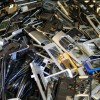
“Two Children May Have Died for You to Have Your Mobile Phone”
"It’s possible that two children died so that you could have that mobile phone,” says Jean-Bertin, a 34-year-old Congolese activist who wants to end the “absolute silence” around the crimes committed in his country to exploit strategic raw materials like coltan.« Previous Page — Next Page »


Tierramérica is the main communications platform on sustainable development and the environment in Latin America and the Caribbean. It is produced by IPS Noticias, the agency’s Spanish-language service, which created it jointly with the United Nations Development Programme (UNDP) and the United Nations Environment Programme (UNEP), with later support from the World Bank. The weekly editions of Tierramérica are published in Spanish, Portuguese and English and are picked up and printed by dozens of media outlets in the region. Follow us on Facebook and Twitter.

From the Frontline of Environment
Supported by

Tierramérica en Español

Terramérica em Portuguese

