Languages
Monday, October 26, 2026



News and Views from the Global South


Mesoamerica Ignores Its Water Footprint
It takes 1,600 litres of water to produce one kilo of bread. This is the type of calculation used to measure a water footprint, the total volume of freshwater used to produce the goods and services consumed by people and communities.Ecobreves – BRAZIL: Research to Monitor São Paulo Aquifers
The State University of São Paulo (UNESP) and the Environmental Company of the State of São Paulo, a government agency, have signed an agreement for the monitoring of underground water resources in this southern Brazilian state.Ecobreves – ARGENTINA: NGOs Demand Protection for Glaciers
Environmental organizations in Argentina have called on the country’s Supreme Court of Justice to order a halt to the activities of a mining company operating in a glacier area.Ecobreves – HONDURAS: Fires Destroy 127,000 Hectares of Forests
In the last two years alone, Honduras has lost 127,000 hectares of forests in 2,400 fires, reports the Independent Forest Monitoring Committee of the National Human Rights Commission.Ecobreves – MEXICO: Scientists Call for Regulation of Nanotechnology
Nanotechnology, which is currently unregulated in Mexico, could pose serious threats to human health and the environment, cautions a new study.
CHILE: Promoting Women’s Empowerment on Two Wheels
What does riding a bike have to do with women’s rights? According to the Chilean feminist group Macleta, which promotes cycling and a gender perspective on public transport, a bicycle is a powerful tool for social change.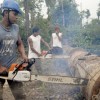
Green Economy Seeks to Maintain Growth Threatened by Disasters
There is every indication that major disasters could be the new midwives of history. Seeking to prevent them, the green economy aims to reduce "environmental risks" and "ecological scarcities" while improving human well-being and social equity.
Mesoamerican Coral Reef on the Way to Becoming a Marine Desert
Scientific studies show that global warming is causing irreversible damage to the Mesoamerican Barrier Reef System, the world’s second largest coral reef, yet efforts to protect this biologically and economically vital ecosystem remain insufficient.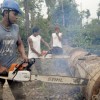
Green Economy Seeks to Maintain Growth Threatened by Disasters
There is every indication that major disasters could be the new midwives of history. Seeking to prevent them, the green economy aims to reduce "environmental risks" and "ecological scarcities" while improving human well-being and social equity.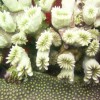
Mesoamerican Coral Reef on the Way to Becoming a Marine Desert
Scientific studies show that global warming is causing irreversible damage to the Mesoamerican Barrier Reef System, the world’s second largest coral reef, yet efforts to protect this biologically and economically vital ecosystem remain insufficient.Ecobreves – BRAZIL: Genetic Alternations Detected in Amazon River Dolphin
A study undertaken in Brazil has detected genetic alterations in the Amazon river dolphin (Inia geoffrensis), an endangered aquatic mammal found only in the Amazon and Orinoco river basins of South America.Ecobreves – VENEZUELA: New Environmental Journalism Manual
A new digital publication, “Environmental Communications and Best Practices”, has just been published in Venezuela, aimed at journalists, students and environmentalists.Ecobreves – HONDURAS: Flood Prevention Works Begin
Japanese technicians have initiated works aimed at reducing the risk of flooding in four areas of the Honduran capital which are home to 8,000 people.
Promoting Women’s Empowerment on Two Wheels
Riding a bike requires balance, self-confidence and self-control, qualities that women need to claim their place in public spaces, says a group of feminist cyclists in the Chilean capital.
Q&A: No Magic Solutions for the Extinction of Species
The Earth's life support system, which generates the planet's air, water and food, is powered by 8.7 million living species, according to the latest best estimate. We know little about 99 percent of those unique species, except that far too many are rapidly going extinct.
No Magic Solutions for the Extinction of Species
The Earth's life support system, which generates the planet's air, water and food, is powered by 8.7 million living species, according to the latest best estimate. We know little about 99 percent of those unique species, except that far too many are rapidly going extinct.
Chile’s Earthquake Reconstruction Hindered by Delays and Profiteering
Two years after the earthquake and tsunami in south-central Chile, the worst natural disaster to hit the country in half a century, thousands of families who saw their homes destroyed are still waiting for a solution.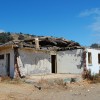
Chile’s Earthquake Reconstruction Hindered by Delays and Profiteering
Two years after the earthquake and tsunami in south-central Chile, the worst natural disaster to hit the country in half a century, thousands of families who saw their homes destroyed are still waiting for a solution.Ecobreves – BRAZIL: Plastic Bottles Transformed into Varnish
) A technique developed by the Federal University of Rio de Janeiro makes it possible to recycle plastic bottles made from polyethylene terephthalate (PET) to produce varnish.Ecobreves – ARGENTINA: Caravan Against Open-Pit Mining Planned
Artists and residents of the southern Argentine province of Chubut are preparing for a 400-kilometer march to protest open-pit mining projects that involve the use of cyanide.Ecobreves – HONDURAS: The Struggle to Enforce the Forest Law
The Law on Forests, Protected Areas and Wildlife of Honduras, adopted in 2008, is not effectively implemented and has not stopped illegal logging. Representatives of the justice system, activists and local governments are working together on strategies to ensure that it is genuinely enforced.« Previous Page — Next Page »





Tierramérica is the main communications platform on sustainable development and the environment in Latin America and the Caribbean. It is produced by IPS Noticias, the agency’s Spanish-language service, which created it jointly with the United Nations Development Programme (UNDP) and the United Nations Environment Programme (UNEP), with later support from the World Bank. The weekly editions of Tierramérica are published in Spanish, Portuguese and English and are picked up and printed by dozens of media outlets in the region. Follow us on Facebook and Twitter.

From the Frontline of Environment
Supported by

Tierramérica en Español

Terramérica em Portuguese

