Languages
Sunday, October 4, 2026



News and Views from the Global South

Ecobreves – CHILE: Environmentalists on War Footing
More than 70 national and foreign organizations together issued a public statement in opposition to the proliferation of open-pit coal mining projects in Chile, citing their disastrous environmental consequences.
The Return of the Giant Tortoise
An ecological restoration plan in Ecuador is unfolding with the successful return of 39 Galápagos tortoises to their habitat.
“Latin America Faces an Environmental Emergency”
An Uruguayan expert warns that the unrelenting extraction of natural resources in Latin America fails to take into account the environmental damage, with the pretext that the wealth generated will sustain social programs.Ecobreves – BRAZIL: Self-Sufficient Streetlights
A self-sufficient streetlight created by engineer Fernando Ximenes, of the northeastern Brazilian state of Ceará, could save up to 21,000 reais (11,280 dollars) per kilometer of public lighting.Ecobreves – ARGENTINA: Referendum on Agro-Chemical Plant
Residents of Casilda, in the eastern Argentine province of Santa Fe, will gather at the voting booths in July to vote on whether an agro-chemical factory can be built in their town.Ecobreves – MEXICO: Wanted: Plan to Fight BP Oil Spill
Mexican environmentalists are demanding that the Felipe Calderón administration do something to prevent the massive oil spill off the U.S. coast in the Gulf of Mexico from reaching this country's coast.Ecobreves – HONDURAS: Communities Take Over Forest Management
Two communities in the west-central Honduran region of Orica will be in charge of control and management of 496,000 hectares of forest as part of the benefits granted under the March 2008 Forestry Law.
Conservation Can Be a Weapon Against Poverty
In the Sierra Gorda, in central Mexico, a new approach is being tested for protecting the environment in a way that also ends poverty.
Nature vs. Nurture in Forest Recovery
Some experts disagree with the German government's plan to extend virgin natural areas, saying it will open the way for pests. Supporters say it will help protect biodiversity.
URUGUAY: Rio de la Plata Under Land-Based Attack
Unregulated population growth along Uruguay's southern coast has hurt the Río de la Plata (River Plate) along an extensive stretch where the freshwater mixes with the Atlantic's salty seas, warn scientists.Ecobreves – BRAZIL: Logging Town Halts Deforestation
The Green Municipality program in the district of Paragominas, in the northern Brazilian state of Pará, is held up as an example for having dramatically reduced deforestation, planting 50 million trees and standardizing rural properties -- which means better environmental regulation.Ecobreves – CUBA: Quake Alert Continues
Cuba has beefed up its system of prevention for dealing with a major earthquake disaster after the series of temblors that followed the tragic January quake in nearby Haiti.Ecobreves – HONDURAS: Agatha Cost 72 Million Dollars
Tropical storm Agatha left a wake of destruction in her path across Honduras three weeks ago, causing 72 million dollars in losses in farming and road infrastructure, say officials.Ecobreves – VENEZUELA: Yellow Butterflies Return to Caracas
The yellow butterflies have returned, after a harsh dry season, as the rainy months begin in the valley where Caracas is located. These insects have been absent for nearly three decades as a result of urban sprawl.
Natural Heritage of the Honduran Caribbean on a Tightrope
The great biodiversity of a protected area on the Honduran Caribbean coast is at risk, despite the efforts of a handful of residents and local institutions.
Río de la Plata Under Land-Based Attack
The waters of the Río de la Plata (River Plate) estuary flowing into the Atlantic Ocean suffer the effects of poor management along the Uruguayan coast, though there are some signs of improvement.
Q&A: “Sustainability Is Paramount for Latin American Development”
Although the financial, climate, energy and food crises continue to create new challenges, Colombian biologist Margarita Astrálaga believes that now could be the time for Latin America "to advance towards a more equitable and sustainable development."
PARAGUAY: “Pause” Farming Expansion in Gran Chaco, Say Activists
Extensive cattle farming in northwestern Paraguay is the leading cause of deforestation in the Gran Chaco, one of the world's leading regions in biodiversity and South America's second largest forested area, after the Amazon.
CUBA: How to Hurricane-Proof a Caribbean Island
The residents of Isla de la Juventud (Isle of Youth), the second largest of the Cuban archipelago, know a lot about hurricanes, but it wasn't enough to avoid the destructive power of Hurricane Gustav two years ago.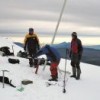
CLIMATE CHANGE: As Humans Advance, Andean Glaciers Recede
The spectacular glacier Number 15 of Antisana, one of the Ecuadorean capitals' sources of potable water, lost at least 36 percent of its original mass in the last 50 years.
“Pause” Farm Expansion in Gran Chaco, Say Activists
Paraguayan authorities admit they are powerless to stop the advance of ranching and soy farming into the forests of the Gran Chaco, which his home to more than half of the country's indigenous peoples.« Previous Page — Next Page »


Tierramérica is the main communications platform on sustainable development and the environment in Latin America and the Caribbean. It is produced by IPS Noticias, the agency’s Spanish-language service, which created it jointly with the United Nations Development Programme (UNDP) and the United Nations Environment Programme (UNEP), with later support from the World Bank. The weekly editions of Tierramérica are published in Spanish, Portuguese and English and are picked up and printed by dozens of media outlets in the region. Follow us on Facebook and Twitter.

From the Frontline of Environment
Supported by

Tierramérica en Español

Terramérica em Portuguese

