Languages
Wednesday, November 11, 2026



News and Views from the Global South
Africa

Corruption Kills
Nigeria’s accountant-general, the administrative head of the country’s treasury, has been arrested by the Economic and Financial Crimes Commission for allegedly stealing 80 billion naira ($134 million). This is a staggering theft in a country that has an estimated poverty rate of 95 million (48% of the population) and some of the worst health indices in the world.
Youth Survivors, Activists Will Hold Governments Accountable to Call to Action on Ending Child Labour
Governments of the world must focus on providing quality free education and prosecuting corrupt officials and people who siphon state and donor funds as crucial steps towards taking decisive action to fight child labour across the globe.
Youth Demand a Voice in Call-To-Action on Child Labour
Ashley has vast work experience. She has laboured by the sweat of her brow in the blistering sun on the streets of Guatemala, in the open fields on farmlands and indoors, toiling for long hours to the hum of a sewing machine. Her work resume might be impressive to some – street trader, farmworker and tailor – but she, like 160 million children around the world, is trapped in child labour, working desperately to support her impoverished family and provide for her education.
As COVID Wanes, Tuberculosis Deaths Must Become Visible
It is time to treat the scourge of Tuberculosis scourge with the same urgency as we did the COVID-19 pandemic.
Former Child Labourer, now Lawyer, Passes Light of Freedom to Others
Amar Lai’s first memories are working alongside his parents and siblings in a quarry, breaking rocks. He was aged four. Now chatting to Lai, a confident 25-year-old human rights lawyer, it is hard to believe he was once a child labourer.
Debt Distress in Africa: Problems and Ways Forward
The COVID pandemic has had a profoundly negative impact on Africa’s sovereign debt situation. Currently, 22 countries are either in debt distress or at high risk of debt distress.
Technology for Tracing the Work of Child Labour Could Help End the Practice
Technology used to trace the origin and price of consumer goods to ensure farmers earn fair profits could easily be adapted as a tool to fight child labour Fair Trade living wage and income lead Isa Miralles told delegates at the 5th Global Conference on the Elimination of Child Labour.
Political Will and Partnerships Key to Ending Child Labour, says ILO’s Joni Musabayana
With a strong commitment from governments, businesses, labour and consumers, the scourge of child labour can be eliminated, says Dr Joni Musabayana, Director of the International Labour Organisation (ILO) in Pretoria, South Africa.
Africa Expected to Strongly Support Durban Call to Action on Child Labour
Global goals to eradicate child labour will not be achieved without a breakthrough in Africa, where most of the world’s 160 million children entrapped in child labour work in rural regions, mostly in agriculture with their families.
Call to Invest ‘Serious Resources’ in Education, to Stem Tide of Child Labour
"Education is the most powerful weapon you can use to eliminate child labour." So said Dennis Sinyolo, Director of Education International's African Regional Office in Accra, Ghana adapting liberation icon and late South African president Nelson Mandela's famous quote about how education can change the world.
From Child Laborer to Activist, Tara Banjara Asks World to Pledge to End the Scourge
Tara Banjara was four and a half years old when her parents put her to work on the roads, cleaning the garbage and rubble out of potholes to prepare for construction in Nemdi village, Rajasthan, India. She worked in the wind, cold, and rain with her mother, day in and day out, year in and year out. She would return home shattered, too exhausted to eat before falling asleep each night.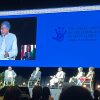
It’s Time To Globalise Compassion, Says Nobel Laureate Kailash Satyarthi
A mere 53 billion US dollars per annum – equivalent to 10 days of military spending – would ensure all children in all countries benefit from social protection, Nobel Laureate Kailash Satyarthi told the 5th Global Conference on the Elimination of Child Labour.
Youths’ Strident Voices Demand an End to Child Labour
Children's voices took centre stage at the 5th Global Conference on the Elimination of Child Labour, which kicked off in Durban, South Africa, on May 15, 2022. Their voices resonated with the saying: "Nothing about us without us."
Alarm Bells for Africa, Child Labour in Agriculture Requires Urgent Action
The Global Estimate on Child Labour estimates 160 million children are in child labour worldwide – an increase of 8.4 million children in the last four years – with millions more at risk due to the impacts of COVID-19.
Massive Deforestation in the Congo Basin Will Lead to Poverty
Growing up amid under the leafy canopy of the Congo Basin rainforest, the woodland was more than our home. It was our playground, our medicine cabinet, our teacher, our therapist. And it was a source of livelihood with its rich biodiversity and helped shield us from the effects of climate change.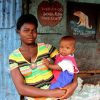
Most Maternal Deaths Are Preventable: How To Improve Outcomes in South Africa
The past 20 years have seen a significant decline in maternal mortality rates from 342 deaths to 211 per 100,000 globally . But every day, more than 800 women around the world die from complications of pregnancy and childbirth, up to 42 days after delivery. Most of these deaths are preventable.
Ghana’s Human Trafficking Scourge
“It feels like yesterday when I was deceived by one man who claimed to be a travelling agent. He promised me a work opportunity and a good salary,” says 25-year-old Cissy, as she prefers to be called. “As a young lady coming from an average family who really needed help, I fell for his lies.”
Zimbabwe’s Press Freedom, One Step Forward, Three Steps Backward
For international journalist Jeffery Moyo, doing his job could land him in prison if Zimbabwe authorities have their way. “Journalism is a crime in Zimbabwe, and the regime is reactive to independent journalism,” says Moyo, an international correspondent for the New York Times and the Inter Press Service (IPS).[related_articles]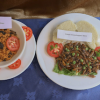
Give Edible Insects a Chance as an Alternative High-Quality Protein Source, say Scientists
Growing up in Samoya Village of Bungoma County in the Western part of Kenya, Elvis Wanjala has fond childhood memories of the rainy season, chasing and catching black-bellied winged termites in the rain.
Breaking Menstruation Taboos and Leaving No Girl Behind
Fourteen-year-old Hadiza smiles as she clutches a purple bag in her hands. Inside the cloth bag is a Menstrual Hygiene Management kit, an essential item that gives her dignity and enables her to continue with school even when menstruating.
Six Ways Rwanda Is Building Resilient and Sustainable Transport Systems
Over the last decade, Rwanda has invested in building efficient and resilient transport systems. Guided by the country’s Green Growth and Climate Resilience Strategy (GGCRS), the Government of Rwanda has carried out numerous initiatives to promote sustainable mobility and the green economy at large.« Previous Page — Next Page » *#*

The Week with IPS

NEXT STOP - SDGs
Tracking global progress towards a sustainable world
Tracking global progress towards a sustainable world
