Languages
Saturday, October 10, 2026



News and Views from the Global South
Asia-Pacific

Reviving the Spirit of the Steppe: Kazakhstan Has Hosted the 5th World Nomad Games
In a vibrant display of culture and tradition, Kazakhstan recently hosted the 5th World Nomad Games in Astana, celebrating the enduring spirit of nomadic heritage against a backdrop of modernity and globalization. This biennial event, which drew competitors and spectators from around the globe, served not only as a showcase of traditional sports but also as a poignant reminder of the resilience of a culture that faced near extinction under Soviet rule.
‘We Continue Working to Make Sure Afghan Girls and Women Are Heard and Not Forgotten’
CIVICUS discusses Afghanistan’s system of gender apartheid with Shaharzad Akbar, Executive Director of Rawadari, a human rights organisation founded by Afghans in exile.

Building Water Security for the Next Generation in the Pacific Territories
The Pacific Islands region is both the frontline of the wrath that climate change is lashing on the environment and human life and the drive for innovation and solutions to stem the destruction and strengthen island environments for the future. The survival of life, even nations, in the Pacific depends on it.
With Climate Change, Government Apathy, Who Should Kerala’s Fishworkers Turn To?
Every morning before dawn, fishworkers along the shores of Kochi, Kerala, head out to sea, casting their nets in the shadow of the iconic Cheenavala—the Chinese fishing nets that have become a symbol of their community. I witnessed this time-honored tradition, once a reliable means of survival, now a daily gamble, a fight against unpredictable seas and shrinking fish populations.
Pakistan’s Digital Censorship—The Real Cost of Internet Disruptions
Over the past few months, Pakistan has been grappling with a persistent and disruptive internet slowdown, leaving millions of citizens frustrated.
Empowering Change & Resilience: Social Protection in the Age of Megatrends
Social protection systems are essential to achieving the 2030 Agenda for Sustainable Development. However, social protection is insufficient across Asia and the Pacific, and the region is at risk from megatrends: climate change, demographic shifts and digitalization. Tens of millions of people have been pushed into extreme poverty since COVID-19, reversing past gains, and many millions more live precariously just above the poverty line.
To Put a Stop to Siphoning off Money, Start with Data
The commonly used Bangla phrase for siphoning off money out of the country – “taka pachar” – is rather misleading. Because taka, the Bangladeshi currency, is never taken out of Bangladesh. It’s not useful anywhere else. What goes out is its equivalence in foreign currencies, especially, US dollars. The technical term for such criminal act is Illicit Financial Flows (IFFs). Mistakenly, sometimes IFFs are referred to as money laundering – a processing of criminal proceeds to disguise their illegal origin.
Nepal’s Deadly Flash Floods: What Went Wrong?
Nepal is trying to recover from recent flash floods and landslides caused by heavy rainfall over the last weekend of September, which claimed at least 226 lives. The mid- and eastern parts of the country, including the capital, Kathmandu, experienced the heaviest monsoon rains in two decades from September 26-28, leaving many parts of Kathmandu underwater. Experts say this is one of the deadliest and worst flash floods that impacted thousands of people in decades.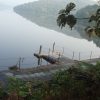
Rejuvenating Tradition To Help Save Ancient Engineering Marvel—Dhamapur Lake
Dhamapur is a small village in Malvan taluka of west Sindhudurg district, housing the famous Dhamapur Lake. The Vijayanagar kings constructed an earthfill dam in 1530 A.D., creating a man-made lake surrounded by hills on three sides. Canals connect it to the Karli river, irrigating lush paddies and farms that grow the red Sorti and Walay rice varieties typical to the region.
‘Australia Must Turn Its Climate Rhetoric into Action’
CIVICUS discusses the recent Pacific Islands Forum (PIF) meeting in Tonga with Jacynta Fa’amau, Pacific Campaigner at 350.org, a global civil society organisation campaigning for climate action.

COP 29: High Stakes for Small Islands Fighting for Climate Finance
Small Island Developing States (SIDS) are experiencing the most severe impacts of climate change. When leaders of those islands met in Antigua and Barbuda in May, they let the world know that achieving climate justice hinges on comprehensive climate finance.
Bangladesh’s Chief Advisor Addresses UNGA Calling for International Cooperation, Freedom and Rights
In his first major address at the United Nations, the Chief Advisor of Bangladesh’s interim government, Dr. Muhammad Yunus, appealed to the international community to engage with a ‘new Bangladesh’ in the shared efforts to cooperate on global issues. Yunus arrived earlier in the week to attend the 79th United Nations General Assembly (UNGA) in New York. In the four days he was here, Yunus held meetings with a range of world leaders, notably UN Secretary-General António Guterres and US President Joe Biden. This would indicate there is good support for him and what he represents. On Friday, Yunus addressed the General Assembly, speaking in his native language, Bangla.
Rising Temperatures Devastate Agricultural Eden of India’s Kashmir Region
Abdul Hameed Sheikh sowed his crop, working tirelessly for days in his paddy field. The 52-year-old farmer, from central Kashmir’s Budgam area, religiously irrigated his 3-acre plot to keep the soil well hydrated. He waited for the rain, but days passed and it didn’t come.
Using Education To Stop the Generational Cycle of Violence Against Women in the Pacific
Parliamentary representation by women in Pacific Island countries remains stubbornly low at 8.4 percent. Yet women leaders across the region have been meeting every year for the past four decades to discuss goals and drive action to address gender inequality and the most pressing development challenges in the Pacific.
Typhoon Yagi Devastates Southeast Asia
In early September, Typhoon Yagi, a deadly tropical cyclone, hit Southeast Asia and Southern China, causing widespread destruction. According to the United Nations (UN), wind speeds, reaching 213 kilometers per hour, as well as heavy flooding and severe landslides, have devastated affected areas. Yagi is the strongest natural disaster to hit the South China Sea in three decades, leaving over 500 people killed, 38 missing, and 1,900 injured.
Nagorno-Karabakh: One Year After the Ethnic Cleansing
It has been 12 months since Hayk Harutyunyan, a 22-year-old photographer from Nagorno-Karabakh, cleaned his house for the last time and closed the door behind him for good.
We Stand with the Girls and Women of Afghanistan
Today, we stand with solemn hearts as the world marks this week the three-year ban on girls’ secondary education in Afghanistan. Today and every day, we must stand up for the millions of Afghan girls and women living under the yoke of gender-apartheid: systematized and institutionalized oppression, exclusion, and marginalization based exclusively on their gender. However, standing in solemnity for their suffering is not enough. We must act to remove the oppression and injustice. Against all odds, we must continue to deliver results to provide the girls access to an education well beyond grade sixth.
Odious Debts: What Can Bangladesh Learn from Ecuador?
Bangladesh’s White Paper committee will review foreign loan deals signed by the fallen kleptocratic regime. We recommend that it identifies and declares the loans or portions of loans that did not benefit the nation as unpayable, because they were siphoned off the country by corrupt politically powerful elites, or worse used to buy deadly weapons and surveillance equipment to oppress people. Such loans are “odious” – they stink and are detestable.
15 Years After the Civil War Ended, Sri Lanka Faces Another Crucial Election
Thousands of Tamils are heading to Mullivaikal on the northeast coast of Sri Lanka, many of whom were here 15 years ago and still live in the region. They are there, May 18, to commemorate the massacre of civilians in a ‘no fire zone’ during the final stages of the civil war.
Building Inclusive Smart Cities: Bridging the Gender Gap
When the Beijing Declaration was adopted in 1995, it called for the removal of systematic and structure barriers that prevent women and girls from enjoying their human rights across social, economic, political and environmental domains. Over the last decade, the proportion of population with access to the internet has increased from 36 per cent in in 2013 to 67 percent today.
How Much is Too Much for Mount Everest? Isn’t it Time For Sagarmatha to Rest
"That’s Mt. Everest!" I overheard this from a trekking guide to his trekkers team. I stopped and asked him—which one! He was not our guide, but I approached. He pointed a finger and showed me Mt. Everest and I cried—I don't know why. I was overwhelmed and humbled to finally witness the world's tallest mountain—it was not from the base camp but from Thyangboche while returning.« Previous Page — Next Page »





The Week with IPS

NEXT STOP - SDGs
Tracking global progress towards a sustainable world
Tracking global progress towards a sustainable world
