Languages
Thursday, October 22, 2026



News and Views from the Global South
Asia-Pacific

Last Chance Saloon? Myanmar Junta Imposes Military Conscription
The news travelled like wildfire. In the teashops, bars, and market stalls that make Thailand’s border town of Mae Sot feel far more Burmese than Thai, the feared rumours circulating at the weekend were suddenly confirmed. Military conscription would be imposed on young men and women for two to five years, regime-controlled broadcasters in Myanmar announced on the Saturday night airwaves. Details were sparse.
Nepal Farmers Face Another Year of ‘Agricultural Drought’, Threatening Food Security
Najboon Khatun looks up at the sky every day, searching for the possibility of rain. Clouds come and go without a drop of water. “Winter crops like wheat and vegetables need water, but like last year, there has been no rainfall yet,” says 65-year-old Khatun, expressing her anguish. In her village in Dhanusha, one of the agricultural hubs in the southern plains of Nepal, farmers mostly depend on rain as a source of irrigation. However, they are facing yet another year of drought, affecting winter crops, including wheat, mustard, lentils, and vegetables.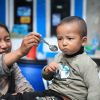
Climate Change Is Amplifying Households’ Food Insecurity, Putting More Pressure on Women’s Mental Health
Studies have long shown that some women’s lower status in Nepali households could mean that they eat last and less and as a result lack nutrition. Experts are now looking into how this could affect their mental health, and if the growing impacts of climate change might amplify the process.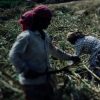
Polycrises are Pushing More Women into Poverty: How can we Help Halt that Trend?
Let’s call her Anita. Four years ago, her life took an unexpected turn when the COVID-19 pandemic disrupted everything she knew. As businesses closed and economic uncertainty loomed, Anita, like countless others, found herself forced out of work. Providing for her three young children became a daily struggle, prompting her to seek informal work as a subsistence agricultural worker to ease the financial burden.
Yangon—A Junta-Ruled Bubble in a Fragmenting Myanmar
Landing in Rangoon nearly 100 years ago, a young Chilean poet described “a city of blood, dreams, and gold” with “leprous streets”. The flourishing capital of then British-ruled Burma and its major port were a must-see staging post on an Asian tour.
Embodying the Spirit of the Dragon
The Year of the Dragon is upon us. UN Secretary-General António Guterres said in his message for this Lunar New Year, “The dragon symbolizes energy, wisdom, protection and good luck. We need these qualities to rise to today’s global challenges.”
Hit by Climate Change, Authorities Seek to Improve Saffron Yields in Kashmir
Saffron, the expensive spice from the Kashmir Himalayas, has been facing challenges for years, mostly related to yields and inadequate irrigation compounded by the climate crisis.
Female Genital Mutilation and Cutting in Asia Remain a Neglected Problem
Significant advances have been made in Africa towards ending female genital mutilation/cutting (FGM/C). Unfortunately, the same cannot be said for Asia, where FGM/C occurs in at least ten countries, but governments across the region are failing to take effective action. Women’s rights organizations are calling for states to introduce much-needed laws to criminalize FGM, provide national data on the extent and nature of the practice, and adequately fund efforts to tackle this regionally neglected problem.
Moimuna Nursing Institute Ushers Hope for Vulnerable Rural Girls in Bangladesh
After passing her secondary school certificate (SCC) in 2019, Sweety Akter went door-to-door to collect money to enroll in a college, but she wasn't successful. Born to an extremely poor family in Fultala village under Baliadangi upazila in Thakurgaon district, Akter saw her dream of studying fading as she was unable to enroll in a college because of a lack of funding, despite her good results at school.
Unlocking India’s Potential with AI
India is on the brink of a transformation that could change its economic and social future. Before the end of this decade, more Indians will use AI every day than in any other country in the world. What’s more, people in advanced economies will be surprised by the ways the country will use AI.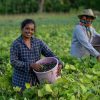
Inclusive & Sustainable Businesses Set New Pathways for Sri Lanka
Selyn, a women-led handloom business, offers flexible employment and valuable income opportunities to about 1,000 women artisans and persons from marginalized groups in rural Sri Lanka. Selyn develops and exports high-value craft products in global markets.
Myanmar’s Military Catastrophe: Three Years and Counting
The military must have expected an easier ride. Three years ago, it ousted Myanmar’s democratically elected government. But the coup has been met with fierce resistance, unleashing a bloody conflict with no end in sight.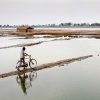
How Asia Can Unlock $800 Billion of Climate Financing
Countries in the Asia-Pacific region face a shortfall of at least $800 billion in climate financing. With public finances depleted by the pandemic, policymakers must unlock the vast potential of private capital to join the fight more effectively against global warming.
Snow Tales: ‘Too Little, Too Late,’ Say Climate Experts
Alpine skier, 28-year-old Muhammad Karim, has spent the winter with his eyes skyward, wishing and hoping for deep and abundant snow. “My bread and butter depend on the snow,” said the Olympian, who is also a ski trainer, at Naltar Ski Resort, in the valley by the same name nestled in the Gilgit-Baltistan’s Karakoram mountain range.
Jailed in Limbo: The Armenian Prisoners in Azerbaijan
On July 29, 2023, Vagif Khachatryan, a 68-year-old Armenian retiree, woke up early in Nagorno Karabakh —a self-proclaimed republic in the Caucasus region—to travel to Armenia. He needed to undergo delicate heart surgery.
Matchmaking for Green Cities? Accelerating Climate Finance in Urban Areas
Asia and the Pacific is home to 54 per cent of the world's urban population, who are disproportionately vulnerable to the impacts of climate change (ESCAP, 2023; IPCC, 2022). Why then, do climate action projects in cities commonly face delays in implementation?
Settling the Middle East Vs West Asia Debate
“Middle East” or “West Asia?” This somewhat divided nomenclature adds another layer to the region’s already “complicated” label. Is it the “Middle East” because it is in the “middle” of the East? Is it “West Asia” because it is in the western part of Asia? So, why is the region mostly called the Middle East? It is “geographically ambiguous” to some, as it is “East” only from the “West’s” perspective. The term West Asia has fewer challengers, but it isn’t used as much.
Is Bangladesh Sleep Walking to Dictatorship ?
The parliamentary elections held in Bangladesh on 7 January, 2024, has created much controversy in the country, terming it an “election of the Awami League (AL) government, for the AL government and by the AL government", by many. Internationally, China and India have congratulated the government for victory and organization of a fair election. But, several western countries have termed it as unsatisfactory. However, irrespective of the diverse views, everyone agrees that it was not participatory elections. Voter turn out was significantly low and it was boycotted by the main opposition Bangladesh National Party (BNP).
Scared of Sharps? This MAP Shows the Way to Delivering Painless Vaccines
If the fear of sharps makes a visit to the doctor dreadful, you need not dread it anymore. A South Korean company's invention of an innovative micro-needle patch could make you look forward to your next doctor’s visit.
Trapped and Trafficked—Fishers Tell of Forced Labor Horror
“The thing is that when you come from an African country, they know that you’re basically trapped,” says Noel Adabblah. “You have the wrong documents; you can’t go home because you’ve already borrowed money there to get here, and you won’t risk losing what work you have, no matter how bad, because of that. They know all the tricks.”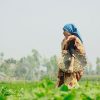
Climate Change Is Taking a Major Toll on Agriculture. Here’s How to Support Farmers
Half the world eats rice. In Bangladesh, everyone eats it. The small, densely-populated nation is the third-highest rice-producing country in the world.« Previous Page — Next Page »





The Week with IPS

NEXT STOP - SDGs
Tracking global progress towards a sustainable world
Tracking global progress towards a sustainable world
