Languages
Saturday, October 24, 2026



News and Views from the Global South
Asia-Pacific

Fighting Dengue Virus with Biological Weapons
Twenty-three-year-old Sarah Tajammal felt a sense of “impending doom” as she fought high fever, nausea, bouts of vomiting and extreme fatigue after being diagnosed with dengue two weeks back.
Is Asia and the Pacific Ready for the Global Climate Stage?
As the leaders of Asia and the Pacific prepare to head to Glasgow for the 26th United Nations Climate Change Conference of the Parties (COP26), they can be sure that our region will be in the spotlight: many of the most vulnerable countries to the impacts of climate change are located here; the seven G20 members from this region are responsible for over half of global GHG emissions; and five of the 10 top countries with the greatest historic responsibility for emissions since the beginning of the twentieth century are from Asia.
From Taliban to Taliban: Cycle of Hope, Despair on Women’s Rights
Secondary schools have reopened for boys but remain closed to the vast majority of girls. Women are banned from most employment; the Taliban government added insult to injury by saying women in their employ could keep their jobs only if they were in a role a man cannot fill—such as being an attendant in a women’s toilet. Women are mostly out of university, and due to new restrictions it is unclear when and how they can return. Many female teachers have been dismissed.
Mental Health Strategic Plan for Bangladesh: An Overview
Mental health and treating mental health conditions involves not only treating an individual’s ability to manage their thoughts, emotions, behaviors, and interactions with others, but also ensuring that the social, cultural, economic, political, and environmental conditions are in place through effective national policies, social protections, adequate living standards, working conditions, community social support, and a tiered system of care through a robust network of health services. In Bangladesh, the Mental Health Act 2018 and the National Mental Health Policy 2021 were developed with the above in mind.
Mental Health Achievements in Bangladesh
Mental health is a state of well-being when both your body and your mind are in balance, and you are able to deal with the difficulties and challenges that come your way and easily find joy, peace, and happiness once the challenge is overcome. For many people though, the challenges often remain for too long - the pain of losing someone you dearly loved, being diagnosed with a chronic disease like cancer or a heart condition, losing your family/home/job or feeling like you failed to meet expectations. All those things and more can trigger so much intense stress and maladjustment, that if it goes unchecked and untreated, it may lead to a chronic disease, a mental health disorder. WHO defines health as “a state of complete physical, mental and social well-being and not merely the absence of disease or infirmity”. The majority of people are able to cope and get back to life as normal, but for the many who cannot, they begin to experience intense detachment from reality (experiencing delusions, pervasive sadness, uncontrollable fears, intense anger and/or fantasies and hallucinations). For those individuals, there is limited help and treatment in every country in the world. Those who suffer from mental health disorders and the brave professionals who learn to treat them are chronically stigmatized, under-appreciated and under-paid.
How the Social Sector Thinks About Tech Is Wrong
Today, technology has become integral to almost all aspects of work—from implementing and standardising processes and collecting data to monitoring and evaluation and helping an organisation scale. This was increasingly apparent during the COVID-19 pandemic, when all organisations turned to technologies like WhatsApp and Zoom to stay connected and deliver their programmes to communities. And yet in the nonprofit sector, tech is viewed as an overhead rather than being fundamental to the functioning of an organisation.
Atoll Nation of Tuvalu Adopts ‘Cubes’ to Step Up Nutritious Food Production
Tuvalu, a small atoll island nation in the Central Pacific Ocean, is one of few countries in the world to have so far evaded the pandemic. But, while it has achieved a milestone with no recorded cases of COVID-19, its population of about 11,931 continues to battle food uncertainties and poor nutrition. These challenges, present long before the pandemic emerged, have been exacerbated by lockdown restrictions and economic hardships during the past year and a half.
Why Pakistani Women Feel Unsafe in Public Spaces
The mauling, groping and tossing of a young woman by a crowd of between 300 and 400 men in a park in the eastern city of Lahore, in the Punjab province, may have caused a wave of country-wide disgust, but speaks volumes of how unsafe public spaces are for Pakistani women.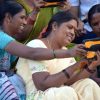
India: Gaps in the Government’s Plan to Help Unorganised Workers
The Government of India launched the e-Shram portal with the mandate of registering 380,000,000 unorganised workers in the country. The portal aims to bridge the gap in unorganised workers’ ability to access social welfare and employment benefits by issuing an e-Shram card (or Shramik card) upon registration.
China and the UN at 50- What We Can Achieve Together
China was one of the architects of the United Nations and was the first signatory of the UN Charter in San Francisco in 1945. But it was only in October 1971, with the Chinese delegation led by Mr. Qiao Guanhua, that China’s representation at the UN resumed. Since that time, the UN has had the great privilege of witnessing and supporting China in achieving one of the greatest periods of socio-economic progress in world history.
Will Taliban Honour UN Treaties Signed by Afghanistan Over the Last 20 Years?
When the Islamic Emirate of Afghanistan receives the political blessings of the 193-member General Assembly-- and eventually inherits its seat at the United Nations-- it will have to ultimately prove its credentials as a member of good standing by adhering to the UN Charter and the Universal Declaration of Human Rights (UDHR) – as all member states do.
Afghan Women – The Emerging Narrative and Why it is Wrong
The USA and its allies have repeatedly stated that promoting women’s rights was one of the key reasons they were in Afghanistan. The US military top brass, in a letter to marines stated that they were in Afghanistan “for the liberty of young Afghan girls, women, boys, and men who want the same individual freedoms we enjoy as Americans”.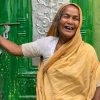
Is Asia Pacific Prepared to Take Care of Its Elderly?
Imagine it is the year 2050. In Asia Pacific, one in four people will be over the age of 60 years—three times the number of older people in 2010. With close to 1.3 billion senior citizens in less than 30 years from now, are countries in the region prepared to fully address the needs of their older populations, so that they age with dignity?
Digital Equity for All Ages
The growing number and share of older persons in Asia and the Pacific represent success stories of declining fertility and increasing longevity; the result of advances in social and economic development. This demographic transition is taking place against the backdrop of the accelerating Fourth Industrial Revolution. But COVID-19, with its epicentre now in Asia and the Pacific, has exacerbated the suffering of older persons in vulnerable situations and demonstrated the fragility of this progress.
Zero Hunger Campaign in Vietnam Targets Remote Areas and Cities
Amidst the verdant hills and remote corners of Vietnam’s rural regions, the growth that has transformed the economy in this part of Southeast Asia in recent decades can be hard to see. Undernourishment among children still results in stunting – even in cities too where overweight/obesity is also on the rise.
Young Migrant Workers Bear Brunt of COVID-19 Pandemic
Most families in the Republic of Tajikistan were affected when economic migrants were caught up in the COVID-19 pandemic abroad, Dr Vazirov Jamshed, research consultant for Asian Forum of Parliamentarians on Population and Development (AFPPD), told a webinar on the impact of the pandemic on youth.
When Taliban Ministers Avoided Eye Contact With Senior Female UN Officials
When the Taliban ruled Afghanistan during 1996-2001, the United Nations was engaged in a losing battle for women’s rights. And that battle was occasionally led by two senior female UN officials, one of them working for a UN agency providing humanitarian assistance inside unfriendly Taliban territory.
When Love is Called as a Conspiracy: The ‘Love Jihad’ Bogey Targeting Interfaith Couples in India
When Ali (name changed) proposed to his best friend, little did he know that her parents would take six years to agree to their alliance because he was born into a Muslim family, and they were Hindus.
How Satellite Technologies Can Aid Fiji, Other Pacific Island Nations to Build Climate Resilience
Sepesa Curuki and his community are coming to terms with the prospect of relocation from Cogea village on Fiji’s second-largest island of Vanua Levu. Their village, which lies between two rivers that flow into the Pacific Ocean only 2km away, has been battered by intense and frequent cyclones, flooding and erosion, threatening their very existence.
Afghanistan: Efforts To Prevent a Food Crisis Before Everything Becomes More Serious
The traumatic events that occurred in recent weeks in Afghanistan have once again placed this Asian country at the center of the world’s attention with high-impact coverage and analysis in the media.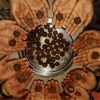
Right to Food: Can Millets Improve Nutrition Outcomes in Chattisgarh, India?
Chhattisgarh was one of the first few states in the country to universalise the public distribution system (PDS) and provide ‘Right to Food’ to its people. In order to ensure access to quality foodgrains for its vulnerable population, the state introduced the Food Security Act in 2012. The state has been providing support—35 kg of rice at INR 1 and INR 2 per kg; 1 kg of iodised salt and 1 kg refined oil at no cost; 2 kg of grams at INR 5 per kg—to each eligible family (as defined in the act).« Previous Page — Next Page »





The Week with IPS

NEXT STOP - SDGs
Tracking global progress towards a sustainable world
Tracking global progress towards a sustainable world
