Languages
Monday, October 26, 2026



News and Views from the Global South
Asia-Pacific

Afghanistan: Efforts To Prevent a Food Crisis Before Everything Becomes More Serious
The traumatic events that occurred in recent weeks in Afghanistan have once again placed this Asian country at the center of the world’s attention with high-impact coverage and analysis in the media.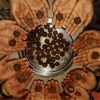
Right to Food: Can Millets Improve Nutrition Outcomes in Chattisgarh, India?
Chhattisgarh was one of the first few states in the country to universalise the public distribution system (PDS) and provide ‘Right to Food’ to its people. In order to ensure access to quality foodgrains for its vulnerable population, the state introduced the Food Security Act in 2012. The state has been providing support—35 kg of rice at INR 1 and INR 2 per kg; 1 kg of iodised salt and 1 kg refined oil at no cost; 2 kg of grams at INR 5 per kg—to each eligible family (as defined in the act).
Southeast Asian Farmers Adapt, Insure against Growing Climate Risks
As incidents of drought and extreme rainfall increase, farmers in Southeast Asia are partnering with experts to develop targeted weather forecasts to work around the threats and, when adaptation becomes too costly, buy specially designed insurance to protect their livelihoods.
The Islamic Emirate, led by an Insurgent Group, Aims at Capturing a Coveted Seat at the UN
When the high-level segment of the 76th session of the UN General Assembly opens September 21, the Islamic Emirate of Afghanistan is unlikely to occupy a much-coveted seat in the world body.
CommonSensing Project Builds Climate Resilience for Small Island Nations
The UK Space Agency’s International Partnership Programme (IPP) CommonSensing is led by the United Nations Institute for Training and Research (UNITAR) through the United Nations Satellite Centre (UNOSAT), which is working with selected partners including the Commonwealth Secretariat, to improve resilience to the effects of climate change in Fiji, the Solomon Islands and Vanuatu.
Afghanistan’s Girls Need our Unwavering Support in Education
The Taliban takeover of government in Kabul is just days old, and the eyes of Afghans and the world are cautiously watching and hopeful to see them stand by their word and ensure that girls’ education be promoted and protected.
The Forbidden Love
 Abandoned by family and friends, transgender people in Bangladesh are subject to extensive daily abuse. The existing and continuously growing transphobia and homophobia in society are obstacles in the lives of this group. The people featured here from the LGBTQ+ community share a wide variety of narratives.

Afghanistan: A Swedish Officer’s Point of View
Like most of us, I rely on news media to find an explanation to tragedies I watch on TV. Neverthelss, some of my opinions about the Afghan tragedy have furthermore been influenced by talks I once had with my friend Bernth Dagerklint. We had for some years been working as teachers at a high school, though this was not Bernth’s main occupation. Most of the time, he served as an officer during international, armed campaigns supported by the Swedish government. He had been to former Yugoslavia, the West Bank and not the least in Afghanistan, where he since 2003 on several occasions worked as ”instructor” for Afghan officers.
Afghanistan – Another Viet Nam?
There are several points of similarity between the war in Afghanistan and the war in Viet Nam. The Taliban, like the North Vietnamese and the Viet Cong, proved to be formidable tacticians and fighters. They managed to contain a far better equipped opponent and mount effective counteroffensives; access sufficient domestic and foreign funding to pay their fighters and support their families; build a formidable intelligence network; and acquire necessary technical capabilities in areas such as repair and maintenance of small arms.
Afghanistan – a Turning Point?
Headlines in the press, live TV and internet coverage of the chaos at Kabul airport following the American withdrawal from Afghanistan has generated an impression around the world of an American foreign policy debacle, belittling the supremacy of American military power.
Armed with a New Training Manual, Pacific Farmers Look to Control Deadly Coconut Rhinoceros Beetle Infestations
The Pacific has been battling the spread of the Coconut Rhinoceros Beetles (CRB) for years and is now challenged by the invasion of a new CRB biotype, the CRB-Guam strain, that has spread to seven Pacific Island countries in just a decade leaving thousands of dead palms in its wake. The Guam strain, together with much more established biotype CRB-S has hampered the success of renovation programmes for mature tall palms as well as newly emergent, high-value coconut product industries (such as virgin oil and coconut water) that offer economic opportunities for communities in the region.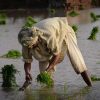
The Future of Food & Water Systems in Pakistan & Central Asia?
An intense monsoon season in Pakistan means the country’s food system faces the challenge of both extreme floods and extended droughts. In an effort to address these challenges through cross-sectoral collaboration, Dr. Mohsin Hafeez, IWMI’s Country Representative for Pakistan and Regional Representative for Central Asia, convened a regional dialogue in advance of the UN Food Systems Summit (which is scheduled to take place at the United Nations, September 23) .
Biden’s Revenge: Fueling ‘Madness of Militarism’ in Afghanistan
Joe Biden provided a stirring soundbite days ago when he spoke from the White House just after suicide bombers killed 13 U.S. troops and 170 Afghans at a Kabul airport: “To those who carried out this attack, as well as anyone who wishes America harm, know this: We will not forgive. We will not forget. We will hunt you down and make you pay.”
Taliban’s Quest for Legitimacy – and a Seat at the United Nations
When the Taliban captured power back in 1996, one of its first political acts was to hang the ousted Afghan President Mohammed Najibullah in Ariana Square in Kabul. The newly-installed government played a triple role: judge, jury and hangman, all three rolled into one.
Data Platform Helps Pacific Island Countries Collect, Analyse and Act on Information
Do you know if midwife services are available at the Saupia Health Centre in Paunangisu, on the island of Efate in Vanuatu, in the Pacific Islands? I do, and I’ve never been within 1,000 kilometres of the facility — I found the information online within seconds thanks to a data platform called Tupaia.
Closed Borders and Hostile Receptions Await Afghan Refugees
Whether desperately trying to get a place on the last evacuation flights out of Kabul or trekking to the borders with neighbouring Pakistan and Iran, tens of thousands of Afghans are fleeing their country once more. Events are unfolding at speed. The Taliban are establishing a central government in the capital to fill the void of the collapsed western-backed administration, but they do not control all the country as the protracted civil war enters a new stage. The UN refugee agency UNHCR says that in its “worst case scenario” it is preparing for around 500,000 new refugees in the region by the end of this year. As with many past estimates that could prove optimistic.
The Taliban Win: The Aftermath in Afghanistan and in the World
Some years ago, on a piece on the Afghan crisis I had written that Mullah Omar’s face bore no resemblance to that of the impossibly beautiful, albeit mythical, Helen of Troy. Yet it too had caused the launch of a thousand ships (airships to be more precise), just as Helen’s had done in Homer’s epic tale, the Iliad. Like Troy in that ancient narrative, Afghanistan of the present times was swarmed with invaders who could also be seen as the counterparts of those Greeks- the Americans and their NATO allies. This war lasted for double the time of the Trojan episode, twenty years instead of ten. At its end it led to a reverse situation, victory of the Trojans, in this case, of the Taliban. Though the Greeks destroyed Troy by the ruse of a gift of the Wooden Horse, eventually a Trojan warrior, Aeneid, sailed to southern Mediterranean and laid the foundation of the Rome and its empire. The Greek epoch ultimately yielded to the Roman age, and the annals of geopolitics of that time took a completely new turn. Will the impact of the Afghan war be the same? Shall we see a power transformation in a new paradigm from what we have at the present time? Will American predominance make way for a risen China, now or in the future?
After Afghanistan, War’s Idealists Must Accept Defeat
As the Western occupation of Afghanistan has come to an end, TV news is broadcasting harrowing scenes of death and destruction, citizens in fear, allies abandoned, and dreams dashed.
Cook Islands Entrepreneur Develops Hydroponics Greenhouse to Boost Local Food Production
Finding ways to be smarter producers of food was a priority in small island developing states (SIDS) before the outbreak of Covid-19. Now the ideas of farmers and entrepreneurs, such as Piri Maao in the Cook Islands, are being avidly sought by governments and development bodies, which are keen to drive resilience and recovery as the pandemic moves into its second year.
Pacific Community Warns of Threat to Education Retention in the Wake of COVID-19
Before the pandemic, many Pacific Island countries grappled with low numbers of students completing secondary education. Now experts in the region are concerned that the closure of schools to contain the spread of COVID-19, and the economic downturn, will lead to even more students dropping out of education early.
Crisis in Afghanistan: All Eyes on Central Asia
The political and human catastrophe in Afghanistan is threatening to boost autocratic tendencies in Tajikistan and Uzbekistan. With the withdrawal of US and coalition forces from Afghanistan and the rapid takeover by the Taliban, neighbouring Central Asian countries are once again at the focus of international attention.« Previous Page — Next Page »





The Week with IPS

NEXT STOP - SDGs
Tracking global progress towards a sustainable world
Tracking global progress towards a sustainable world
