Languages
Sunday, November 15, 2026



News and Views from the Global South
Asia-Pacific

Food Sovereignty as a Pillar of Self-Determination
A recent meeting in Rome between our Pacific leaders and UN Food & Agriculture Organisation (FAO) highlighted the urgency of food security in our region given the reality of climate change affecting our agriculture and aquaculture.
Rohingya Refugees: The Woes of Women – Part One
Afia* lines up her bucket every morning in the refugee camp for water delivery from humanitarian relief workers. On one particularly sweltering day, she kept four water pitchers in a row with gaps between them, hoping to insert another empty container in the space when the water arrived.
Rohingya Exodus Is a “Major Global Humanitarian Emergency”
In less than four months, over 600,000 Rohingya refugees have fled brutal persecution in Myanmar to seek safety across the border in Bangladesh. They are now crowded into camps across a stretch of 30 kms in Cox's Bazar, a southeastern coastal region of the small South Asian nation.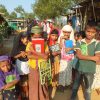
Rohingya Refugees Face Fresh Ordeal in Crowded Camps
Mariam Akhtar, 23, is desperately searching for her young daughter two weeks after arriving from Myanmar in Cox’s Bazar, a southeastern coastal district in Bangladesh.
South-South Cooperation Key to a New Multilateralism
“There are new challenges to all states: among them, the real threat to multilateralism... South-South and triangular cooperation can contribute to a new multilateralism and drive the revitalisation of the global partnership for sustainable development.”
Warm-hearted Sri Lankans
Scene 1: As a visiting tourist goes through the aero bridge outside the flight gate into the Bandaranaike International Airport lobby, walking past airport officials and smartly-clad SriLankan Airlines’ ground staff, the mood is anything but welcoming. They are greeted by glum or stern faces.
“Every Day Is a Nightmare”
Parul Akhtar,* a Rohingya woman in her mid-twenties, may never wish to remember the homeland she and her children left about three weeks ago.
Violence: Unending Woes of Indian Women
The statistics are chilling. As many as 2.24 million crimes against women were reported over the past decade: 26 crimes against women are reported every hour, or one complaint every two minutes. As chilling as these statistics are, they don’t reflect the gory details.
Climate-Smart Agriculture in Vanuatu: Learning to Grow
It’s been dry in Isavai on the island of Aniwa for last couple of years – ever since Tropical Cyclone Pam tore through Vanuatu in March 2015, leaving an El Nino-induced drought in its wake. A dry phase is bad news for farmers anywhere, but in Aniwa, where there is no constant water source and the only water supply comes almost exclusively from harvesting rain into tanks, it’s disastrous.
Taxi Company Empowers Women on Mumbai’s Bustling Streets
Jahhavi Kshsarter pulls out on to the Western Express Highway, careful to avoid the swarm of cars, lorries and motorbikes zipping past. She is one of 65 women employed by an all-female taxi company in Mumbai.
Coping with Foreign Direct Investment
Foreign direct investment (FDI) is increasingly touted as the elixir for economic growth. While not against FDI, the mid-2015 Addis Ababa Action Agenda (AAAA) for financing development also cautioned that it “is concentrated in a few sectors in many developing countries and often bypasses countries most in need, and international capital flows are often short-term oriented”.
Beyond Piketty: on income inequality
Have demonetisation and the GST aggravated income inequality? With the Gujarat State elections barely a few weeks away, the debate on the Indian economy has become increasingly polarised. While the official view of demonetisation unleashed in November 2016 elevates it to a moral and ethical imperative, the chaos caused by the goods and services tax (GST) launched on July 1, 2017, is dismissed as a short-run transitional hiccup. Both policies, it is asserted, are guaranteed to yield long-term benefits, unmindful of large-scale hardships, loss of livelihoods, closure of small and medium enterprises and slowdown of agriculture. Critics of course reject these claims lock, stock and barrel. Lack of robust evidence is as much a problem for the official proponents of these policies as it is for the critics. Hence the debate continues unabated with frequent hostile overtones.
The Birth of a Dictator
The government had an almost paranoid fear of protests. A square kilometer around the Supreme Court was barricaded and off limits to the public. In faraway provinces, roadblocks were erected to stop demonstrators. Some opposition members were under temporary house arrest. But it turned out to be unnecessary. Nobody dared to protest.
Girls in Afghanistan—and Everywhere Else—Need Toilets
"I never come here, just because of boys," Atifa says, pointing at the door of the stall. "They're opening the door." Atifa, a sixth grader in Kabul, Afghanistan, attends a school of 650 girls. Since they study in tents in a vacant lot, the only toilets the girls have access to are on the far side of the boys' school next door. The school is one of a very few for girls in the area, so some students walk over an hour each way to get there.
The Mekong, Dammed to Die
In Laos, the lush forests are alive with the whines of drills that pierce the air. On the Mekong, a giant concrete wall rises slowly above the trees. The Don Sahong dam is a strong symbol, not only for a power-hungry Asia but also for what critics fear is a disaster in the making.
The Harsh Plight of 152 Million Child Labourers
While trillions of dollars are being spent on exploring remote galaxies, Planet Earth is still home to harsh realities that could be easily –and much less expensively—resolved. One of them is that worldwide 152 million children are currently victims of child labour.
Yolanda (Haiyan): Remembrance, Reflection and Responsibility
In the arcane world of natural disasters, names matter a great deal—not only because of history and science, but because people need them in order to remember or mourn what and whom they have lost.
Big Hearts in a Small Village
Johora, 60, came to the IOM-supported community clinic in Kutupalong, Ukhiya sub-district, with Shajeda, her 20-year-old daughter-in-law, who is in her eighth month of pregnancy and expecting her first child.
Emerging Markets at Risk Again
Emerging market governments often draw lessons from previous financial crises – or at least claim to do so – to prevent their recurrence. However, such preventive measures are typically designed to address the causes of the last crisis, not the next one. Hence, some measures adopted may inadvertently become new sources of instability and crisis.
Conservation Agriculture: Zambia’s Double-edged Sword against Climate Change and Hunger
As governments gather in Bonn, Germany for the next two weeks to hammer out a blueprint for implementation of the global climate change treaty signed in Paris in 2015, a major focus will be on emissions reductions to keep the global average temperature increase to well below 2°C by 2020.
Climate Change Summit a Step Further, Yes… But Where To?
The UN Climate Change Summit in Bonn is a step further, most experts say. Fine, but towards what?« Previous Page — Next Page »


The Week with IPS

NEXT STOP - SDGs
Tracking global progress towards a sustainable world
Tracking global progress towards a sustainable world
