Languages
Thursday, October 1, 2026



News and Views from the Global South
Europe

Climate Change Becomes a Reality Check for the North
“This season, the month of May was particularly hot and dry,” says Leo De Jong, a commercial farmer in Zeewolde, in Flevopolder, the Netherlands. Flevopolder is in the province of Flevoland, the largest site of land reclamation in the world. Here a hectare of land costs up to 100,000 Euros. “At the moment, we are spending between 20,000 and 25,000 Euros per week on irrigation.”
Crisis alla Turca
The meltdown of the Turkish currency over a matter of a few days in August 2018 has elicited various reactions and interpretations both at home and abroad, and created widespread concern that it could mark the beginning of a series of crisis in emerging economies exposed to a reassessment of risks by international investors and lenders as well as a rapid normalization of monetary policy in the United States.
I am a Nigerian Migrant, Struggling to Live the ‘European Dream’ – Part 1
Jim*, a 34-year-old Nigerian, has been living in Italy for the last eight years. And even though he has a legal permit to reside in the country, he is yet to find steady employment. Instead, for three days a week you will find him begging for alms in front of a supermarket in Rome.
Mediterranean Migrant Arrivals Reach 61,517 in 2018; Deaths Reach 1,524
IOM, the UN Migration Agency, reports that 61,517 migrants and refugees entered Europe by sea in 2018 through 12 August. This compares with 118,436 arrivals across the region through the same period last year, and 265,640 in 2016.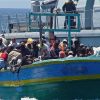
Save the Children Warns Untraceable Minors in Italy May be Trafficked
Thousands of migrant minors placed in reception facilities upon arrival in Italy, as a first step in identification and later relocation into other structures for asylum seekers, are untraceable and feared trafficked.
Global Compact & the Art of Cherry-Picking Refugees
When Secretary-General Antonio Guterres was asked about the legality of the UN’s much-ballyhooed Global Compact for Migration, he was initially evasive in his response. “I’m not a lawyer”, he told reporters July 12, “and I presume that this question might be better asked from a lawyer”.
‘Agromafia’ Exploits Hundreds of Thousands of Agricultural Workers in Italy
In Italy, over 400,000 agricultural labourers risk being illegally employed by mafia-like organisations, and more than 132,000 work in extremely vulnerable conditions, enduring high occupational suffering, warns the fourth report on Agromafie and Caporalato.
Immigration, Lot of Myths and Little Reality
According to the latest statistics, the total flow of immigrants that reached Europe so far in 2018 is 50.000 people, compared with 186,768 last year, 1,259,955 in 2016 and 1,327,825 in 2015. The difference between reality and perceptions is so astonishing, we are clearly witnessing one of the most brilliant manipulations in history.
Europe Needs to Stop the Criminal Business Behind Immigration
Debating on migration as an emergency is a huge mistake and treating it as such opens the door for illegal and unfair activities, says a migration expert.
United Nations Compact Must End Child Detention
World leaders must commit to ending child migrant detention during United Nations negotiations next week, a human rights group said.
Tackling Goal 8 and Modern Day Slavery through Technology
Pursuant to the ‘Joint Declaration of Faith Leaders Against Modern Slavery’ signed under the auspices of Pope Francis at the Vatican on 2 December 2014, the ‘Global Sustainability Network – GSN’ and ‘Rani’s Voice’, commemorate and reaffirm support for the victims in the lead up to the ‘World Day Against Trafficking in Persons’ on July 30th, 2018
Ukraine Puts Water Strategy High on Development Agenda
A campaign to raise awareness of water security in Ukraine could be an inspiration around the world, activists behind it say, after it forced a change in the country’s approach to its water resources.
Europe, Sharing the Love?
Even if arrivals of migrants into Italy by sea have decreased between 2017 and 2018 so far, recent events in the Mediterranean rim have strongly drawn attention to the migration issue and a fierce debate is now underway among European countries.
From Fake News to a Fake Death
When news broke on May 29th that journalist Arkady Babchenko had been murdered in Ukraine, serious questions about the safety of journalists in the country were raised.
Nepali Mothers and an Irish Daughter
I am the daughter of a formidable campaigner for women’s reproductive rights in Nepal. Decades ago, when such issues were not part of the playbook for development activists, my mother, a medical doctor, started setting up family planning programs after seeing women die in childbirth, shifting from hospital work into public health.
Greece: SDGs a Way to End Economic Crisis?
Seven years after being on the verge of a financial collapse, Greece is now seeing better times. Its economic accounts have clearly improved but what is not under the spotlight is how the Greek people are still paying for the effects of the crisis.
Experts Urge Lawmakers to Focus on Food-Migration Nexus
Lawmakers at the highest levels urgently need a “revolution in thinking” to tackle the twin problem of sustainable food production and migration. Starting with an inaugural event in Brussels, then travelling on to New York and Milan, an international team of experts led by the Barilla Center for Food and Nutrition (BCFN) is urging far-reaching reforms in agricultural and migration policy on an international scale.
Media Watchdogs Fear a Chill in Slovakia
International media watchdogs, EU politicians, journalists and publishers have condemned Slovak police investigating the murder of a local journalist after one of his colleagues claimed she was interrogated for eight hours before being forced to hand over her telephone – potentially putting sources at risk.
Ex-President Leaves ILO after Corruption Scandal
There is a compact silence surrounding how the corruption scandal affects ILO’s work on developing a plan to change the UN body.
Economic & Social Costs of Gun Violence Appalling
Every day, hundreds of lives are lost due to gun violence worldwide. Guns are responsible for about half of all violent deaths – nearly a quarter million each year. But the dire consequences of gun violence are not limited to those slain by guns. For every person killed by a gun, many more are injured, maimed, and forced to flee their home and community. Still many more live under constant threats of gun violence.
How Do You Attain “Sustainable Peace” Amidst Rising Military Conflicts?
The underlying message at the fifth annual Stockholm Forum on Peace and Development was summed up in its telling title “The politics of peace.” But the task ahead was overwhelmingly difficult: How do you advance peace and development against the backdrop of political unrest in parts of Asia and Africa and continued conflicts in the Middle East— all of them amidst rising global military spending triggering arms sales running into billions of dollars.« Previous Page — Next Page »


The Week with IPS

NEXT STOP - SDGs
Tracking global progress towards a sustainable world
Tracking global progress towards a sustainable world
