Languages
Thursday, October 1, 2026



News and Views from the Global South
Global

Care for the Elderly
Who should be responsible for providing care and covering expenses for the elderly? Should it be governments, the elderly themselves, their families, a combination of the three, or a new societal arrangement?
The Day the General Assembly Moved to Geneva– to Provide a Platform to a PLO Leader…
The United Nations faces two crucial elections later this year: the election of a new Secretary General, with no confirmed date for polling, and the election of a new President (PGA), scheduled for June 2, for the upcoming 81st session of the General Assembly.
From Flooded to Future Ready: Why Asia Pacific Cities must Become ‘Sponges’
As the Pacific recovers from a severe cyclone season and Asia braces for the monsoon, flood readiness has become a defining test of sustainable urban development.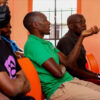
Unexpected Ally Stepping Up Against Sexual Assault in Kenyan Slums: Landlord
Trigger warning: This article discusses child rape. Their quiet latent power comes from being ever-present eyes and ears on the ground. As they move around their compounds, collecting rent and checking on anywhere from 10 to 20 houses occupied by as many as 200 people, they see and hear things.
Nations pledge $3.9bn to Global Environment Facility as Race to Meet 2030 Goals Tightens
With just four years left to meet a series of global environmental targets, governments are committing to shore up one of the world’s main environmental funds, the Global Environment Facility (GEF), with a $3.9 billion pledge.
Over 1,000 Humanitarian Workers Killed Distributing Food, Water, Medicine & Shelter
In 2025, at least 326 humanitarians were recorded as killed across 21 countries, bringing the total number of humanitarians killed in three years to over 1,010. We recognise, grieve and honour each of our 326 colleagues, and commit the work ahead to their memory.
“Humanity at the Edge of Its Own Humanity”
We live in a century of extraordinary achievement. Humanity has split the atom, mapped the genome, and sent astronauts to the Moon, with plans now underway to reach Mars. Our knowledge has expanded, our tools have become more powerful, and our capacity to shape the world around us exceeds anything previous generations could have imagined. We communicate instantaneously across continents, diagnose diseases earlier, monitor climate patterns in real time, and design artificial intelligences that can aid in everything from medicine to climate modelling.
The Race Is On: Who Will Be the Next UN Secretary General?
Let the race begin! April 1st was the deadline for candidates to be nominated for Secretary-General. Was it a coincidence that the deadline was April Fool’s Day? Judging by the quality of the official candidates, we suspect so.
Inequalities in Human Mortality
As stated in Hamlet, “Thou know'st 'tis common; all that lives must die, Passing through nature to eternity.” Although death is inevitable for all living beings, human mortality, which is expected to reach approximately 64 million individual deaths worldwide in 2026, is not evenly distributed across populations.
Regime Change – Sometimes It Works, Often It Doesn’t
Donald Trump ran on a platform of ending wars. After his success in Venezuela, he is intoxicated by his military achievements and is banking on regime change in several countries.
Tackling Political Exclusion is Central to Saving Democracy
Urgent steps need to be taken to rebuild the relationship between citizens and state to stem the decline of democracy globally. Experts point to inequality and political exclusion as two of the biggest drivers for democratic backsliding, with the exclusion of citizens from a role in policy and decision-making spaces leading to ‘hollow citizenship’.
US Aims at Heavy Staff & Budgetary Cuts, Seeks to Launch Cost-Saving Artificial Intelligence at UN meetings
The US has spelled out in detail its own concept of what a restructured United Nations should look like: after drastic reductions in staff, cutting down its budget, avoiding duplication in mandates, slashing peacekeeping operations worldwide and deploying artificial intelligence (AI) for translations and interpretations in six languages.
The Inter-American Development Bank Invest Talks Growth– but Ignores People Bearing the Cost
In Asunción, Paraguay last month, finance ministers, central bank presidents, and private sector leaders gathered for the Inter-American Development Bank’s (IDB) Annual Meetings to talk about growth.
WHO: Migrants and Refugees Face Rising Health Risks as Global Systems Fall Short
Global human migration is at record-high levels, as the World Health Organization (WHO) estimates that roughly 1 in 8 people—about one billion individuals—are on the move. Many of these migrants and refugees face harsh living conditions and heightened challenges, such as poverty, insecurity, and limited access to basic services. With the number of international migrants having doubled since 1990, new findings from WHO call for expanding health systems to meet the growing scale of needs.
UN80: UN General Assembly Adopts Resolution on Mandate Review
UN Member States made progress toward the UN80 initiative by adopting a resolution that would implement a mandate review, which is set to pave the way to strengthen the process of mandate creation and implementation.
MC14 Exposed US Heavy Hand at the WTO; Developing Countries Need Each Other
The WTO's 14th Ministerial Conference (MC14), which took place from 26 to 30 March 2026 in Cameroon, was reported as a collapse resulting from the stand-off between Brazil and the United States on the extension of the e-commerce moratorium. This is one screen shot of a bigger unfolding story where the US is attempting to enforce its will on the organization, while some are resisting.
The United Nations Needs a Secretary-General of Courage, Not Convenience
The United Nations was not founded to be comfortable; it was founded to be necessary. Created in the aftermath of catastrophe, its purpose was clear: to maintain international peace and security, to uphold international law, to defend human rights and to promote human dignity and development.
CSW70: Women’s Equality under Siege
On 19 March, the Commission on the Status of Women (CSW) did something unprecedented in its eight-decade history: it held a vote. The Trump administration, having spent two weeks attempting to defer, amend and ultimately block the session’s main outcome document, known as the agreed conclusions, cast the only vote against its adoption. That dissenting vote said a lot, as it came from the world’s most powerful government, backed by financial leverage, bilateral reach and a network of anti-rights states and organisations that are making inroads at many levels.
The “Extremely Dangerous and Unpredictable” situation in Middle East and Beyond
More than three weeks after the United States and Israel launched strikes on Iran, the conflict is spreading and intensifying in the region and beyond, with civilians bearing the brunt. Families across the region marked Eid and Nowruz under fire, in fear and uncertainty, and facing further hardship.
War in Iran, Middle East Threatens Global Agrifood Systems
The current conflict in Iran and the Middle East region threatens to disrupt the global energy and agri-food sectors, as the closure of the Strait of Hormuz affects oil and fertilizer exports for farmers during critical harvest seasons.
Torture and Physical Abuse of Children in Gaza Declared War Crimes
The ongoing Israeli-Palestinian conflict, which began October 2023, has claimed the lives of more than 73,600 Palestinians and about 1,195 Israelis. But there are widespread charges accusing Israel of war crimes, genocide, torture and the abuse of Palestinian detainees in Israeli jails.« Previous Page — Next Page »


The Week with IPS

NEXT STOP - SDGs
Tracking global progress towards a sustainable world
Tracking global progress towards a sustainable world
