Languages
Friday, November 20, 2026



News and Views from the Global South
Global

Sweetened Research, Sugared Recommendations
In 2015, Coca Cola’s chief scientist was forced to resign after revelations that the company had funded researchers to present academic papers recommending exercise to address obesity and ill health, while marginalizing the role of dietary consumption. Coca-Cola, the world’s largest producer of sugary beverages, had provided millions of dollars to fund researchers to downplay the links between sugar and obesity, tooth decay and non-communicable diseases (NCDs).
Water, the Great Enabler
I listened to a Haitian farmer share solutions with neighbouring water users on how best to allocate scarce water resources. I learned about the resolution of inter-village water conflicts after sitting in a longboat for hours on the Ganges Delta in Bangladesh. On the dry floodplains of Ethiopia, I heard how local solutions benefitted women and outperformed ‘imported’ ones.
Cities: a Hub for Wastewater Innovation
Water is a finite resource. With a growing population, an expanding global middle class and a rise in energy and industrial production, the demand for water is reaching new levels. According to the OECD, global demand for freshwater will increase by 55 percent between 2000 and 2050. By 2050 it is expected that roughly 6.4 billion people will live in cities, making urban water management an essential building block for resilience and sustainable growth.
No Water, No Life – Don’t Waste It!
During the final exams of Spanish official high school of journalists, a student was asked by the panel of professors-examiners: If scientists discover that there is water in Planet Mars, how would you announce this news, what would be your title? The student did not hesitate a second: “There is life in Mars!” The student was graduated with the highest score.
‘Words of Fear and Loathing Can -and Do- Have Real Consequences’
“Politics of division and the rhetoric of intolerance are targeting racial, ethnic, linguistic and religious minorities, and migrants and refugees. Words of fear and loathing can, and do, have real consequences,” warns the UN High Commissioner for Human Rights
Smiling Towards Development
Previous indications of national prosperity have focused on income, poverty, health and, above all, Gross Domestic Product, but on March 20th, World Happiness Day commemorates what is perhaps becoming the new way to measure welfare: happiness.
‘Religious Discrimination, Fanaticism and Xenophobia Worsened’
Religious discrimination, fanaticism and xenophobia have worsened in several countries in Europe, Asia, Africa, the Middle East and North America, thus there is a need for alternatives to identify a common strategy to address these challenges, a Geneva-based think tank promoting global dialogue stated.
Oh Happy Day!
Once a year, there is a day when the seven billion inhabitants of Planet Earth should feel happy or at least are encouraged to do so--the World Happiness Day, which is marked every year on March 20. So far, so good.
“The Struggle Continues” for Human Right to Peace and Inclusion of Women
UN officials and activists gathered to discuss the essential relationships between sustainable peace and gender equality during a two week-long UN meeting, begining March 13.
UN FARMS to Create One Million Days of Work for Mideast Migrants
The problem is rather complex and often not recognised: in one of the major regions of both origin and destination for migrants and refugees -- the Near East and North of Africa, 10 per cent of rural communities is made up of forcibly displaced persons, while more than 25 per cent of the young rural people plan to emigrate.
Why Do Some Men Rape?
A recent report from Equality Now titled 'The World's Shame: The Global Rape Epidemic' offered a series of recommendations for strengthened laws to deter and punish sexual violence against women and girls.
The Robots are Coming, your Job is at Risk
Last year Uber started testing driver-less cars, with humans inside to make corrections in case something goes wrong. If the tests go well, Uber will presumably replace their present army of drivers with fleets of the new cars.
Most Financial Inflows Not Developmental
Recent disturbing trends in international finance have particularly problematic implications, especially for developing countries. The recently released United Nations report, World Economic Situation and Prospects 2017 (WESP 2017) is the only recent report of a multilateral inter-governmental organization to recognize these problems, especially as they are relevant to the financing requirements for achieving the Sustainable Development Goals (SDGs).
A Structural Theory of Aging
Wikipedia has much to offer under "aging". Highly recommended are the 10 points by the world's oldest living man, 114, Walter Breuning.
Strengthening UN & Business Community Partnerships on SDGs
Just this year, public and private stakeholders from around the globe marked the one-year anniversary of the United Nations Sustainable Development Goals (SDGs). The milestone served as an important reminder of the fifteen-year framework that is now in place.
Violence, Power Vacuum in Mideast, Fertile Ground for Terrorism
Long decades of violence in the Middle East and Northern Africa, resulting from the proliferation of international and local conflicts, have strained the social fabric that once held peaceful Arab societies together, says a Geneva-based think tank promoting global dialogue.
370 Million Children Eat Healthy Food at School, Every Day
Every day some 370 million children around the world are fed at school, while learning about healthy food and nutrition through school meals programmes that also help boost attendance, the United Nations reports.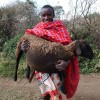
The Indigenous ‘People of Wildlife’ Know How to Protect Nature
In the northern part of Mount Kenya, there is an indigenous community -- the Il Lakipiak Maasai ("People of Wildlife") -- which owns and operates the only community-owned rhino sanctuary in the country.
Ecco Subcontractor in Breach of the Law
Low wages, precarious employment, and lots of overtime. A recent report from the EU project ”Change Your Shoes” show that Indonesian subcontractors for several European footwear companies, including Ecco and Deichmann, are not in compliance with the law.
Women’s Progress Uneven, Facing Backlash – UN Rights Chief
“The women’s movement has brought about tremendous change but we must also recognise that progress has been slow and extremely uneven and that it also brought its own challenges,” warned the UN High Commissioner for Human Rights Zeid Ra’ad Al Hussein.
Gender Disparity at UN: Three Out of 71, Zero out of Nine
The United Nations has frequently been accused of vociferously preaching gender empowerment and women’s rights to the outside world -- but failing miserably to practice what it preaches in its own political backyard.« Previous Page — Next Page »


The Week with IPS

NEXT STOP - SDGs
Tracking global progress towards a sustainable world
Tracking global progress towards a sustainable world
