Languages
Monday, November 23, 2026



News and Views from the Global South
Global
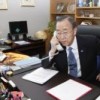
U.N. Chief Seeks Second Five-Year Term from 2012
U.N. Secretary-General Ban Ki-moon, who completes his five- year term by the end of this year, offered himself "for consideration" for a second five-year term as chief administrative officer of the world body.BELARUS: Despite Crackdown, Opposition is Defiant
President Alexander Lukashenko has locked most of his rivals in jail, but the Belarus opposition continues to work diligently to isolate the dictator.Bike vs Car on a Hot Planet
As global carbon emissions hit record-high levels last year, officials from leading Asian nations told the 2011 International Transport Forum in nearby Leipzig that their citizens want more cars.OP-ED: Climate Talks: Voices of the Vulnerable Must Be Heard
Last week, the world received a warning. A disturbing report from the International Energy Agency, the respected international authority on energy policy, found that CO2 emissions in 2010 were the highest ever recorded.U.S. Plan to Boost Nuke Spending Undercuts Nonproliferation, Activists Warn
A Pentagon plan to step up spending on nuclear weaponry would severely undermine global efforts geared towards disarmament, warn independent analysts on U.S. nuclear policy.Reimagining Food Systems in the Midst of a Hunger Crisis
Today one billion people are living in hunger, not because of scarcity of production or a shortage of food on shelves in the global marketplace, but because they "lack the most basic purchasing power needed to acquire it", Olivier De Schutter, the United Nations Special Rapporteur on the Right to Food, said Thursday.HIV Infections Down, but Treatment Access Still Uneven
Officials underscored the importance of stepped-up action Friday to combat HIV/AIDS, the worst epidemic the world has seen since it began 30 years ago, ahead of a high-level meeting on the disease at the United Nations next week.ENVIRONMENT: Business Lobby Resists Ban on ‘Perverse’ Emissions – Part 2
For years, European governments and corporations have made use of a loophole in the Kyoto protocol on climate change to make exorbitant profits. According to some sources, this lucrative scheme has caused more pollution than ever before while lobbyists in Brussels have methodically undermined the European Commission's decision to put a stop to it.OP-ED: Cutting the Fog: Multiculturalism, Religion and the Common Good
The death of "multiculturalism" has been proclaimed repeatedly recently, the idea pronounced with a big "M" as if we were talking of something tangible around which there is consensus.ENVIRONMENT: Business Lobby Resists Ban on ‘Perverse’ Emissions – Part 1
For years, European governments and corporations have made use of a loophole in the Kyoto protocol on climate change to make exorbitant profits. According to some sources, this lucrative scheme has caused more pollution than ever before.Decriminalising Drugs Moves into the Mainstream
Several years ago, anyone calling for an end to Washington's "war on drugs" would be considered a heretic. Today, high- level politicians and business people, backed by thousands of regular citizens, are doing just that.World’s Energy Poor See Receding Light at End of Tunnel
As the world continues to marvel at the widespread progress in modern technology and home electronics, there are still about 2.5 billion people - out of a global population of nearly 6.9 billion - who have little or no access to electricity.
ENVIRONMENT DAY: Better to Plant a Tree Than Curse the Desert
With deforestation claiming 5.2 million hectares annually and governments seemingly incapable of agreeing on a new pact to curb climate-altering carbon emissions, it would be easy to write off the situation as hopeless.DEVELOPMENT: Microfinance Craze Conceals Multiple Problems
The microfinance industry is expanding at breakneck pace, with more banks and private equity firms now entering the fray. Yet there is growing unease about the naive assumptions, and evangelical predictions, of its advocates.Asia Fires Warning Shots Over IMF Chief
Even if French Finance Minister Christine Lagarde secures the top post at the International Monetary Fund (IMF), the rumblings across Asia convey the message that the international lender's clubby custom of picking a European national to be its managing director smacks of discrimination.Higher Tobacco Taxes Cure for Killer Addiction
The world is facing a "global epidemic in need of a global effort", according to a panel of experts on tobacco control, who met at the United Nations Tuesday to commemorate World No Tobacco Day.U.S. Veto Could Derail Palestine as New U.N. Member State
If the General Assembly is called upon to recognise Palestine as a new sovereign nation state, the resolution is expected to garner the required two-thirds majority among the 192 members in the world body, come September.Human Rights Teachings Spread Ripples of Hope
In a new curriculum introduced last December, thousands of students in New York State are learning about modern-day human rights defenders, and that they too can make a positive difference in the world.YEMEN: Living With an Endless Revolution
It was during moments on our rooftop earlier this week - seeing flashes in the air and hearing the heavy pounding of gun fire - when we realised that Yemen’s capital city Sana’a was no longer as safe as we had hoped.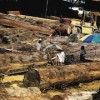
WORLD: Tropical Forest Summit Opens
Heads of state from the Amazon, Congo and Borneo-Mekong basins are meeting in the Congolese capital, Brazzaville: leaders hope to reach an accord on sound management of valuable rainforest ecoystems, but civil society actors believe the problems faced by local populations may be ignored.Putting Road Safety on the Development Agenda
The leading killer of children over the age of five is not malaria or dysentery, but cars and trucks. And 90 percent of those children are killed on roads in developing countries.« Previous Page — Next Page »


The Week with IPS

NEXT STOP - SDGs
Tracking global progress towards a sustainable world
