Languages
Sunday, August 30, 2026



News and Views from the Global South
Latin America & the Caribbean

Q&A: What of the Carbon Neutral Countries?
As High Forest Cover and Low Deforestation (HFLD) nations meet in Suriname at a major conference, it is obvious that the decision made by these countries to preserve their forests has been a difficult but good one.
The Role Technology Can Play in Fighting Climate Change and Deforestation
At 51, Roberto Wong Loi Sing has spent nearly half of his life working in the field of engineering. But as he spends his days designing more efficient stormwater management systems, or water purification systems, for instance, the child in him comes alive as he combines his skills to find “win-win” solutions for the environment.
Rapa Nui’s Stone Statues and Marine Resources Face Threats from Climate Change
Social activists and local authorities in Rapa Nui or Easter Island are calling for urgent action to address rising sea temperatures, declining rainfall, and rising tides that threaten their fishing resources and their Moais, the mysterious volcanic stone monoliths.
Q&A: We Are Helping the World Mitigate Climate Change, Now it’s Time to Help Us
The Caribbean nation of Suriname may be one of the most forested countries in the world, with some 93 percent of the country’s surface area being covered in forests, but it is also the most threatened as it struggles with the impacts of climate change.
Our Forests Provide the World With Oxygen But We Need More Climate Change Finance – HFLD Countries
Suriname, the most forested country in the world, is this week hosting a major international conference on climate financing for High Forest Cover and Low Deforestation (HFLD) countries.
Q&A: A Cuban Film About Family in the “Global South” Premieres in Berlin
A documentary about a Cuban family facing an uncertain future had its world premiere Feb. 12 at the Berlin International Film Festival, one of the world’s most prestigious cinema events. “La Arrancada” (On the starting line) is a debut feature by Brazilian director Aldemar Matias, focusing on a young athlete who is having doubts about her role in national sports in the Caribbean country. The narrative follows her as she considers her future, which may well lie abroad, she reluctantly realises.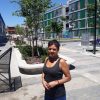
Solar Energy Provides Hope for Poor Neighbourhoods in Buenos Aires
Solar panels shine on the rooftop terraces of 10 neat buildings with perfectly straight lines and of uniform height, an image of modernity that contrasts with the precariously-built dwellings with unplastered concrete block walls just a few metres away, with rooms added in a disorderly manner, surrounded by a tangle of electric cables.
Deported Salvadoran Women Pin Their Hopes on Poultry Production
Salvadoran farmer Lorena Mejía opens an incubator and monitors the temperature of the eggs, which will soon provide her with more birds and eggs as the chickens hatch and grow up.
Q&A: Continuous Struggle for the Caribbean to be Heard in Climate Change Discussions
In recent years Caribbean Community (CARICOM) countries have experienced escalated climate change impacts from hurricanes, tropical storms and other weather-related events thanks to global warming of 1.0 ° Celsius (C) above pre-industrial levels. And it has had adverse effects on particularly vulnerable countries and communities.
Venezuela
Alea Jacta Est!
The count down towards a tragic outcome in Venezuela has started. All outside powers express what they say is a shared concern for its peace-loving people that has the misfortune of sitting on what is maybe the largest oil reserves in the world. The problem is that geopolitics lead groups of foreign countries to express different, not to say opposed recipes as to how democracy can be restored and happiness pursued in Venezuela and want to make their own views prevail in this divided country. 
Fighting Machismo in Latin America: The Formula to Combat Femicides
Peru began the year with 11 femicides in January, despite progress made in laws and statutes and mass demonstrations against gender-based violence. This situation is also seen in other Latin American countries, raising the need to delve deeper into the causes of the phenomenon.
Bullets Against Pots and Pans in the Crackdown on Venezuela’s Protests
The protests in Venezuela demanding an end to the presidency of Nicolás Maduro in the last 10 days of January, whose soundtrack was the sound of banging on pots and pans in working-class neighbourhoods, had a high human cost: more than 40 deaths, dozens wounded and about a thousand detainees, including 100 women and 90 children under 18.
Making Communities Drought Resilient
The United Nations Convention to Combat Desertification (UNCCD’s) Drought Initiative is in full swing with dozens of countries signing up to plan their drought programme.
Mexican Village Wants to Turn Thermoelectric Plant into Solar Panel Factory
Social organisations in the central Mexican municipality of Yecapixtla managed to halt the construction of a large thermoelectric plant in the town and are now designing a project to convert the installation into a solar panel factory, which would bring the area socioeconomic and environmental dividends.
Gender Gap Made Worse by Land Degradation
In parts of the world where the gender gap is already wide, land degradation places women and girls at even greater risk.
Billions of Dollars Available for Reducing and Reversing Land Degradation
The United Nations Convention to Combat Desertification (UNCCD) has debunked the notion that there is no funding available for countries to prevent, reduce or reverse land degradation.
Youth Bridge the Gap Between Climate Change and Climate Awareness in Guyana
A group of youngsters in the Caribbean who promote environmental protection in the region is on a drive to empower other youth to address some of the big issues facing their generation.
Crusade Against Sex Education Undermines Progress Made in Latin America
The crusade against comprehensive sex education by conservative and religious sectors undermines progress in Latin America and could further drive up rates of teen pregnancy, communicable diseases and abuse against girls and adolescents.
The Silent, Invisible Crisis Destabilising Communities Could be a Subject of Hope
New data show that globally two billion hectares of land—roughly twice the size of China—have been degraded. And of this amount, 500 million hectares are abandoned agricultural lands.
Desertification, Land Degradation and Climate Change Go Hand in Hand
The link between desertification, land degradation and climate change is among several issues occupying the attention of the 197 Parties to the United Nations Convention to Combat Desertification (UNCCD) for the next three days.
In Venezuela, Two Presidents Vie for Power
Venezuela entered a new and astonishing arena of political confrontation, with two presidents, Nicolás Maduro and Juan Guaidó, leading the forces vying for power, while Venezuelans once again are taking to the streets to demonstrate their weariness at the crisis, which has left them exhausted.« Previous Page — Next Page » *#*

The Week with IPS

NEXT STOP - SDGs
Tracking global progress towards a sustainable world
Tracking global progress towards a sustainable world

