Languages
Wednesday, September 2, 2026



News and Views from the Global South
Latin America & the Caribbean

Mexico Opens Its doors to Central American Migrants
A few months ago, Candelario de JesúsChiquillo Cruz reached Mexico's southern border and ran into a fence reinforced with barbed wire, while a barrier of police officers sprayed him with gas. Today, he is walking freely over the bridge that crosses the Suchiate River, a natural border with Guatemala.
Solar Energy Begins to Light Up Favelas in Rio de Janeiro
 “We can’t work just to pay the electric bill,” complained José Hilario dos Santos, president of the Residents Association of Morro de Santa Marta, a favela or shantytown embedded in Botafogo, a traditional middle-class neighborhood in Rio de Janeiro.
Family Farming Wages a Difficult Battle in Argentina
"Our philosophy is based on two principles: zero tolerance of pesticides or bosses," says Leandro Ladrú, while he puts tomatoes and carrots in the ecological bag held by a customer, in a large market in the Argentine capital, located between warehouses and rusty old railroad cars.
Climate Change Threatens Mexico’s Atlantic Coast
"I couldn't plant my cornfield in May, because it rained too early. I lost everything," lamented Marcos Canté, an indigenous farmer, as he recounted the ravages that climate change is wreaking on this municipality on Mexico's Caribbean coast.
Journalism in Nicaragua Under Siege
Eight months of social and political crisis in Nicaragua have hit the exercise of independent journalism in the country, with 712 cases of violations of the free exercise of journalism, one murdered reporter, two in prison and dozens fleeing into exile, in addition to several media outlets assaulted by the security forces.
Shedding Light on Forced Child Pregnancy and Motherhood in Latin America
Research and campaigns by women’s rights advocates are beginning to focus on the problem of Latin American girls under the age of 14 who are forced to bear the children of their rapists, with the lifelong implications that entails and without the protection of public policies guaranteeing their human rights.
Argentina’s Indigenous People Fight for Land Rights
Nancy López lives in a house made of clay, wood and corrugated metal sheets, on private land dedicated to agriculture. She is part of an indigenous community of 12 families in northern Argentina that, like almost all such communities, has no title to the land it occupies and lives under the constant threat of eviction.
Indigenous People, the First Victims of Brazil’s New Far-Right Government
"We have already been decimated and subjected, and we have been victims of the integrationist policy of governments and the national state," said indigenous leaders, as they rejected the new Brazilian government’s proposals and measures focusing on indigenous peoples.
Local Innovation Facilitates Solidarity-Based Biogas Networks in Cuba
Black plastic pipes, readily available on the mainly empty shelves of Cuba’s shops, distribute biogas to homes in the rural town of La Macuca, buried under the ground or running through the grass and stones in people’s yards.
Solar Energy Crowns Social Housing Programme in Brazil
"Solar energy makes my happiness complete," said Divina Cardoso dos Santos, owner of one of 740 houses with photovoltaic panels on the rooftops in a settlement on the outskirts of this central Brazilian city.
Mexico’s Forests, Both Victims of and Solution to Climate Change
"I dream of a healthy, sustainable, well-managed forest," says Rogelio Ruiz, a silviculturist from southern Mexico, who insists that "we have to clean it up, take advantage of the wood, and reforest.”
Climate Change Forces Central American Farmers to Migrate
As he milks his cow, Salvadoran Gilberto Gomez laments that poor harvests, due to excessive rain or drought, practically forced his three children to leave the country and undertake the risky journey, as undocumented migrants, to the United States.
Women in Argentina Are Empowered as They Speak Out Against Gender Violence
"In 2001 I was raped. I was 31 years old, had two university degrees and was still doing postgraduate studies, I had family, friends, a job. Many more resources than most rape victims have. Even so, it was the start of an ordeal whose scars I still feel today."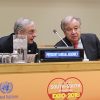
BAPA+40: An Opportunity to Reenergize South-South Cooperation
The upcoming conference on the Buenos Aires Plan of Action (BAPA+40), scheduled to take place in the Argentine capital on 20-22 March 2019, ought to be more than just another UN conference where the developing countries assemble to present their demands and seek support from the North.
Global Pact Gives Dignity and Rights to Latin American Migrants
A landmark global migration pact provides dignity and rights to migrants in every situation and context, stressed representatives of non-governmental organisations in Latin America and the Caribbean, where some 30 million people live outside their countries, forced by economic, social, security, political and now also climatic reasons.
Local Communities in Mexico Question Benefits of Mayan Train
"If thousands of people flock to this town, how will we be able to service them? I'm afraid of that growth," Zendy Euán, spokeswoman for a community organisation,said in reference to the Mayan Train (TM) project, a railway network that will run through five states in southern Mexico.
“No One Listened to Us!” The Ixiles of Guatemala
According to the Mexican Interior Ministry more than 7,000 Central American migrants have during the last month arrived at the US-Mexico border. Despite warnings by officials that they will face arrests, prosecution and deportation if they enter US territory, migrants state they intend to do so anyway, since they are fleeing persecution, poverty and violence. This is not new, in 1995 I visited Ixil and Ixcan, two Guatemalan areas mainly inhabited by Ixiles. My task was to analyse the impact of a regional development programme aimed at supporting post-conflict indigenous communities. United Nations has estimated that between 1960 and 1996 more than 245,000 people (mostly civilians) had been killed, or "disappeared" during Guatemalan internal conflicts, the vast majority of the killings were attributed to the army, or paramilitary groups.
Brazil Will Test a Government in Direct Connection with Voters
The government that will take office on Jan. 1 in Brazil, presided over by Jair Bolsonaro, will put to the test the extreme right in power, with beliefs that sound anachronistic and a management based on a direct connection with the public.
Costa Rica: First Country to Protect Sustainable Fisheries of Large Pelagics Species
Twelve years ago, in a restaurant in Puntarenas on the pacific coast of Costa Rica, a group of long line fishermen met with three UNDP conservation specialists.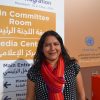
Q&A: How Will the Global Compact for Migration Aid the Work of Civil Society
Claudia Interiano from Fundación para la Justicia y el Estado Democratico de Derecho, a Latin American organisation that works to access justice for persons killed or missing during transit through Mexico to the United States, spoke to IPS about the foreseeable future of migration in a world after the end of the Global Compact for Safe, Orderly and Regular Migration (GCM) conference.
Final Thoughts as the Global Compact for Migration Starts its Own Long Journey Against the Odds
As the red carpets are rolled up in Marrakesh after two days of intense declarations and commitments by more than 160 countries, what are the smaller players in this global phenomenon taking back with them?
« Previous Page — Next Page » *#*


The Week with IPS

NEXT STOP - SDGs
Tracking global progress towards a sustainable world
Tracking global progress towards a sustainable world

