Languages
Sunday, August 30, 2026



News and Views from the Global South
Latin America & the Caribbean

Millions of Venezuelans in Need of Protection
The international community must extend protections for Venezuelans in light of a growing humanitarian crisis with no end in sight. Human Rights Watch has urged governments in the Americas to provide temporary protection to the millions of Venezuelans fleeing a severe humanitarian crisis.
Environmental Funding For Guyana Must Cater for Mangroves Too
For several decades, Guyana has been using mangroves to protect its coasts against natural hazards, and the country believes its mangrove forests should be included in programmes like the REDD+ of United Nations, in order to access financing to continue their restoration and maintenance, as they complement miles of seawalls that help to prevent flooding.
Protecting Women’s Space in Politics
Women human rights defenders around the globe are facing heightened threats of violence and repression. Sometimes they are targeted for being activists, and sometimes just for being women. World leaders should do much more to secure space for women’s safe participation in public life.
Decent Work Still a Distant Dream for Many Latin American Women
Women in Latin America earn one-fifth less than men for every hour worked, on average - one of the statistics that reflect the continuing inequality in the world of work that makes it unlikely for the region to meet the goal of equal pay by 2030.
Latin American Women Programme Their World against the Digital Divide
Designed mostly by men, many digital applications are not suitable for women, but some initiatives are beginning to include them as programmers and beneficiaries in Latin America, where the gender gap is also technological.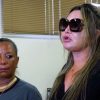
Violence Fuels Mobilisation by Women against Brazil’s Anti-Gender Equality Government
Crime, a key issue in far-right President Jair Bolsonaro's election in Brazil, has a dimension that is gaining in visibility and could turn against his government: gender violence.
Saving for a ‘Rainy Day’ Takes on New Meaning in Caribbean
In the tiny eastern Caribbean nation of St. Vincent and the Grenadines, proverbs relating to the weather are very common. Everyone knows that “Who has cocoa outside must look out for rain”, has nothing to do with the drying of the bean from which chocolate is made or the sudden downpours common in this tropical nation.
Q&A: Caught Up in the Opportunities of Climate Change and Less So With Adaptation
Caribbean countries have been signalling their willingness to dedicate time and resources to implement and sustain effective multi-hazard early warning systems.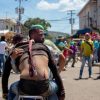
Repression Stands in the Way of Political Solution to Crisis in Venezuela
The violent repression that prevented food and medical aid from crossing into Venezuela, which left at least four people dead and 58 with gunshot wounds, has distanced solutions to what is today Latin America's biggest political crisis, although 10 countries in the hemisphere are stepping up the pressure while at the same time ruling out the use of force.
Accelerating the Caribbean’s Climate Resilience
The Caribbean Climate Smart Accelerator launched last year June with the backing of Virgin’s Richard Branson has given itself five years to help the region become climate resilient.
Does Climate Change Offer New Opportunities for Agriculture in Argentina?
Climate change poses a global threat to food production, but for agriculture in Argentina it could also present new opportunities. In some areas of the country, farming conditions will improve, according to an analysis by experts of the latest climate projections.
Taking the Lead in Fight Against Climate Change
As the grandchild of Jamaican citizens who moved to Great Britain, Monique Taffe says she inherited a tradition of recycling and learned not to be part of the “throwaway culture”, as some environmentalists have labelled consumerist societies.
Local School Is a Model for Energy and Water in Rapa Nui
A school in the capital of Easter Island (Rapa Nui, in the local indigenous tongue) gives an example of clean management with the use of solar energy, rainwater recovery and an organic vegetable garden, as well as rooms and spaces built with waste materials.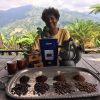
Wake Up and Smell the Organic Coffee
In 1992, the idea of replanting her father’s ruined coffee farm seemed foolhardy at the time. But in retrospect it was the best business decision that Dorienne Rowan-Campbell, an international development consultant and broadcast journalist, could have made.
Attacks on Human Rights Defenders: A Daily Occurrence in Latin America
"We're in a very difficult situation. There is militarisation at a regional level, and gender-based violence. We are at risk, we cannot silence that," Aura Lolita Chávez, an indigenous woman from Guatemala, complained at a meeting of human rights defenders from Latin America held in the Mexican capital.
Mining Grabs Up Land, Deals Blow to Agriculture in Central America
Like an octopus, metals mining has been spreading its tentacles throughout Central America and dealing a blow to the region's agriculture and natural ecosystems, according to affected villagers, activists and a new report on the problem.
What, After Buenos Aires Conference on South-South Cooperation?
Initially, in its BAPA+40 follow-up, the Group of 77 should address – in its own circle and in a comprehensive manner – the challenges and opportunities facing South-South cooperation.
Q&A: Jamaica Pushes Climate Smart Policies to Secure the Future of its Food Supply
The island state of Jamaica is vulnerable to climate change which has in turn threatened both its economy and food production. But the Caribbean nation is taking the threat seriously and it has constructed a robust policy framework to support national climate action, particularly when it comes to promoting climate-smart agriculture (CSA).
International Aid Feeds Hope and Fuels Confrontation in Venezuela
The international food and medical aid awaiting entry into Venezuela from neighboring Colombia, Brazil and Curacao is at the crux of the struggle for power between President Nicolás Maduro and opposition leader Juan Guaidó, recognised as "legitimate president" by 50 governments.
Q&A: Suriname’s President Champions Preserving the World’s Forests
At the Bonn Climate Conference in 2017, Suriname announced its aspirations to maintain its forest coverage at 93 percent of the land area. For Suriname and other High Forest Cover and Low Deforestation (HFLD) nations, maintaining forest coverage is their contribution to saving the planet from the effects of climate change, something they did not cause.
‘Today, We Declare Our Love to Our Forests and Ecosystems’
High Forest Cover and Low Deforestation (HFLD) nations ended a major conference in Suriname on Thursday, with the Krutu of Paramaribo Joint Declaration on HFLD Climate Finance Mobilisation.« Previous Page — Next Page » *#*

The Week with IPS

NEXT STOP - SDGs
Tracking global progress towards a sustainable world
Tracking global progress towards a sustainable world

