Languages
Saturday, November 28, 2026



News and Views from the Global South
Latin America & the Caribbean

Cash-Strapped Latin American Countries Turn to China for Credit
Angolans are generally grateful for China’s participation in the reconstruction of their central African country, in spite of the fact that some of the roads and buildings built by Chinese firms are of poor quality, and mainly Chinese labourers have been hired rather than local workers.
Grenadian Fishermen on the Front Lines of a Rising Sea
 Grenada and its tourism-dependent Caribbean neighbours are thought to be among the globe's most vulnerable countries to the myriad impacts of climate change, especially coastal flooding due to natural disasters and storm surges.
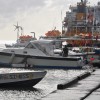
Grenada Braces for Impacts of Climate Change
Henry Prince has lived in this fishing village for more than six decades. Prince, 67, who depends on the sea for his livelihood, said he has been catching fewer and fewer fish, and the decrease is taking a financial toll on him and other fisher folk throughout the island nation of Grenada.
Planned Mega-Port in Brazil Threatens Rich Ecological Region
Activists and local residents have brought legal action aimed at blocking the construction of a nearly 50 sq km port terminal in the Northeast Brazilian state of Bahia because of the huge environmental and social impacts it will have.
Talk of Death Squads to Combat New Wave of Gang Violence in El Salvador
The resurgence of violent crime in El Salvador is giving rise to a hostile social environment in El Salvador reminiscent of the country’s 12-year civil war, which could compromise the country’s still unsteady democracy.
Tailings Ponds Pose a Threat to Chilean Communities
Chile lives under the constant threat of spillage from tailings ponds, which became even more marked in late March after heavy rains fell in the desert region of Atacama leaving over two dozen people dead and missing and thousands without a home.
To Defend the Environment, Support Social Movements Like Berta Cáceres and COPINH
The 2015 Goldman Environmental Prize for Central and South America has been awarded to Berta Cáceres, an indigenous Honduran woman who co-founded the Council of Popular and Indigenous Organizations of Honduras, known as COPINH.
Latin America Slow to Pledge Emissions Cuts
Latin America is making heavy weather of setting targets for greenhouse gas emissions reduction, which all countries must present ahead of the United Nations Framework Convention on Climate Change (UNFCCC) conference later this year.
Women Farmers Rewrite Their History in Chile’s Patagonia Region
More than 100 women small farmers from Chile’s southern Patagonia region have joined together in a new association aimed at achieving economic autonomy and empowerment, in an area where machismo and gender inequality are the norm.
Rural Women in Latin America Define Their Own Kind of Feminism
Rural organisations in Latin America are working on defining their own concept of feminism, one that takes into account alternative economic models as well as their own concerns and viewpoints, which are not always in line with those of women in urban areas.

Antigua Draws a Line in the Vanishing Sand
Jabberwock beach, located on the northeastern coast of Antigua, features a mile-long white sand beach and is a favourite with locals and visitors alike.
Opinion: Two Winners and One Loser at the Summit of the Americas
U.S. President Barack Obama has earned a place in history for taking the first steps towards rectifying a policy that has lasted over half a century without ever achieving its primary goal of ending the Castro regime in Cuba.
Latin America Heralds New Era with United States
Latin America presented its own recipes for development in the new era of relations with the United States in the Seventh Summit of the Americas, where Cuba took part for the first time and the U.S. said it would close the chapter of “medd[ling] with impunity” in its neighbours to the south.
Economic Slowdown Threatens Progress Towards Equality in Latin America
Predictions of a sharp slowdown in Latin America’s economic growth this year make it even more necessary for the region’s leaders to make commitments to boost prosperity with equality during the Seventh Summit of the Americas, currently taking place in the Panamanian capital.
Plunging Oil Prices Won’t Kill Vaca Muerta
Despite the precipitous fall in global oil prices, Argentina has continued to follow its strategy of producing unconventional shale oil, although in the short term there could be problems attracting the foreign investment needed to exploit the Vaca Muerta shale deposit.
In Belize, Climate Change Drives Coastal Management
A five-year project launched here in Belize City in March seeks to cement a shift in view of climate change and its impact on Belize’s national development.
From Punta del Este to Panama, the End of Cuba’s Isolation
U.S. President Barack Obama was only four days old when Comandante Ernesto “Che” Guevara publicly castigated the United States’ policy of hostility toward Cuba at an inter-American summit, reiterated then Prime Minister Fidel Castro’s willingness to resolve differences through dialogue on an equal footing, and held secret conversations with a Washington envoy.
Taking Child Workers Out of El Salvador’s Sugar Cane Fields
The participation of children and teenagers in the sugar cane harvest, a dangerous agricultural activity, will soon be a thing of the past in El Salvador, where the practice drew international attention 10 years ago.
Deforestation in the Amazon Aggravates Brazil’s Energy Crisis
In Brazil water and electricity go together, and two years of scant rainfall have left tens of millions of people on the verge of water and power rationing, boosting arguments for the need to fight deforestation in the Amazon rainforest.
Global Civil Society to the Rescue of the Amazon
A global civil society petition to save the Amazon is circulating on the internet and its promoters say that once one million signatures have been collected indigenous leaders will deliver it directly to the governments of Brazil, Colombia and Venezuela.
Lesbians Receiving Unequal Treatment from Cuban Health Services
In addition to other forms of discrimination, lesbian and bisexual women in Cuba face unequal treatment from public health services. Their specific sexual and reproductive health needs are ignored, and they are invisible in prevention and treatment campaigns for women.« Previous Page — Next Page » *#*

The Week with IPS

NEXT STOP - SDGs
Tracking global progress towards a sustainable world

