Languages
Saturday, November 21, 2026



News and Views from the Global South
Regional Categories

Why Incarceration further Disadvantages Australia’s Indigenous
Keenan Mundine grew up in the Aboriginal community social housing called The Block, infamous for poor living conditions, alcohol and drug use, and violence, in Sydney’s Redfern suburb. At the age of about seven, soon after losing his parents to drugs and suicide, he was separated from his siblings and placed in kinship care.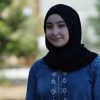
The Perils of Child Marriage & the Promise of Freedom
How much is a girl worth? If you are Maja, the answer is a chicken, a six-pack of beer and 100 euros. That is how much her family, living in a Roma settlement in Serbia, received in exchange for her hand “in marriage.” She was 11 years old at the time. “They benefited maybe a month from it, and I was left with a problem for my whole life,” Maja, now 18, said.
In Tanzania, a Radio Programme for Girls Yields Unexpected Results
Last fall, a 45-year-old father of four named Moses turned on the radio at his home in Arusha, Tanzania. Searching for his favorite station, he heard the introduction to a program about girls that he would later describe as ‘ear-catching.’ He wanted to know what would come next.
Argentina’s Abortion Legislation Sparks Hope in Caribbean Region
It was a joyful, tearful celebration in the early morning hours of Dec. 30, 2020 for countless Argentinians when they heard the news: the senate had legalized terminations up to 14 weeks of pregnancy. Prior to this, activists have said that more than 3,000 women died of botched, illegal abortions since 1983. And across the Latin American and Caribbean (LAC) region, this renewed sense of optimism was compounded after President Joe Biden rescinded what is known as the “global gag rule,” which essentially denied funding to international non-profit organizations that provided abortion counseling or referrals.
Where do UN Diplomats Hide During Politically-Sensitive Voting?
The United Nations, created in 1945 following the devastation caused by World War II, was mandated with one central mission: the maintenance of international peace and security.
COVID-19 Pandemic has Shown Humanity at its Best– & at its Worst
WHO and UNICEF have a long, deep and very special relationship. Neither of us could do what we do without the other. UNICEF’s success is WHO’s success, and we are proud to be your partner on so many issues: Ebola, polio, maternal health, nutrition, infection prevention and control, primary health care – the list is long.
Give us Access to Tigray to Find Missing Refugees — NRC Pleas
The Norwegian Refugee Council (NRC) has called for unimpeded access to all parts of Ethiopia’s Tigray Region, to locate an estimated 20,000 unaccounted for refugees and assess damage to its Hitsaats Camp which was looted and set alight in early January.
Food Systems Need to Change to Promote Healthy Choices and Combat Obesity
COVID-19 has had a devastating impact on people with obesity and noncommunicable diseases such as diabetes. The pandemic has underlined the importance of the food environment and healthy food intake. It has shown the urgent need for effective policies to make sure that everyone can get enough nutritious food – and particularly in sub-Saharan Africa.
Kim is Waiting for Joe — But for How Long?
How long can Kim Jong-un wait patiently? After a euphoric start, the Trump administration ultimately proved to be a bitter disappointment for the North Korean regime.
Labour Rights Have Worsened in India Post-Lockdown
As the Indian economy officially heads into a recession and news of layoffs and unemployment reaches us with increasing frequency, we at Gram Vaani turned to workers to hear their side of the story. Industrial sector workers, largely engaged in the automotive and garments factories in the Gurgaon-Manesar belt, spoke to us about the turn that their lives have taken due to the COVID-19 crisis.
Forgotten Conflicts 2021: When Will the Crisis in the Central African Republic End?
Last October, an ICRC medical team helped a woman deliver a baby boy in the bush on their way to a health center we support in Grévaï, a small town in the north-central region of CAR. On her way to the market, by foot, the woman went into labour and only by chance did not have to go through it alone, surviving along with her baby.
The West vs the Global South: You Have the Numbers. We Have the Money
When the 134-member Group of 77, the largest single coalition of developing countries, was trying to strike a hard bargain in its negotiations with Western nations years ago, one of its envoys famously declared: “You have the numbers. We have the money.”
Intellectual Property Cause of Death, Genocide
Refusal to temporarily suspend several World Trade Organization (WTO) intellectual property (IP) provisions to enable much faster and broader progress in addressing the COVID-19 pandemic should be grounds for International Criminal Court prosecution for genocide.
How My Dad Captured This Famous Photo of Martin Luther King Jr.
My dad, Griff Davis, was a boyhood friend of Martin Luther King, Jr. They ran in the same crowd and, after graduating from Morehouse College, stayed in touch their whole lives. Dad, who was both an international photojournalist and U.S. Foreign Service officer, captured a famous photo of a rising “M.L.,” as they called him in Atlanta, and Vice President Richard Nixon meeting for the first time in newly independent Ghana in 1957. That photo couldn’t have been made in America at the time.
Myanmar Faces Increasing Uncertainty as Opposition to the Military Coup Grows
Myanmar is in a deep political crisis. Over the past week -- reminiscent of the pro-democracy demonstrations of 1988 -- Myanmar’s citizens are openly and publicly challenging the country’s powerful military, whose coup earlier this month now threatens to stifle the country’s fledgling democracy.
Is Turkey a Proof that Religion and Democracy Cannot Coexist?
Over the years, Turkey has survived three Coup d'état in which its military forces took power, in 1960, 1971 and 1980. The coup in 1997, was carried out in a “post-modern way”, where generals sat down with the then prime minister, Necmettin Erbakan and forced him to resign. However the turning point in Turkey has been the failed coup attempt in July 2016, which has till date been one of the bloodiest coup attempts in its political history, leaving 241 people killed, and 2,194 others injured.
Post-Coup Myanmar, Aung San Suu Kyi and the Way Forward
The 1 February 2021 coup d’état by Myanmar’s military (Tatmadaw), has been widely condemned by all the world’s democratic leaders, human rights activists and genuine friends of the people of Myanmar around the globe. In an unusual manner for the world’s top diplomat, UN Secretary-General Antonio Guterres has gone so far as to urge the world community to make sure that Myanmar's military coup fails.
The Struggle to End Female Genital Mutilation: A Dark Secret No More
Survivors of female genital mutilation or cutting (FGM/C), are determined to share their stories to end this practice – even though they face ostracisation by their communities. Masooma Ranalvi, an FGM/C survivor and founder of ‘WeSpeakOut’, an organisation committed to eliminating FGM/C or khafd/khafz/khatna explains that FGM/C is practised by various communities in India but is prominently practised among the Dawoodi Bohras.
Q&A: Documenting COVID-19 Effect on Youth Sexual and Reproductive Health
With the COVID-19 pandemic adding complex layers of challenges to the issue of sexual and reproductive health for the youth, governments should prioritise documenting these effects for data collection purposes, Dr. Simon Binezero Mambo co-founder and team leader of the Youth Alliance for Reproductive Health in the Democratic Republic of the Congo, told IPS in an interview.
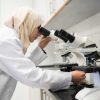
Helping Survivors of Violence Seek Justice through Forensic Science in the West Bank
Violence, especially against women and girls, is a worldwide systematic human rights violation that has only increased since the COVID-19 pandemic. Globally, 243 million women and girls aged 15 to 49 have suffered sexual and/or physical violence by an intimate partner in the last year.
El Aromo Solar Project Sets Precedent for Renewable Energy in Ecuador
In December 2020, the “El Aromo” solar energy project was approved in coastal Manabí province, Ecuador. Operated by the Spanish company Solarpack, the project is expected to transform national solar output. El Aromo will occupy 2.9km2 of land that was previously cleared to build a multi-billion dollar oil refinery, plans that have since been abandoned. While El Aromo holds symbolic significance, it remains uncertain whether the project will mark a significant step toward more environmentally sustainable energy development in Ecuador.« Previous Page — Next Page »


The Week with IPS

NEXT STOP - SDGs
Tracking global progress towards a sustainable world
Tracking global progress towards a sustainable world
