Languages
Friday, November 27, 2026



News and Views from the Global South
Regional Categories

Pakistan, Facing Military Aid Cuts, One Step Ahead of US
When the United States abruptly cuts off military supplies to its allies for political or other reasons, the reaction has been predictable: it drive these countries into the arms of the Chinese, the Russians and Western European weapons suppliers.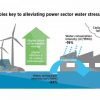
Renewable energy and cooling technologies key to reduce water use in India’s Power Sector
A new policy brief co-authored by the International Renewable Energy Agency (IRENA) and the World Resources Institute (WRI) finds that increasing the share of renewables, in particular solar photovoltaic (PV) and wind, in India’s power mix, and implementing changes in cooling technologies mandated for thermal power plants would not only lower carbon emissions intensity, but also substantially reduce water withdrawal and consumption intensity of power generation.
Fate of the Rohingyas – Part Two
With discussions underway between Bangladesh and Myanmar about the repatriation of more than a half a million Rohingya refugees, many critical questions remain, including how many people would be allowed back, who would monitor their safety, and whether the refugees even want to return to violence-scorched Rakhine state.
Sustainable Energy Critical for Achieving Overall Goals of Paris Climate Agreement
The Paris Agreement ushered in a new global approach to climate change. At the core of this agreement are the Nationally Determined Contributions. We are now implementing these pledges.
Thousands Still Dying at Sea En Route to Europe
Amid concerns that 160 people may have drowned while attempting to cross the Mediterranean this week alone, the UN refugee agency have urged countries to offer more resettlement places.
Fate of the Rohingyas – Part One
The repatriation of Rohingya refugees driven from their villages through violence and terror appears uncertain, with critics saying the agreement legalising the process of their return is both controversial and impractical.Lawmakers discuss policies to accelerate global energy transformation
Lawmakers from around the world gathered in Abu Dhabi to discuss the policies needed to accelerate transformation of the global energy system, in a Legislators Forum organised by the International Renewable Energy Agency (IRENA) and a Parliamentary Forum jointly organised by the United Arab Emirates’ Federal National Council (FNC).
UN Chief Calls for Collective Global Response to Migration
I am very pleased to present this report, “Making Migration Work For All”, which serves as my principal input to the zero draft of the “Global Compact for Safe, Orderly and Regular Migration.”UAE ‘most visionary’ in future energy sector: Atlantic Council President
The reality is that the energy mix for the foreseeable future is going to consist of both fossil fuels and renewable energy forces, according to Frederick Kempe, President of the Atlantic Council. "Work in the energy market with a mix of both these energy forces is key to why we brought the Global Energy Forum to the UAE."
Tocantins, a River of Many Dams in Central Brazil
Tocantins, the newest of Brazil’s 26 states, which was created in 1988 to seek its own paths to development in central Brazil, fell into the common plight of expanding borders, based on soy and hydroelectricity.
Abu Dhabi to host eighth IRENA Assembly
More than 1,100 representatives of governments from 150 countries will meet in Abu Dhabi to attend the Eighth Assembly of the International Renewable Energy Agency, IRENA, taking place on 13th -14th January, 2018.
The Reality of North Korea as a Nuclear Power
With a track record of six underground nuclear tests between 2006 and 2017, North Korea is desperately yearning to be recognized as the world’s ninth nuclear power – trailing behind the US, UK, France, China, Russia, India, Pakistan and Israel.
Argentina Pursues the Lithium Dream
The government of Mauricio Macri dreams of Argentina becoming the world leader in lithium production. But it does not seem so clear that this aspiration, underpinned by the interest of multinational corporations, would also drive the development of local communities.
Philippines Most Dangerous Country in Southeast Asia for Journalists
It’s not just suspected drug users and dealers at risk of targeted killing in the Philippines. The International Federation of Journalists (IFJ) reported last week that the Philippines is the most dangerous country in Southeast Asia for journalists. Globally, the island nation came sixth on the list of most murderous countries.UN Urges Comprehensive Approach to Sexuality Education
Close to 10 years after its first edition, a fully updated International Technical Guidance on Sexuality Education published today by UNESCO advocates quality comprehensive sexuality education to promote health and well-being, respect for human rights and gender equality, and empowers children and young people to lead healthy, safe and productive lives.
Can Uganda Reduce Financial Exclusion to 5% in 5 Years?
In October 2017, Uganda launched a new five-year National Financial Inclusion Strategy. The strategy seeks to reduce financial exclusion from 15 to 5 percent by 2022 by ensuring that all Ugandans have access to and use a broad range of quality and affordable financial services.
The Data Revolution Should Not Leave Women and Girls Behind
If there is one political principle that has been constant throughout the history of human civilization it is the fact that land is power. This is something that is particularly true, and often painfully so, for women who farm in Africa.
Clean Energy Sources Manage to Cut Electricity Bill in Chile
A 75 percent drop in electricity rates, thanks to a quadrupled clean generation capacity, is one of the legacies to be left in Chile by the administration of Michelle Bachelet, who steps down on Mar. 11.
Policy Support Gap for “Climate-Smart” Agriculture
Conditioned that ploughing is the sure way to produce crops, Zimbabwean farmer Handrixious Zvomarima surprised himself by trying a different method. He planted cowpea seeds directly without tilling the land. It worked.
How Low-Income Bangladeshis Use Loans
Bangladeshis have a long tradition of borrowing from family, neighbors and other informal sources. Microfinance institutions (MFIs) have proliferated over the past three decades and offer a more formal loan service that has been taken up with enthusiasm, and today some 25 million Bangladeshis borrow from MFIs.
Why the #MeToo Movement Disrupts the Creeping Commodification of Feminism
As the 62nd Session of the Commission on the Status of Women (CSW) at the United Nations in New York draws near, women from every corner of the world will convene to deliberate on the theme of CSW 2018: Challenges and Opportunities in achieving gender equality and the empowerment of rural women and girls. This year, the theme of empowerment has added significance. The #MeToo movement has shocked our collective conscience and made it impossible to ignore that empowerment goes far beyond economic agency.« Previous Page — Next Page »


The Week with IPS

NEXT STOP - SDGs
Tracking global progress towards a sustainable world
