Languages
Sunday, November 29, 2026



News and Views from the Global South
Regional Categories

Tree Regeneration Restoring Hope
Maurice Kaduka Lukaro, 54, is a farmer in Oljorai, an area with short grasses and small-scattered bushes in Nakuru county in Kenya’s Great Rift Valley. Crop production has declined tremendously in this region. Like the rest of the arid and semi-arid lands (ASAL) in the Sub Saharan region, Maurice Kaduka Lukaro, 54, is a farmer in Oljorai, an area with short grasses and small-scattered bushes in Nakuru county in Kenya’s Great Rift Valley. Crop production has declined tremendously in this region. Like like the rest of the arid and semi-arid lands (ASAL) in the Sub Saharan region, Kenya hosts a population worst hit by the reality of climate change. Kenya hosts a population worst hit by the reality of climate change.
Peace in Colombia, Shielded by International Support
“It was not possible” to reach a final agreement with the Revolutionary Armed Forces of Colombia (FARC), the Colombian government’s lead negotiator, Humberto de la Calle, announced in Havana on Wednesday Mar. 23 – the deadline set for a peace deal.
OPINION: Terrorism: the Answer Is More Europe, Not Less
The enemy isn’t Brussels: it’s Europe. The so-called Islamic State clearly signaled this by attacking, even more than the airport, a metro station. Maelbeek is not just another subway stop in the Belgian capital. Although the symbolism could have been more dramatic if the terrorists had chosen the neighouring station named after Robert Schuman…but perhaps the tighter security there dissuaded them.
The Last of the Tigers
The mighty beast's hypnotic eyes may strike fear into the hearts of its prey, while its majestic thick orange- black striped fur serves as a reminder of its supremacy in the swampland, as it roams around like a king, ruling over the tropical kingdom of the Sundarbans. The spirit of a Bengal Tiger lives in the heart of every Bangladeshi. Hence, the nickname 'Tigers' for our beloved cricket team. Yet, it is a shame that our tigers, the ones in the forest, are in peril, struggling to survive in the kingdom they rule over. Our negligence in protecting our national asset has resulted in those with selfish motives to take advantage of the scenario, as their activities threaten to push these mighty creatures further towards extinction.
Western Powers Unlikely to Impose Arms Embargo on Saudi Arabia
As hundreds of civilians continue to be killed in the ongoing conflict in Yemen, one of the leading human rights organization is calling for an arms embargo – specifically against Saudi Arabia which is leading a coalition of eight countries battling Houthi rebels in the war-ravaged neighbouring country.
A New Roadmap to Meet Hunger Goals
As we move the Sustainable Development Goals from ideas into actions, tracking progress is going to be paramount. Goal two, to achieve food security, can be measured in many ways. This week, scientists are revealing new research that will be invaluable for reaching target 2.5: maintaining the genetic diversity of crop plants and their wild relatives.
Quake Fear Stalks Kathmandu
Early evening, there is a play of light and shadow over Kathmandu’s famous Durbar Square. The rising monuments, damaged by the April 2015 earthquake, appear as dark silhouettes while large flash lights streak through in between them.
Soy Fuels Industrialisation in Paraguay
A soybean processing plant, Angostura Agroindustrial Complex SA (CAIASA), that does not use fossil fuels and generates practically no waste products from soy reflects Paraguay’s growing industrialization.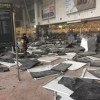
Brussels Under Attack
The sun was shining brightly on the second day of springtime in Belgium. I kissed my children goodbye when they took off for school and I fed the hungry cats. I love this in-between-time after getting everybody ready for school and before work. The house is quiet and I still have some time left to take another coffee and read the newspaper.How Smart Solutions to Tax Reform Can Help Develop Infrastructure
Bangladesh's public sector faces serious challenges. Poor infrastructure is one of the main factors that hold back economic growth. Government-funded health clinics struggle to provide the population with quality, specialised services. And beyond primary school, quality public education opportunities are extremely limited. These are just a handful of the challenges, and they are partly due to a stark fact: the country has one of the lowest tax-to-GDP ratios in the world.DIHAD 2016 Closes With Calls For Better Future Of Those Faced With Wars And Catastrophes
The 13th Dubai International Humanitarian Aid and Development Conference and Exhibition (DIHAD) ended today with keynote speakers drawn from International organizations, technical experts, diplomats and the private sector calling for building a better future and more development for those who are suffering from crisis, wars and catastrophes.
The PELIS Factor
Peter Wainaina’s focus is on the fresh Irish potatoes he has just harvested. He assembles them into a 90-kilogramme bag while sorting out the unmarketable ones like sliced and tiny tubes. He lives on a small plot of land in Njabini, 600 metres away from a farm in Aberdares forest, west central Kenya, where he has been growing this fast-maturing crop for the past three months.
Corruption Swallows a Huge Dose of Water
While the United Nations marked this year’s World Water Day on March 22 focusing on the connection between water and jobs, a new report has rung loud alarm bells about the heavy impact of corruption on the massive investments being made in the water sector.
Galvanizing Efforts Towards the 2030 Agenda and Fostering Partnerships, UN Women Unveils New Media Compact
More than 35 leading media outlets commit to increase women’s representation in the newsroom and in news content Media Contacts: Oisika Chakrabarti, Ph: +1 646 781-4522; Email: oisika.chakrabarti[at]unwomen.org Sharon Grobeisen, Ph: +1 646 781-4753; Email: sharon.grobeisen[at]unwomen.orgThe Fuel of Economic Growth
Water has become Pakistan`s number one development and governance issue. While water availability in our river systems has remained fairly stable, per capita water availability has diminished from about 1,500 to nearly 1,000 cubic metres, owing to a fast-growing population.

Three International Days in a Week, But Is Anybody Listening?
For three consecutive days this week, we gave thought to our future. On International Forests Day, Monday, 21 March, we were reminded that forests are vital for our future water needs. On Tuesday, 22 March, World Water Day, we learned that half the world’s workers are involved in the water sector and some 2 billion people, especially women and girls, still need access to improved sanitation. World Meteorological Day, on Wednesday, 23 March, concluded with the warning of a hotter, drier and wetter future. A reality that is already evident and frightening, as productive land turns to sand or dust.
Build Healthy, Sustainable Food Systems to Fight Malnutrition
Creating healthy and sustainable food systems is key to overcoming hunger and all forms of malnutrition (undernourishment, micronutrient deficiencies, obesity) around the world. Food production has tripled since 1945 while average food availability per person has risen by 40 per cent. Current food systems are not delivering well on ensuring healthy diets for all. We have to fix the problem. The most efficient and sustainable approach will be to reshape and strengthen food systems that support healthy diets for all.Will Children of Colombia Know Peace at Last?
“No child in Colombia today knows what it is like to live in a country at peace,” said UN Children’s Fund’s (UNICEF) Representative in Colombia Roberto De Bernardi during the launch of a new report.
Water Crisis in Zimbabwe
A narrow dirty trail snakes through what used to be a small dam in Mpudzi Resettlement Scheme south of the eastern border city of Mutare. And what remains of this once perennial dam is just a small puddle of mudded water; the dirty water is completely covered with thick green algae.
Are Indigenous Women Key to Sustainable Development?
"We, indigenous women want to be considered as part of the solution for sustainable development, because we have capabilities and knowledge, " said Tarcila Rivera, a Quechua journalist and activist for the rights of indigenous people in Peru, at a press conference on the Empowerment of Indigenous Women.« Previous Page — Next Page »


The Week with IPS

NEXT STOP - SDGs
Tracking global progress towards a sustainable world
