
Sunday, October 25, 2026



News and Views from the Global South
G20
CULTURE-AUSTRALIA: Film on ‘Slavery’ Ignites Controversy
‘Stolen’, an Australian documentary film that premiered at the Sydney Film Festival last month, has ignited a controversy with its claims on slavery in the refugee camps of Western Sahara. The main protagonist has denounced the film for her portrayal as a 'slave’, but the filmmakers say they stand by their version of the story "one hundred per cent".MEXICO: Int’l AIDS Funds Necessary but Not Sufficient
For the first time, Mexico is eligible for a grant from the Global Fund to Fight AIDS, Tuberculosis and Malaria. But even if its application is successful, resources for HIV/AIDS prevention among high-risk sectors of the population will fall short.RIGHTS-INDIA: India's Historic Gay Ruling
A day after the Delhi High Court's landmark judgment to overturn a colonial law that criminalised homosexuality, Indians expressed mixed reactions to the verdict.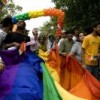
RIGHTS: Queer Parade Defies Anachronistic Indian Law
"Not all females are women," reads a poster emblazoned in red. "I am the pink sheep of my family!" is the message on another, while a third, very cheekily proclaims, "I don’t give a f***, I am a greedy bisexual"!
Q&A: “Participatory Socialist Democracy Is Essential”
Renowned for her work for the rights of gay, lesbian, bisexual, transvestite and transgender people, Mariela Castro advocates a fairer, more inclusive, and above all more participatory socialism in Cuba.POLITICS-US: Same-Sex Marriage May Return to the Ballot Box
In the wake of the California Supreme Court’s decision Tuesday to uphold Proposition 8, which eliminated the right of same-sex couples to marry, a surprising scapegoat and potential savior for opponents of the proposition has emerged in the California ballot initiative process.
COSTA RICA: A Day of Multi-Coloured Splendor
Government institutions and civil society organisations are holding talks, workshops and other activities aimed at raising awareness and overcoming intolerance, in preparation for the National Day Against Homophobia on Sunday in Costa Rica.
ZIMBABWE: Recognise Rights of Gays and Lesbians
Zimbabwe is trying to rebuild itself as a nation where rights to freedom of expression and association are protected. Amongst the chorus of voices raised in support of a new constitutional order are the country's gays and lesbians.RIGHTS-BRAZIL: Gay-Bashing Murders Up 55 Percent
In 2008, 190 homosexuals were killed in Brazil, one every two days, representing a 55 percent increase on the previous year – a veritable "homocaust" according to gay rights activists.RIGHTS: Cuba Launches Anti-Homophobia Campaign
You could hear a pin drop and uncomfortable glances went round the room when the moderator of the debate invited contributions from the floor. A law student finally broke the silence, appealing for education to be a two-way street, so that homosexuals can "help us to accept them."
COLOMBIA: Equal Rights for Same-Sex Partners
Members of the gay civil rights advocacy group Colombia Diversa just celebrated their fifth anniversary with a big event, which the occasion clearly merited due to a recent landmark decision by the Constitutional Court recognising equal rights for heterosexual and same-sex partners in common-law unions.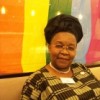
Q&A: Fighting to Free Those Found ‘‘Guilty’’ of Homosexuality
In 2003, Alice Nkom made a decision that has put her on a collision course with the police, prosecutors and judges of Cameroon. Nkom, who has been a barrister at the Cameroonian Bar for 40 years, was chatting with some young men whom she considers her own children.RIGHTS: “Sodomy Laws” Rooted in British Colonialism
Although 66 countries signed a statement at the United Nations on Dec. 19 affirming that human rights protections extend to sexual orientation and gender identity, activists note that dozens of nations still criminalise homosexuality and seven impose the death penalty.RIGHTS: Europe Goes Slow on Gay Laws
European Union governments are in no hurry to widen the scope of the bloc's anti-discrimination rules so that gays and lesbians can enjoy greater rights.RIGHTS-COLOMBIA: Where Homophobia Totes a Gun
Homosexuals can remain in the closet and not be noticed, but that is not an acceptable alternative for transgender people who suffer violence to a greater extent in Colombia, where armed combatants in the conflicts too often turn prejudice into murder.EUROPE: Turkey to be Pushed to Speed Up Reforms
Turkey will be told later this year that it should accelerate the pace of its reforms on freedom of expression in an official assessment of its efforts to join the European Union.HEALTH: Indigenous People Speak Out Clearly on AIDS
"In my community, living with HIV is synonymous with death," Fernando Solís, a 34-year-old member of the Cuna ethnic group in Panama, told IPS. Solís, who was diagnosed four years ago, is now working in prevention efforts among other young indigenous people, which he described as "the key to eradicating the epidemic in our communities."
HEALTH: Global Village or Sexual Minority Ghetto?
Dealing with transgenders (TGs) can be confusing. Even the organisers of the 17th International AIDS Conference underway in this city failed to accommodate the third gender by providing them separate toilets.
RIGHTS-NEPAL: Court Ruling Emboldens Third Gender
Suman Tamang, 26, remembers feeling guilty for wishing he were a man. Tamang, born a woman, wanted to do the heavy work only men do, was friends with more men than women and was attracted to girls. "At that time, I didn’t really understand I was transgender, I was awkward and I knew I was different."RIGHTS: ‘Gay Acceptance Related to Income’
The past few months have seen victories and setbacks in the international struggle for gay rights. In June, Norway became the latest country to legislate in favour of allowing same-sex marriages. In May, however, Gambian President Yahya Jammeh issued homosexuals with a 24-ultimatum to leave the West African country, threatening to decapitate those who remained.
BULGARIA: Hate Wave Threatens New Gay Pride
The attack on Bulgarian gays at their first gay pride march is symptomatic of widespread opposition to the movement.« Previous Page — Next Page »





The world is in financial disarray, facing the danger of widespread protectionism, food crisis and unemployment. The G20 - comprising some of the world's major economies, the International Monetary Fund and the World Bank - aims to seal firm agreements to put the global economy on the right track. The newly formed 27-member Global Governance Group (3G) is challenging the politically and economically powerful G20 not to marginalise the interests of small and medium-sized countries or undermine the United Nations in key decision-making. The G20, in its deliberations, should take into account the concerns and aspirations of non-G20 countries and different national and regional circumstances, according to the G3. Furthermore, decisions taken by the G20 should seek to protect the development gains made by these countries, particularly the most vulnerable. Will the G20 succeed? Are the voices of the most vulnerable, developing and poor countries being heard? What does the civil society say about it? The world is watching.

The Week with IPS

Tracking global progress towards a sustainable world
