Languages
Saturday, September 19, 2026



News and Views from the Global South
Sustainability

Rural Laboratory Innovates in Northeastern Brazil
In the municipality of Congo, in the state of Paraiba, in the driest territory of Brazil's semi-arid region, an original initiative seeks to prove it is possible to overcome several challenges concerning family farming. It is the EcoProductive Pilot Project.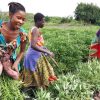
How an App Transformed Farming for Rural Tanzanian Women
In the sun-scorched soils of Moshi, where every drop of rain counts, two female farmers have defied the odds through technology. Mwajuma Rashid Njau and Mumii Rajab, once locked in a daily struggle to survive, have found a mobile phone their best ally.
Focus on Africa: IPBES Plenary Session Makes Inaugural Visit to Biodiverse Continent
The Intergovernmental Science-Policy Platform on Biodiversity and Ecosystem Services’ (IPBES) first Plenary session in Africa is a “crucial acknowledgement of Africa’s important contribution to biodiversity conservation, which is a global public good, a heritage that Africa has the privilege to share with the peoples of the world,” says Dr. Luthando Dziba, from South Africa, co-chair of the IPBES Multidisciplinary Expert Panel.
Maya Train is Yet to Deliver Promised Benefits
Indigenous craftsperson Alicia Pech doesn’t know about the Maya Train (TM), the Mexican government's most emblematic megaproject that runs through five states in the country’s south and southeast
Solar Project Causes Social and Environmental Conflict in Rural El Salvador
With machete in hand, Salvadoran farmer Damián Córdoba weeds the undergrowth covering the trunk of what was once a leafy tree to show the deforestation taking place on the Santa Adelaida farm, where a company seeks to install a solar park in western El Salvador.
Bangladesh Bans Polythene Bags Again, Sparking Hopes for the Eco-Friendly ‘Sonali Bag’
After Bangladesh’s interim government banned polyethene bags, a new sense of hope has emerged for the Sonali bag—a jute-based, eco-friendly alternative developed in 2017 by Bangladeshi scientist Dr. Mubarak Ahmed Khan. Sonali bag, or the golden bag, is named after the golden fiber of jute from which it is made.
Mayan Farmers Improve Their Livelihoods and Polyculture of Milpa in Mexico
María Bacab, a Native Maya, considers herself the “guardian of seeds” as she cares for the milpa - an ancestral Mesoamerican polyculture that mixes maize, beans, squash and other vegetables - and promotes its practice and use in Mexico.
Brazil Vows to Make COP30 a Catalyst for Climate Action and Biodiversity Celebration
As Brazil gears up to host COP30 in Belém next year, Moisés Savian, the country's Secretary of Land Governance, Territorial and Socio Environmental Development, outlined the event's significance in showcasing Brazil's environmental policies and fostering global collaboration.

Solar and Wind Power Wealth Does Not Reach Consumers in Chile
Chile, a country rich in solar and wind energy and with huge photovoltaic power stations and wind turbines in its elongated territory, managed to change its grid by incorporating renewable energies, which account for an installed capacity equivalent to 43.8 % of its electricity production.
Latin America: Pass on Renewables, Fail on Efficiency
The Latin American and Caribbean region is a student with good grades in renewable energy, but not in energy efficiency, and has a long way to go in contributing to global climate action and overcoming the vulnerability of its population and economies.
Lahore’s Dangerous Smog: Where Disease and Death Stalk
"It's been horrible; I've been sick on and off for the last 10 days," said 29-year-old asthmatic Natasha Sohail, who teaches A-Level students at three private schools in Lahore. Last week, her condition worsened with a vertigo attack and fever. “It’s criminal what is happening here,” said an incensed Sohail, referring to the “band-aid measures” taken by the Punjab government.
Leather Cooperative Stops Unemployment in Northeast Brazil
The small community of Ribeira stands out in the Northeast, the poorest region of Brazil. There is no unemployment here. One in five inhabitants make a living directly or indirectly from the Arteza Cooperative of Tanners and Leather Artisans.
As Forests Felled Wood Shortage Hits Villagers in Zimbabwe
Linet Makwera (28) has a baby strapped on her back as she totters barefoot, picking tiny pieces of wood on both sides of a dusty and narrow road, peering fearfully at people passing by along the road in Chimanimani’s Mutambara area in Gonzoma village located in Zimbabwe’s Manicaland Province, east of the country.
Brazil Promotes a Freer Global Biofuels Market
Holding this year's presidency of the Group of 20 (G20) large industrial and emerging economies is allowing Brazil to push forward the dream of creating a global biofuels market without the current trade barriers.
Building Water Security for the Next Generation in the Pacific Territories
The Pacific Islands region is both the frontline of the wrath that climate change is lashing on the environment and human life and the drive for innovation and solutions to stem the destruction and strengthen island environments for the future. The survival of life, even nations, in the Pacific depends on it.
Tanzania’s Maasai Women Adopt Climate-Smart Solutions To Tame Drought
In the scorching sun of Mikese village in Tanzania’s eastern Mvomero district, 31-year-old Maria Naeku tirelessly tends to her small vegetable patch. Each time she pulls a weed, the red soil stains her hands as she guides the trickle of water from a maze of pipes through an elevated bed to nurture her plants. In a drought-stricken area, Naeku's small garden is a lifeline for her family, giving them food and income.
Mexican chinampas survive surrounded by threats
Mexican Crescencio Hernández orders radishes, herbs and lettuce for shipment to an alternative market in west-central Mexico City.
A Cuban Town Improves Water Quality Through Desalination
Overnight, hundreds of people in the rural community of Las Mangas, located in Granma province in eastern Cuba, realised something they had already suspected: that the water they had been drinking for decades was not exactly crystal clear, but rather “salty”, as they say.
Climate Assemblies Seek Citizen Participation in Latin American Solutions
Danilo Barbosa had never taken part in political processes until his name was drawn in a lottery to join the climate assembly of the municipality of Bujaru, in the Amazon region of Brazil.
Clean Energy Boosts Autonomy for Brazilian Women Farmers – VIDEO
 A community bakery, family production of fruit pulp, and the recovery of water springs are some of the initiatives of the Energy of Women of the Earth, organised since 2017 in the state of Goiás, in central-western Brazil.
Empowering Africa’s Informal Market Traders To Deliver Safe Food
Local informal food markets feed millions of urbanites in bustling African cities, but the consequences of tainted food could be illness and death for unsuspecting consumers.« Previous Page — Next Page »


The Week with IPS

NEXT STOP - SDGs
Tracking global progress towards a sustainable world
Tracking global progress towards a sustainable world
