Languages
Thursday, September 17, 2026



News and Views from the Global South
Newsbriefs

Global Citizenship Starts with Education
For peace to be embedded in culture and society, it starts with childhood education which leads to the creation of global citizens, according to a panel of experts.U.N. Marks First Anniversary of Arms Trade Treaty
The United Nations Wednesday marked the first anniversary of the adoption of the Arms Trade Treaty (ATT). Nine months after the treaty was opened for signature, a group of 18 countries have jointly deposited their instruments of ratification.
U.N. Shines a Light on Autism Awareness
As buildings and landmarks lit up blue around the world to shine a light on the “World Autism Awareness Day,” the U.N. urged the global community to empower those who live with Autism Spectrum Disorders with equal opportunities to education, employment and integration.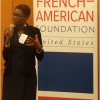
“The Marches For Freedom” – An American perspective of French multiculturalism
The issue of racism was the underlying theme of a new documentary screened at the French-American Foundation Monday.IPS appoints Ramesh Jaura as new Director General
The Board of IPS meeting on April 1 unanimously elected Ramesh Jaura as the new Director General of IPS (Inter Press Service) news agency.Lost Children Call for Help to Find Parents
The “dirty war” in Argentina, that occurred 38 years ago, has left the country mystified, with disappearances still a continuing crime, a victim of the war said Friday.Nuclear Experts to Discuss Current State of Play
Against the backdrop of a political confrontation between two major nuclear powers over Ukraine, the Lawyers Committee on Nuclear Policy (LCNP) will be hosting a Forum titled “Law’s Imperatiove: A World Free of Nuclear Weapons.”Targeting the Humanitarian Side of Drones
Failure to account and justify lethal drone activity by the United States represents a major violation of international law and international human rights law, a former U.N. rapporteur said Wednesday.Media Landscape Undergoes Technological Amendments
A new report launched Tuesday in Stockholm by the UN Educational, Scientific and Cultural Organisation (UNESCO) raises the issue of the opportunities that new technologies have opened up, and focuses on recent progress towards media freedom.Women Seek Mentors to Help Achieve Economic Goals
In an effort to leverage the power of partnerships and assist in the creation of an equitable world for women and girls in developing countries, non-profit organizations and UN agencies are turning to mentoring in business. UN Women’s Knowledge Gateway for Women’s Economic Empowerment and the Cherie Blair Foundation’s Mentoring Women in Business Programme have agreed on a 12-month initiative that will provide opportunities for women through a range of projects.
Sudan & South Sudan Aid Efforts Dramatically Underfunded, Says U.N.
Sudan and South Sudan represent two of the most serious and worsening humanitarian crises on the planet, yet U.N aid efforts in both countries are receiving dramatically less funding and attention than is necessary, according to a senior U.N official.WHO Reports Seven Million Deaths Annually due to Air Pollution
In new estimates released Monday, the World Health Organisation (WHO) reports that around seven million people died prematurely in 2012 as a result of air pollution exposure. The figures confirm it is one of the world’s largest single environmental health risks.
Japanese Global Health Fund Targets Diseases of Developing World
The Global Health Innovative Technology Fund (GHIT Fund) has allocated 12 million dollars to three recent projects targeting tuberculosis and some of the developing world’s most neglected diseases, which affect over one billion people.Planting Seeds for Women’s Roles in Forest Management
The role of women in the management of forests is crucial for the success of sustainable development, according to diplomats and experts meeting Friday to commemorate International Day of Forests.Professor Briscoe Stockholm Water Prize Laureate
Professor John Briscoe has been named the 2014 Stockholm Water Prize Laureate for his “unparalleled contributions to global and local water management, inspired by an unwavering commitment to improving the lives of people on the ground,” according to the Stockholm International Water Institute (SIWI) . In its citation, the Stockholm Water Prize Committee states that Professor Briscoe ”has combined world-class research with policy implementation and practice to improve the development and management of water resources as well as access to safe drinking water and sanitation.” Professor Briscoe currently lives and works in the United States, where he is a popular teacher at Harvard University. Upon receiving the news, he said he was “Very surprised and honoiured. I am delighted for the recognition this gives to thinking practitioners, of which I consider myself one," according to a SIWI press release. SIWI said today’s world is beset by daunting water challenges – human water security and biodiversity are at risk, global demand for water is soaring, and droughts and floods cause deadly disasters. These challenges cannot be met on one front alone. Professor Briscoe’s genius lies in his fusion of science, policy and practice, giving him unrivalled insights into how water should be managed to improve the lives of people worldwide. “At the end of the day, it is what happens on the ground that matters. All policies must be judged by whether they make a difference on the ground. I believe that the years I spent working at the micro level is what enables me to be an effective policy maker,” says Briscoe. In the mid 1970s Briscoe lived in a small village in the interior of Bangladesh, and learned first-hand how infrastructure for protection from floods and droughts could transform the lives of the poor. Later in the 1970s Briscoe worked as an engineer in the government of newly independent Mozambique, learning that you were a credible policy maker only if you could help resolve basic problems of building and running infrastructure. At the other end of Professor Briscoe’s spectrum of accomplishments , SIWI said, is the 2003 Water Strategy for the World Bank. This strategy provided a new, creative and enduring benchmark for global understanding of the need for both better infrastructure and improved institutions. The strategy has had implications far beyond the water sector, helping to ensure that developing and emerging countries get a stronger voice in global governance. Professor Briscoe brought his experience of high-level policy with him to Brazil as the World Bank Country Director in 2005. Brazil was one of the biggest of the World Bank’s borrowers, and John Briscoe was praised for bridging the divide between sound environmental management and economic development objectives in the Amazon and other parts of this rapidly developing nation. King Carl XVI Gustaf of Sweden, Patron of the Stockholm Water Prize, will present the prize to Professor Briscoe at a Royal Award Ceremony during 2014 World Water Week in Stockholm on September 4.
Liberian Women see Land as Tool for Development
The topic of natural resource management posed a critical question during the current 58th session of the Commission on the Status of Women (CSW): how can women utilize their knowledge for managing natural resources to promote peace and develop themselves?UN Celebrates Cultural Diversity and Multilingualism
“We live in a multicultural world. The language we speak affects both the way we think and act,“ said Under-Secretary-General Peter Launsky-Tieffenthal, the UN Coordinator for Multilingualism, at a roundtable discussion on the occasion of the International Francophonie Day on Thursday.
U.N. Says Rising Energy Demand Threatens Scarce Water Resources
Increasing global demand for energy will affect the already acute fresh water shortage, according to the latest World Water Development Report (WWDR) launched in Tokyo Saturday on the occasion of World Water Day.OP-ED: Putting an end to the racial divide
Between 20 and 30 percent of the Latin America and Caribbean population is of African descent. Even though citizens of African ancestry comprise more than half of the population in countries like Brazil, throughout the region they still face discrimination and experience disproportionate levels of poverty and social exclusion.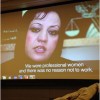
Justice for ‘Women by Women’ in Afghanistan
“Progress for women is progress for all,” said Irene Khan, director-general of the International Development Law Organization (IDLO), at a roundtable discussion Monday on the sidelines of the two weeklong session of the Commission on the Status of Women (CSW)Humanitarian Issues Ignored by Crisis-Stricken Venezuelan Government
Despite escalating tensions and anti-government demonstrations, the Venezuelan government has not addressed any human rights issues regardless of the rising death toll and captive political prisoners, a panel of experts stressed Monday.« Previous Page — Next Page »


The Week with IPS

NEXT STOP - SDGs
Tracking global progress towards a sustainable world
Tracking global progress towards a sustainable world
