Languages
Thursday, September 24, 2026



News and Views from the Global South


Explainer: Why Kenya is Considered a High Climate Risk for Development Banks
Kenya contributes less than 0.1 percent of global greenhouse gas emissions every year, yet development banks have flagged the East African nation as a high climate risk. This is due to extreme weather changes that are increasingly threatening the country’s development agenda, widening socio-economic inequalities, and deepening rural poverty and hunger.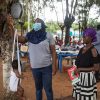
Improving Childhood Health and Development Need Not Be an Olympian Effort
From 11-year-old Chinese skateboarder Zheng Haohao to 16-year-old American gymnast Hezly Rivera, several children have reached the pinnacle of world sport at the Paris 2024 Olympic Games.
Water Stories: The Well Seven Families and 400 Buffaloes Rely On
In the rural village of Khardariya in the Dang district of Nepal, access to clean water is a major issue. Villagers depend on one poorly managed well for drinking water, cleaning, and feeding livestock. Anjana Yadav stood near the well while a neighbor walked toward it to fetch a bucket of water.
ECUADOR: ‘We demand that the violation of the rights of nature be recognised and reversed’
CIVICUS speaks with Darío Iza Pilaquinga, president of the Kitu Kara People of the Kichwa nationality of Ecuador, about a historic court ruling that applied a constitutional provision recognising the rights of nature.
Pivotal Shift at Seabed Authority: Nations Rally for Deep-Sea Mining Moratorium
The International Seabed Authority (ISA) Assembly meeting concluded last week with no mining authorized, an unprecedented number of States calling for a moratorium or precautionary pause and a new Secretary-General elected.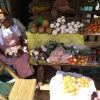
What Potential Do Gender Bonds Have For Increasing Financing For Gender Equality?
Iceland’s gender bond last month caused great excitement in the capital markets community. While gender bonds have been increasing in popularity within the private sector, Iceland is the first country to issue a sovereign gender bond. Many in the development community are however asking, are gender bonds the solution to financing for gender equality?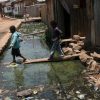
G20 Leaders Must Listen To Their People and Agree To Tax the Ultra-Rich
We are living in a world of multiple crises of inequality, climate breakdown and conflict. Billions of people globally are facing huge hardship. Whole governments, too, are virtually bankrupt, with extremely high debt levels forcing them to implement brutal and deeply unpopular cuts and tax rises for ordinary people. 3.3 billion people live in countries that spend more on debt interest payments than on either education or health.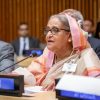
UN Calls for ‘Peaceful, Orderly and Democratic Transition’ Following Protests in Bangladesh
After weeks of violent clashes against protestors, Bangladesh Prime Minister Sheikh Hasina resigned from her position and fled the country on Monday. Preparations are underway for an interim government to take over with the backing of the military, political parties, student leaders of the protest movement and all other groups involved in the transition. A UN spokesperson has urged that all parties involved in the current transition should work together to ensure a peaceful and democratic transition.
Nigeria: Why #EndBadGovernanceInNigeria Protests Gained Traction
Thousands of Nigerians have taken to the streets to protest against bad governance, corruption, soaring inflation, and the rising cost of living, in what has been termed "10 Days of Rage" and believed to mirror Kenyan protests organized by the youth. Nigeria, Africa's most populous country and a major exporter of crude oil, citizens claim that the benefits of the country's resources do not trickle down to the masses but to a group of corrupt politicians.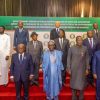
ECOWAS at 49: Successes in Regional Integration, Despite Emerging Challenges
The Economic Community of West African States (ECOWAS) was founded in 1975 to promote economic integration in the region. Forty-nine years later, the regional bloc boasts significant successes in integration, peace and security and good governance, but also faces some challenges.
The Demise of Democracy and Human Rights Violations in Bangladesh: International Financial Institutions’ Culpability
The International Monetary Fund (IMF), World Bank and Asian Development Bank (ADB) are complicit in the gross human rights violations and death of democracy in Bangladesh. They continued to supply financial blood line to the regime, well-documented for its corruptions, human rights violations – such as forced disappearances and tortures in custody – and riggings of votes, including politicization of state institutions in its slide into autocracy. This is despite their professed commitment to transparency, accountability and good governance (IMF, World Bank, ADB).
Chilean Fisherwomen Seek Visibility and Escape from Vulnerability
The number of organisations that bring together fisherwomen who seek to be recognised as workers, make their harsh reality visible and escape the vulnerability in which they live is growing in Chile.
UN’s Summit of the Future
Preparations are ongoing for the upcoming Summit of the Future, probably the most consequential initiative of UN Secretary General Antonio Guterres so far.
How Women Volunteers Are Shaping India’s Water Future
“Daily squabbles at the lone water point in Bhubaneswar’s slums, where hundreds of households depended on this single non-potable water source, have now receded into the past,” says Aparna Khuntia, a member of a large cohort of water volunteers who have played an important enabling role in ensuring households in the eastern India city now have their own on-premises potable running tap water available all 24 hours.
Activists Challenge Pharma Company Gilead Over HIV Medication
Campaigners and experts have demanded a breakthrough HIV intervention hailed as “the closest thing to an HIV vaccine” must be made available as soon and as cheaply as possible to all who need it as its manufacturer faces protests over its pricing. Activists led a massive protest during the 25th International AIDS Conference (AIDS2024) in Munich last week as a study was presented showing lenacapavir—a drug currently sold by pharmaceutical firm Gilead for more than USD 40,000 per year as an HIV treatment—could be sold for USD 40 per year as a form of pre-exposure prophylaxis (PrEP) to help prevent HIV infection.
Partnering for Progress: Maldives’ Sustainable Ocean Initiatives
The ocean is our lifeline, covering 70 percent of the earth’s surface, it is the source of half of the oxygen we breathe, and it absorbs 26 percent of the carbon dioxide we produce. It is home to millions of marine species, contains 97 percent of all of the water on our planet and offers humankind immense resources.
79 Years After Hiroshima & Nagasaki: A Grim Reminder of Nuclear Annihilation
The upcoming 79th anniversary of the atomic bombings of Hiroshima and Nagasaki, which took place on August 6 and 9, 1945, remains a grim reminder of the destructive consequences of nuclear weapons. The US bombings killed an estimated 90,000 to 210,000, with roughly half of the deaths occurring on the first day in Hiroshima.
Cambodia’s Young Environmental Activists Pay a Heavy Price
It’s risky to try to protect the environment in authoritarian Cambodia. Ten young activists from the Mother Nature environmental group have recently been given long jail sentences. Two were sentenced to eight years on charges of plotting and insulting the king. Another seven were sentenced to six years for plotting, while one, a Spanish national banned from entering Cambodia, was sentenced in absentia.
Economic Prospects in Asia & the Pacific – Celebrate Resilience, Prepare for Headwinds
Economic performance in Asia and the Pacific has proved to be quite resilient to the shocks of the past few years – the COVID-19 pandemic, the ongoing wars in Ukraine and Gaza, and the cost-of-living crisis. In 2023, the region’s economy drove over 60 per cent of the global economic growth.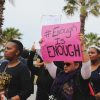
Femicide and Reproductive Violence Harm African Women, Girls
International African Women’s Day on July 31 recognizes the contribution of African women toward political, social, and economic freedom on the continent. But gender equality is still not a reality for most African women.
At Paris Olympics, Art Runs in Tandem with Sports
As cheers from beach-volleyball fans fill the air at the Eiffel Tower Stadium on a steamy, sunny day, pedestrians just down the road are enjoying another kind of show: an outdoor exhibition of huge photographs gleaming on the metal railings of UNESCO headquarters.« Previous Page — Next Page »


Want to keep up with the latest news and views from the Global South? Sign up for IPS Daily News Report for daily emails with our top stories about international development, climate change, gender and more. (Formerly IPS TerraViva since 1993).

The Week with IPS

NEXT STOP - SDGs
Tracking global progress towards a sustainable world
Tracking global progress towards a sustainable world
