Languages
Thursday, October 22, 2026



News and Views from the Global South


Bob Marley: One Love Review – Music and Memories of Troubled Times
Judging from the audience reactions at a screening of Bob Marley: One Love in Brussels, the music may touch international viewers, but the memories and some of the “insider” comments belong to Jamaicans and those closely connected with the country.
World Social Forum Insists: Another World is Possible!
These are the worst of times, but they can become the best of times, said speaker Dr. Walden Bello, seeking to inspire thousands of progressives who gathered for the World Social Forum (WSF) in Kathmandu on Thursday with the planet under clouds of armed conflict and assaults on democracy.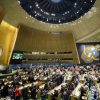
UN Tax Convention is Historic Opportunity at Risk of Failing
In late November, the UN General Assembly passed a landmark resolution signaling a start on working on a UN framework convention on taxation.
Tracking Global Development in Child Benefits Through New Monitoring and Information Platform
Inclusive social protections for children would be a positive signifier of social development in a time where 1.4 billion children globally are denied them. A step towards realizing this has been taken through a new monitoring tool on current social protection and child poverty statistics.
What if Super Bowl 2025 Attendees and All Stadium Food Selling Stores Carry Food Grown In Urban Areas?
Recently, a group of non-profit organizations launched the Inaugural Souper Bowl of Caring - a nationwide movement to address hunger-related challenges. It was an opportunity for VIP guests to engage and lend their support to end food insecurity as part of the Super Bowl. The goal is to encourage every viewer of the Super Bowl to contribute $1 or one can of soup.
Last Chance Saloon? Myanmar Junta Imposes Military Conscription
The news travelled like wildfire. In the teashops, bars, and market stalls that make Thailand’s border town of Mae Sot feel far more Burmese than Thai, the feared rumours circulating at the weekend were suddenly confirmed. Military conscription would be imposed on young men and women for two to five years, regime-controlled broadcasters in Myanmar announced on the Saturday night airwaves. Details were sparse.
The West’s Frankenstein Moment
Israel continues to defy its strongest backer the US and its western allies in its quest to control the land from the “River to the Sea”, and in the process ethnic cleansing of the Palestinian population. Israel’s Prime Minister Benjamin Netanyahu is determined to push ahead with a ground offensive against Gaza’s southernmost town of Rafah despite mounting warnings from aid agencies and the international community that an assault on Rafah would be a catastrophe. He also snubbed the US on the latest hostage release and ceasefire deal brokered by Qatar and Egypt. The interim order of the International Court of Justice (ICJ) to take all effective measures to stop “plausible” genocide in Gaza seems irrelevant to Israel. Josep Borrell, the EU’s foreign policy chief admits that Netanyahu “doesn’t listen to anyone”.
Women, Girls Equal Partners in HIV Responses, Says Activist
UNAIDS Executive Director, Winnie Byanyima, recently made an impassioned call for governments to support women and girls from marginalized communities at the frontlines of the defence of human rights, to help ensure, among others, that global health is protected.
Israeli-Palestinian Conflict: Religion & Demographics
Together religious identity and demographics play an important role in the decades-long conflict between Israelis and the Palestinians. If the Palestinians, who are largely Muslim and Christian, had been Jewish, they would have been allowed to live in their homes on their lands and be entitled to be Israeli citizens.
Start-ups Powering up Africa’s Solar Energy Ecosystem
Often referred to as the “Sun continent,” Africa receives more hours of bright sunlight than any other continent. But even with 60 per cent of the world’s solar resources, Africa has only one per cent of solar generation capacity, according to the International Energy Agency (IEA).
North Ignores ‘Perfect Storm’ in Global South
A gathering ‘perfect storm’ – due to various developments, several quite deliberate – now threatens much devastation in the global South, likely to most hurt the poorest and most vulnerable.
World Social Forum Seeks to Reemerge as an Influential Gathering of Diversity
The World Social Forum (WSF) is today "more necessary than ever," according to Oded Grajew, promoter and co-founder of the global civil society meeting - a festival of diversity that has not yet succeeded in fomenting or designing the "other possible world" that it predicted when it was created and adopted that motto.
Nepal Farmers Face Another Year of ‘Agricultural Drought’, Threatening Food Security
Najboon Khatun looks up at the sky every day, searching for the possibility of rain. Clouds come and go without a drop of water. “Winter crops like wheat and vegetables need water, but like last year, there has been no rainfall yet,” says 65-year-old Khatun, expressing her anguish. In her village in Dhanusha, one of the agricultural hubs in the southern plains of Nepal, farmers mostly depend on rain as a source of irrigation. However, they are facing yet another year of drought, affecting winter crops, including wheat, mustard, lentils, and vegetables.
History’s Inflation Lessons
In the early 1970s, conflict in the Middle East set off a spike in oil prices that left central banks around the world scrambling to control inflation. After a year or so, oil prices stabilized and inflation started to retreat. Many countries believed they had restored price stability and loosened policy to revive their recession-hit economies only to see inflation return. Could history repeat?
What Is It Like to Live in Ecuador, One of the Most Violent Countries?
"For a couple of years now we've been seeing the violence growing so fast," said José, who asked not to give his last name for fear of reprisals he may face in Monte Sinai, a low-income neighborhood in Ecuador's most populous city, Guayaquil.
State of the World’s Migratory Species Report ‘Alarming’ Threats, Global Action Urged
A groundbreaking State of the World’s Migratory Species report is calling for accelerated global conservation measures to counter the threat of extinction faced by 1 in 5 of all migratory species.
Climate Change Is Amplifying Households’ Food Insecurity, Putting More Pressure on Women’s Mental Health
Studies have long shown that some women’s lower status in Nepali households could mean that they eat last and less and as a result lack nutrition. Experts are now looking into how this could affect their mental health, and if the growing impacts of climate change might amplify the process.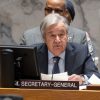
UN Secretary-General Wants Peace through Institutional Reforms
The United Nations and its Member States are up against what the Secretary-General António Guterres calls existential challenges for the world, and they must be organized in taking a united approach to addressing these issues through ambitious plans and widespread reform. In his statement to the General Assembly on February 7, 2024, Guterres laid out his priorities for the coming year, consisting of various ongoing issues that call for urgent action. He has called for member states to fulfill their obligations to the UN Charter, under which every person’s right to life and dignity should be guaranteed. But at present, governments are undermining the tenets of multilateralism with no accountability, he said.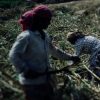
Polycrises are Pushing More Women into Poverty: How can we Help Halt that Trend?
Let’s call her Anita. Four years ago, her life took an unexpected turn when the COVID-19 pandemic disrupted everything she knew. As businesses closed and economic uncertainty loomed, Anita, like countless others, found herself forced out of work. Providing for her three young children became a daily struggle, prompting her to seek informal work as a subsistence agricultural worker to ease the financial burden.
Yangon—A Junta-Ruled Bubble in a Fragmenting Myanmar
Landing in Rangoon nearly 100 years ago, a young Chilean poet described “a city of blood, dreams, and gold” with “leprous streets”. The flourishing capital of then British-ruled Burma and its major port were a must-see staging post on an Asian tour.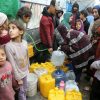
From Memory to Policy
A bloodbath is taking place in the Middle East, and yet, the world is embroiled in absurd debates. One is tempted to say, paraphrasing Marx: here the tragedy, there the farce. The German-speaking world – and Germany in particular – takes a decidedly pro-Israeli stance, while in other societies, an equally dubious anti-Israeli position prevails.« Previous Page — Next Page »





Want to keep up with the latest news and views from the Global South? Sign up for IPS Daily News Report for daily emails with our top stories about international development, climate change, gender and more. (Formerly IPS TerraViva since 1993).

The Week with IPS

NEXT STOP - SDGs
Tracking global progress towards a sustainable world
Tracking global progress towards a sustainable world
