Languages
Thursday, October 22, 2026



News and Views from the Global South


Who Wants to Live by the Sea?
For most of history, only those who made their living from the sea chose to live on the coast. Fear of being battered by storms, not to mention vulnerability to attacks from foreign navies, kept most people inland. Gradually that changed and, along with fisherfolk and their families, the idea of a coastal location became something of a cult. High property prices still reflect its popularity. But is it any longer so desirable?
Cambodia’s Declining Fish Catch: Can the Tide Be Reversed?
Living in a floating village means embracing the rhythm of the ever-changing water. As I stroll through Kampong Khleang, flanked by wooden stilt houses lining sandy streets, I witness daily life unfolding. Alongside staircases, people prepare meals or run their little shops.
Small Island “Digital” States: Charting the Course for Transformation
Small Island Developing States, or SIDS, have long been pioneers in international development, often compelled by the challenges they face. Positioned on the frontlines of climate change, they lead efforts in mitigation, adaptation, and advocacy, and despite their geographical dispersion, they are innovating approaches to resilience and sustainability.
New Anti-Rape Crisis Centre Brings Hope for Sexual Abuse Survivors in Pakistan
Medical experts and women's rights activists are pinning hopes on the establishment of an anti-rape crisis centre for the provision of medical and legal aid to victims of sexual assaults in a timely manner will ensure convictions. Currently, it takes years to bring the perpetrators of rape to justice due to a lack of evidence and more often than not, the accused get acquitted.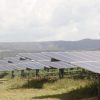
Phasing out from Fossil Fuels: An Imperative for Climate Justice
Climate change made 2023 the warmest year on record. As urgency mounts to address this worldwide crisis, phasing out the use of fossil fuels is a necessary step that all nations must take. This is because fossil fuels—coal, oil and gas -- are the primary drivers of the climate crisis accounting for over 75% of global greenhouse gas emissions and nearly 90% of all carbon dioxide emissions.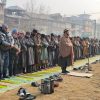
Snowless Winter and a Climate Crisis: Kashmir’s ‘Unprecedented’ Weather
Abdul Gani Malik, a 75-year-old goldsmith living in Kashmir’s capital, Srinagar, has witnessed eras of tranquility and turbulence in the Himalayan region. What he has not seen, however, is a snowless Kashmir during the winter.
INTERVIEW: AI Expert Warns of ‘Digital Colonization’ in Africa
Artificial intelligence (AI) is ripe to help resolve certain major problems in Africa, from farming to the health sector, but Senegalese expert Seydina Moussa Ndiaye is warning of a new “colonization” of the continent by this new technology if foreign companies continue to feed on African data without involving local actors.
Forced Migration Grows, Justice Withers, Say Activists at World Social Forum
As involuntary migration rises around the world, partly in response to the impacts of climate change, justice for those leaving their homes and families to earn a living is largely missing, said activists meeting at the World Social Forum (WSF) in Kathmandu on Sunday.
Women Biomass Producers: Energy’s Largest and Largely Invisible Workforce
The International Energy Agency (IEA) held its annual ministers meeting last week in Paris, marking the 50th anniversary of the world’s leading energy organization. Critical topics on the agenda included energy security issues linked to Russia’s invasion of Ukraine and geopolitical tensions in the Middle East, as well as advancing a clean energy transition to meet global climate change goals.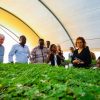
Smallholder Farmers Are Key to CGIAR Response to Hunger Crisis
Dr Ismahane Elouafi has her work cut out. As the new executive managing director of CGIAR, a global network of agricultural research centers, her mandate, simply put, is to tackle the world’s most severe hunger crisis in modern history. And it is in Africa that the former Chief Scientist of FAO with a PhD in durum wheat genetics faces her greatest challenges, both in terms of developing science-based innovations and technologies and lobbying governments to adopt responsible policies.
Making Chile’s Economy More Dynamic, Greener, and Inclusive
Chile’s economy is at a crossroads. Strong policies have successfully brought down high inflation and reduced the large current account deficit that emerged during the pandemic. Increases in social benefits have provided some relief in response to discontent over inequality.
Imperialism, Globalisation and Its Discontents*
Imperialism continues to dominate the world. Globalisation is losing to some of its anti-theses, but imperialism still rules, increasingly by law, albeit in changing even contradictory ways.
Inequality Also Afflicts Clean Energy in Latin America
The specter of blackouts hovers over the Mexican city of La Paz, the capital of the state of Baja California Sur in Mexico's far northwestern corner, as summer approaches, due to increased electricity demand from air conditioning and insufficient capacity in the local grid.
Another World Seen Through the Lenses of Gender and Sexuality
On a white canvas, people were painting different structures, objects and creatures in a range of colours. Kavita Sada Musahar’s creation was on its way to becoming a painting — with houses, humans, birds, trees and rivers — and a bright red heart.
South Africa vs Israel: ICJ Declines SA’s New Application But Says Israel Duty Bound to Protect Civilians
The International Court of Justice has declined the South African government's urgent application for further measures to prevent an "unprecedented military offensive against Rafah,” but reiterated that Israel is bound to protect civilians in the country. South Africa argued in an urgent application that this military offensive “announced by the State of Israel, has already led to and will result in further large-scale killing, harm, and destruction in serious and irreparable breach both of the Genocide Convention" and of the Court's Order of January 26, 2024.
World Social Forum Activists Unravel Roots of Israel’s Occupation of Gaza
Romi Ghimire has a busy life running a non-profit organization dedicated to Nepal’s rural people, but she also feels driven to do something about Gaza. “There are a lot of issues happening in the world, but right now the genocide in Gaza is the most urgent one,” she said inside the Palestine tent at the World Social Forum (WSF) in Kathmandu on Saturday.
Local Knowledge and Women’s Leadership are Key to Food Justice: Activists
Manjula Dungdung is explaining why she is fighting for land and agricultural rights for herself and other members of the Kharia tribe, who grow the food they eat. “Women’s right to land is especially important because it is an issue of our dignity, and since we are the ones who do most of the agricultural work, it is to maintain food security.”
UN’s Financial Troubles Jeopardize Critical Human Rights Work
A cash crunch and hiring freeze at the United Nations threaten to hinder UN human rights investigations in places like Sudan, Ukraine, and Syria.
Grassroots Voices Unite to Call for Climate Justice
Kiprotich Peter from the East African country of Kenya is trying to convey his climate crisis message using the platform of the World Social Forum (WSF) taking place in the mountain nation of Nepal, which has also been battered by the impacts of climate change.
Unveiling the Power Play: Non-Profit Funding as a Strategic Tool for Agenda Setting
In the realm of public discourse, non-profit organizations often serve as the torchbearers of societal change, championing causes ranging from environmental conservation to social justice. Yet, beneath the altruistic facade lies a complex interplay of interests, where non-profit funding emerges as a potent tool for shaping the narrative and driving the agenda.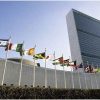
UN’s Cash Crisis May Force Hiring Freeze, Limit Official Travel & Curtail Expenses System-Wide
The United Nations is heading towards a severe cash crisis forcing the world body “to implement aggressive cash conservation measures to avert a default in meeting the legal obligations of the Organization”. Secretary-General Antonio Guterres has drawn attention to “the unfortunate deteriorating financial situation of our regular budget operations”.« Previous Page — Next Page »





Want to keep up with the latest news and views from the Global South? Sign up for IPS Daily News Report for daily emails with our top stories about international development, climate change, gender and more. (Formerly IPS TerraViva since 1993).

The Week with IPS

NEXT STOP - SDGs
Tracking global progress towards a sustainable world
Tracking global progress towards a sustainable world
