Languages
Monday, October 26, 2026



News and Views from the Global South


Road to COP29: Highest Climate Ambitions Needed to Decarbonize World
The road to COP29 has begun in earnest in the backdrop of a global climate report indicating that not only was 2023 the warmest year in a 174-year climate record, it was the warmest by far. Record-breaking temperatures, combined with El Niño, pushed vulnerable and poor nations in the Global South to the frontlines of extreme and severe weather events.
Cubans Are Waiting for a Major Boost to Low Emissions Transport
Jorge Sarmientos said he made a good investment when he bought an electric motorcycle to get around and avoid the anxiety suffered by the users of Cuba's deficient public transportation system or the high prices of private alternatives.
The West’s Addiction to War Must End in Gaza
Two months ago, an opinion piece I wrote, "The Cries of Gaza Reach Afghanistan," was published with the hope of reminding American and other Western leaders of how quickly wars ON terror descend into wars OF terror because of their disproportionate impact on civilians and the unpredictability once unleashed.
Israel Could Face Further Legal Action For Non-Compliance of ICJ Ruling
South Africa's permanent representative to the United Nations, Mathu Joyini, said the country would take further legal action should Israel ignore the provisional measures set out by the International Court of Justice (ICJ).
Inclusive & Sustainable Businesses Set New Pathways for Sri Lanka
Selyn, a women-led handloom business, offers flexible employment and valuable income opportunities to about 1,000 women artisans and persons from marginalized groups in rural Sri Lanka. Selyn develops and exports high-value craft products in global markets.
Is the Reform of the UN Security Council a Good Try in a Lost Cause?
The myriads of proposals for the reform of the much-maligned Security Council have been kicked around the United Nations for more than two decades—with no significant progress. Speaking at the General Assembly’s (GA) annual debate, GA President Dennis Francis told delegates last November that without structural reform, the Council’s performance and legitimacy will inevitably continue to suffer.
Solar Energy Gives Important Boost to Small-scale Farmers in Chile
The installation of photovoltaic panels to use solar energy to irrigate small farms is expanding quickly in Chile because it lowers costs and optimizes the use of scarce water resources.
How Soil Microbes Could save the World
The 500 per cent increase in global agricultural productivity over the past 60 years has largely been made possible by the scientific advances of the “Green Revolution” – from the ability to breed higher yielding varieties to improvements in farm inputs, especially fertiliser.
In Africa, Witch Branding Destroys Elderly Women’s Lives
One day in October 2020, Serah Akpan, 70, was seated in her house at Boki Local Government in Cross River, southern Nigeria, when she heard the murmurings of irate youth outside. Before she could grasp what was really happening, they had broken into her house, bundled her outside, and threatened to kill her for allegedly being a witch.
Myanmar’s Military Catastrophe: Three Years and Counting
The military must have expected an easier ride. Three years ago, it ousted Myanmar’s democratically elected government. But the coup has been met with fierce resistance, unleashing a bloody conflict with no end in sight.
The Spectre of Migration: A conversation with Hammoud Gallego
Karl Marx’s Manifesto of the Communist Party begins with the now worn-out phrase: “A spectre is haunting Europe – the spectre of communism. All the powers of old Europe have entered into a holy alliance to exorcise this spectre”. Nowadays the word “communism” could easily be substituted by “migration”. All over Europe, politicians claim that Europe is being destroyed by migrants. In country after country, ghosts of yesterday are awakened. Parliaments include xenophobic politicians who might be considered as inheritors of demagogs who once dragged Europeans into hate and bloodbaths.
Genocide Convention @75: A Call for its Application as a ‘Living Force in World Society’
It was a notion which haunted him well before the Second World War – from the history books his mother would read him, to the following of the 1921 trial of young Armenian Soghomon Teilerian.
Poverty and Inequality Mark Rural Life in Latin America
Rural life in Latin America and the Caribbean continues to be marked by poverty and inequality compared to the towns and cities where the vast majority of the population lives. A new focus on rural life in the region could help reveal and address the challenges and neglect faced by people in the countryside.
Discrimination, a Killer of Dreams for People Affected by Leprosy
Tuji Sode detached himself from his family and hid himself from the public, embarrassed by his condition, which in biblical times meant exclusion from society and even death. Sode, a university student in Ethiopia, has Hansen’s Disease, also commonly known as leprosy. Leprosy is a bacterial disease that, left untreated, can cause severe disability and deformity.
Prospects for Commonwealth Countries, Addressing Gaps and Shaping Expectations for COP29
The 28th Conference of Parties (COP28) to the United Nations Framework Convention on Climate Change (UNFCCC) marked a pivotal moment in the global efforts to combat climate change. Held in Dubai, United Arab Emirates (UAE) with the participation of delegates from around the world, COP28 showcased a commitment to drive genuine strides in climate action, bringing optimism and progress to the forefront. Here we explore the implications of COP28 outcomes for small and other vulnerable Commonwealth countries and identify the gaps that still need attention. Additionally, it will discuss concrete expectations for COP29, focusing on critical discussions held at COP28.
Onerous Debt Making Poorest Poorer
Contractionary economic trends since 2008 and ‘geopolitical’ conflicts subverting international cooperation have worsened world conditions, especially in the poorest countries, mainly in Africa, leaving their poor worse off.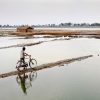
How Asia Can Unlock $800 Billion of Climate Financing
Countries in the Asia-Pacific region face a shortfall of at least $800 billion in climate financing. With public finances depleted by the pandemic, policymakers must unlock the vast potential of private capital to join the fight more effectively against global warming.
Blinken’s Visit to Africa: Is US Counterterrorism Counterproductive?
US Secretary of State Antony Blinken’s week-long tour across four African countries was aimed at strengthening the US-Africa relationship—a relationship, according to some commentators, already waning as China and Russia are increasing their influence.
Funding for UN Palestinian Relief Agency is Threatened While Investigations Continue
The consequences of the investigation into the 12 United Nations Relief and Works Agency for Palestine Refugees in the Near East (UNRWA) staffers allegedly linked to the October 7 Hamas attack in Israel have led to major donor countries pulling their support from the UN agency. However, the agency has appealed to the governments to continue the aid in the face of the humanitarian crisis in Gaza.
Building a More Resilient Work Force to Meet Challenges of Tomorrow
Quadrupling in size since 1950, the working age population in Asia and the Pacific now accounts for 67.2 per cent of the total population in the region and is set to peak at 3.3 billion by the mid-2030s.
Higher Education in Central America: Poor Quality and Unaffordable for the Poor
Decades of civil wars and a lack of long-term public education policies, among other problems, have made higher education in Central America precarious and costly in general. In this region, made up of Belize, Costa Rica, El Salvador, Guatemala, Honduras, Nicaragua, and Panama, home to some 50 million inhabitants, the quality of education offered by public and private universities is poor, while costs are high even for those who can afford them.« Previous Page — Next Page »





Want to keep up with the latest news and views from the Global South? Sign up for IPS Daily News Report for daily emails with our top stories about international development, climate change, gender and more. (Formerly IPS TerraViva since 1993).

The Week with IPS

NEXT STOP - SDGs
Tracking global progress towards a sustainable world
Tracking global progress towards a sustainable world
