Languages
Thursday, November 12, 2026



News and Views from the Global South


Religious Leaders Can Help Bring about World Peace
It is not a secret that the world is witnessing rising international tensions and erosion of the global order that has been in place since the establishment of the United Nations. Divisive blocs, which have not been seen since the Cold War, are making a swift return. As a result, our planet is facing severe threats, including a new global arms race, the threat of the use of nuclear weapons, and the proliferation of wars in all formats, including hot, hybrid, cyber, and trade.
Afghan Women Speak Out About Life and Resistance Two Years After the Taliban Takeover
The Taliban takeover of Afghanistan on 15 August 2021 has devastated millions of Afghans. But women and girls have been particularly affected by progressively restrictive decrees that have created a virtual system of gender apartheid.
Young People Shape Sustainable Development in Timor-Leste
In 2002, a group of young people in Timor-Leste were asked to look ahead into the future and write down on a postcard what they hoped their country could achieve by the year 2020.
Kerala Proved Good Governance Vital in a Pandemic
When COVID-19 claimed millions of lives across India, Kerala state at the southern tip of the subcontinent stood apart for low mortality rates that experts attribute to good governance, a robust public health delivery system and strong civil society support.
Where is India Heading?
Some time ago I watched the Indian blockbuster RRR (Rise, Roar, Revolt). It received universal praise for direction, screenwriting, cast performances, soundtrack (which won an Oscar) and thrilling action sequences. RRR is filled with gore; bodies beaten, pierced and torn apart. An overblown combination of Quentin Tarantino and Bollywood, far away from Satyajit Ray’s emotionally moving films, as well as Bollywood’s romantic comedies and mythological dramas. RRR never pauses for breath. The two male protagonists are supermen, not exposing many recognizable human traits, even if they might occasionally sing and talk about love. Hard to understand, since the few women of the story are cut-out clichés.
Our Teachers, Our Heroes
We are in a race to deliver on our global promise of education for all by 2030 – especially for the 224 million girls and boys impacted by armed conflict, climate change, forced displacement and other protracted crises who so urgently need our support. At the frontlines of this movement are the inspiring, caring, brilliant teachers who work tirelessly to educate future generations.
In Brazil, Indigenous Leaders and Youth Activists Fight To Protect Amazon
Raffaello Nava, a youth and student activist, has fled his home at the peak of the global Coronavirus pandemic after receiving death threats from multinational companies that invaded his ancestral lands in the Amazon rainforest.
A Turning Point for Sustainable Development in Cuba — and Beyond
In 2015, 193 countries adopted the 2030 Agenda for Sustainable Development as “a shared plan for peace and prosperity for people and the planet.”
America’s Record-Breaking Immigration
America’s immigration has reached record-breaking levels having weighty consequences domestically and internationally.
Wanted: Teachers For Change!
Once a year, on October 5, we celebrate World Teachers’ Day. Why is it so important to have a closer look on the teaching profession? What is so special about being a teacher nowadays?
Are Many Children in Japan Going Hungry? How Can We Help?
Picture this: It’s the scorching days of summer, and kids are flocking to the nearby mall, eager to bask in the cool air and hang out with friends. But among the laughter and chatter, one girl stands alone in the food court.
Pronatalism on the Rise to Counter Growing Push for Gender Equality
There’s an insidious new tactic emerging for selling right-wing ideology to wider audiences, evident in last month’s Budapest Demographic Summit for “family-friendly thinkers and decision-makers,” the upcoming pro-birth Natal conference in Austin, Texas, and the recent film “Birthgap.”
UN’s High-Level Appointments Should Give Priority to Gender in Geographical Rotation
The UN’s high-level appointments have mostly been on the basis of “equitable geographical rotation”—with Asia, Africa, Eastern Europe, Western Europe and Latin America and the Caribbean taking turns.
Debt-Pushing as Financial Inclusion
Ajay Banga was anointed World Bank president for promoting financial inclusion. Thanks to its success and interest rate hikes, more poor people are drowning in debt as consumer prices rise.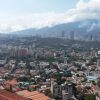
Open Migration Flows and Closed-Up Houses in Venezuela
Gladys swore she would not cry in front of her small children, but she still had to wipe away a couple of tears when she turned her head and looked, perhaps for the last time, at her dream house on Margarita Island in Venezuela, from where she migrated, driven by a lack of income and by fear.
Growing Appetite for Nutrient-Rich Native Indigenous Australian Foods
Growing up in Sydney, Kalkani Choolburra, a Girramay, Kuku Yalanji, Kalkadoon and Pitta Pitta woman from Far North Queensland, would frequently travel with her family up and down Australia’s eastern seaboard. Her grandfathers and uncles would bring fresh catch of dugong, her favourite bush food, and she would go hunting for the short-necked turtle with her aunties and female cousins.
Record-Breaking Global Migration
On 14 June, the UN High Commissioner for Refugees (UNHCR) issued his flagship annual report, Global Trends: Forced Displacement 2022. It states that by the end of 2022, the number of people displaced by war, persecution, violence and human rights abuse had dramatically increased by 19.1 million — the biggest increase on record — reaching a total of 108.4 million.
Peacekeeper Cecilia Erzuah Promotes Gender Equality by Example
Cecilia Erzuah was torn between two opposite career paths at the end of university. The week she was supposed to begin military training, her professor offered her a position as an assistant to a lecturer.
Small Islands with Big Aspirations
Everyone knows that small island states are on the frontline of global warming. Rising sea levels, acidification destroying fisheries and coral reefs, and changing patterns of rainfall are just some of the challenges. Some low-lying islands have already been lost to the ocean.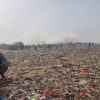
Informal Workers Key to Successful Waste Management in Africa
With the African continent recycling less than 11 percent of its waste, COP28 provided leaders on the African continent to consider integrated waste systems that include informal waste workers.
Innovative Family Farm in Cuba Uses Mix of Clean Energies
Combining technologies and innovations to take advantage of solar, wind, hydro and biomass potential has made the Finca del Medio farm an example in Cuba in the use of clean energies, which are the basis of its agroecological and environmental sanitation practices.« Previous Page — Next Page »





Want to keep up with the latest news and views from the Global South? Sign up for IPS Daily News Report for daily emails with our top stories about international development, climate change, gender and more. (Formerly IPS TerraViva since 1993).

The Week with IPS

NEXT STOP - SDGs
Tracking global progress towards a sustainable world
Tracking global progress towards a sustainable world
