TerraViva United Nations

Young Afghan Taekwondo Women Coach Chose Resistance over Surrender to Taliban

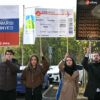
When Khadija Ahmadzada was arrested in Herat province of Afghanistan in January this year, it sparked widespread domestic and international protests. Women’s rights activists and social media users raised their voices with slogans such as “Sport is not a crime,” “Education is a right for women,” and “Don’t erase women,” often using the hashtag #BeHerVoice.

Africa’s Minerals Boon, Cautious Optimism Amid Geopolitical Disruptions

Africa’s eye on minerals as the be-all-and-cure-all for the continent’s development agenda is being tested by geopolitical gamesmanship as global superpowers jostle to carve new spheres of influence.

CHINA: ‘The State Is Using Generative AI to Engineer Reality Through Informational Gaslighting’


CIVICUS discusses China’s tech-enabled repression with Fergus Ryan, a Senior Analyst at the Australian Strategic Policy Institute (ASPI), where he specialises in how the Chinese Communist Party shapes global information environments through censorship, propaganda and platform governance. His research includes a major study on China’s AI ecosystem and its human rights impacts, as well as investigations into China’s use of foreign influencers.

Beyond Stereotypes: Reclaiming Muslim Histories during Ramadan

In public discourse today, Muslims often appear as subjects of debate rather than authors of their own histories. Discussions about Muslim societies tend to revolve around geopolitics, security or conflict, leaving little space for the cultural, artistic and intellectual traditions that have shaped Muslim communities across centuries.

A Remotely-Piloted Weapon That Targets Civilians in War Zones

As the world continues to be weighed down in political and military turmoil, drones are being increasingly used as weapons of war in a rash of ongoing conflicts—including Ukraine vs Russia, Israel vs Palestine, US vs Iran and Israel vs Lebanon, plus in civil wars in the Democratic Republic of the Congo (DRC), Sudan and Haiti.

Iran Conflict: “Civil War Will Be Inevitable”

Iranian and Israeli flags fill the centre of Manchester, in northern England. There are also portraits of a king overthrown almost half a century ago and of his son, now a claimant to the throne from exile. It is yet another march of Iranians calling for Reza Pahlavi as an alternative to the regime of the ayatollahs.

KOFI TIME – The Podcast


About Kofi Time – The Podcast

Join a journey of discovery as Ahmad Fawzi interviews some of Kofi Annan’s closest advisors and colleagues, including Dr Peter Piot, Christiane Amanpour, Mark Malloch-Brown, Michael Møller, Mark Suzman, Alicia Bárcena and more.
 
In each episode, Ahmad Fawzi, a former spokesperson and Communication Advisor to Kofi Annan, examines how Annan tackled a specific crisis and its relevance to today’s world and challenges.
 
Kofi Annan’s call to bring all stakeholders around the table — including the private sector, local authorities, civil society organisations, academia, and scientists — resonates now more than ever with so many who understand that governments alone cannot shape our future.
 
Brought to you by the Kofi Annan Foundation and the United Nations Information Service.


Ep. 10 | Kofi Annan Up Close With Special Guests
The final episode in our special 10-part series welcomes a variety of guests who worked closely with Kofi Annan during his tenure as the head of the United Nations and as Founder and Chair of the Kofi Annan Foundation. What was it like to work with him, and what made him such an extraordinary leader?
Kofi Time: The Podcast · Kofi Annan: Up Close | Kofi Time with Special Guests


Ep. 9 | Democracy in Africa: Then & Now
In episode 9, Ahmad Fawzi welcomes Mohamed Ibn Chambas to discuss democracy in Africa. Together, they discuss the reasons why democracy seems to have lost some of its shine on the continent, especially among young people. And yet, surveys show that a great majority of people reject autocrats and military takeovers. Drawing on Kofi Annan’s leadership, how can we enhance democratic resilience and promote the participation of civil society, women, and young people?
Kofi Time: The Podcast · Democracy in Africa: Then & Now | Kofi Time with Mohamed Ibn Chambas


Ep. 8 | Ending Poverty: Then & Now Part 2
In episode 8, part 2, Ahmad Fawzi welcomes Alicia Bárcena, former Executive Secretary of the Economic Commission for Latin America and the Caribbean, to continue the discussion on eradicating poverty. Alicia and Ahmad deplore weakened multilateralism, the lack of political will and the economic policies that can undermine development progress. They discuss the need for collective action and for a comprehensive vision to tackle poverty. How can Kofi Annan’s spirit inspire us to push development further and finally make poverty history?
Kofi Time: The Podcast · Ending Poverty Part 2: Then & Now | Kofi Time with Alicia Bárcena Ibarra


Ep. 8 | Ending Poverty: Then & Now Part 1
In episode 8, part 1, Ahmad Fawzi welcomes Mark Suzman, CEO of the Bill and Melinda Gates Foundation, to discuss how we can advance the fight against poverty. Mark discusses how Kofi Annan’s concept for the Millennium Development Goals was a necessary milestone in reducing poverty and brought unprecedented progress in development. Mark and Ahmad discuss Kofi Annan’s approach to sustainable development: combining a long-term vision with short-term goals. How can we reignite Kofi Annan’s global endeavour to eradicate poverty once and for all?
Kofi Time: The Podcast · Ending Poverty Part 1: Then & Now | Kofi Time with Mark Suzman


Ep. 7 | Youth & Peace: Then & Now
In episode 7 of Kofi Time, Ahmad Fawzi welcomes two special guests, Hajer Sharief and Jeremy Gilley, to discuss the importance of youth inclusion in global challenges and peacebuilding. Sharing their experiences of meeting and working with Kofi Annan, Hajer and Jeremy highlight Kofi Annan’s ability to connect with young people, giving them a voice and treating them as true counterparts. Kofi Annan knew young people can be powerful agents of change. What can we learn from the ‘Kofi Annan way‘ and how can we ensure youth are included in decision-making?
Kofi Time: The Podcast · Youth & Peace: Then & Now | Kofi Time with Hajer Sharief & Jeremy Gilley


Ep. 6 | Human Rights: Then & Now
In episode 6 of Kofi Time, our special guest is Zeid Raad Al Hussein. Zeid discusses his friendship with Kofi Annan and how they worked together to protect human dignity and promote human rights. Through the creation of the Human Rights Council and the International Criminal Court, Kofi Annan played a critical role in establishing the mechanisms we have today to protect human rights and combat impunity. How can we uphold Kofi Annan’s legacy and ensure that respect for human rights is not just an abstract concept but a reality?
Kofi Time: The Podcast · Human Rights: Then & Now | Kofi Time with Zeid Raad Al Hussein


Ep. 5 | Leadership: Then & Now
In episode 5, Ahmad Fawzi interviews diplomat Michael Møller about Kofi Annan’s unique leadership style. A respected leader among his peers and the public, Kofi Annan served the people of the world with empathy and tolerance. Embodying moral steadfastness and acute political acumen, his leadership was one of a kind. What drove him, and how can we emulate his leadership style to face today’s global challenges?
Kofi Time: The Podcast · Leadership: Then & Now | Kofi Time with Michael Møller


Ep. 4 | Fighting Hunger: Then & Now
In episode 4, Ahmad welcomes special guest Catherine Bertini. Ms Bertini discusses how she worked with Kofi Annan to combat hunger and malnutrition worldwide. Not only is access to food far from universal, but it is also severely impacted by conflicts and climate change. As food prices rise and access becomes even more challenging, how can we replicate Kofi Annan’s approach to improving food systems to ensure no one is left behind on the path to global food security?
Kofi Time: The Podcast · Fighting Hunger: Then and Now | Kofi Time with Catherine Bertini


Ep. 3 | Health Crises: Then & Now
In episode 3 of Kofi Time, our special guest is Dr Peter Piot. Dr Piot shares with Ahmad Fawzi how he and Kofi Annan worked together to reverse the HIV/AIDs tide that swept through Africa in the 1990s. Dr Piot explains how they used patient yet bold diplomacy, innovative partnerships, and an inclusive approach to bring previously marginalised communities to the table. Can this approach be replicated today as the world enters the third year of the COVID-19 pandemic and must prepare for future health emergencies?
Kofi Time: The Podcast · Health Crises: Then and Now | Kofi Time with Dr Peter Piot


Ep. 2 | Making Peace: Then & Now
In episode 2 of Kofi Time, host Ahmad Fawzi interviews renowned journalist Christiane Amanpour. Together, they discuss a world in turmoil, and what would Kofi Annan – who did so much for peace – do today? Christiane shares her thoughts on the ‘Kofi Annan way’, the difficult job mediators and peacebuilders face, and the courage they must show. Together, they deliberate whether there is a type of ‘calling’ for those who work in this field.
Kofi Time: The Podcast · Making Peace: Then and Now | Kofi Time with Christiane Amanpour


Ep. 1 | Multilateralism: Then & Now
In our first episode of Kofi Time, Ahmad Fawzi speaks with Lord Mark Malloch Brown about multilateralism. Lord Malloch Brown shares insights on how Kofi Annan strengthened the United Nations through careful diplomacy and bold reforms, and on the significant advances made during his tenure as Secretary-General. He comments on the state of multilateralism today, as the organisation is buffeted by the crisis in Ukraine and the paralysis of the Security Council.
Kofi Time: The Podcast · Multilateralism: Then and Now | Kofi Time with Lord Mark Malloch-Brown


Ranking U.S. Presidents: Best and Worst

Throughout its 250-year history, following the Declaration of Independence on July 4, 1776, the United States has elected 47 presidents. From George Washington in 1789 to Donald Trump in 2024, each U.S. president has left their mark on the nation and the world in various ways.

Philippines: ICC Hearing Gives Survivors of Duterte’s Drug War Hope

Gito* had just arrived at his father’s house in Caloocan City in the Philippines on December 7, 2016, when three armed policemen burst into the home, grabbed his father, took him outside and shot him multiple times. Gito told IPS his father had put his hands up when the officers told him they had come to arrest him, but they opened fire anyway.

Rapid Rise of Smart City Surveillance Tech Across Africa to Spy on Citizens

A massive expansion of AI-enabled surveillance of public spaces across Africa is violating citizens’ freedoms and the fundamental human right to privacy, warns a new report by the Institute of Development Studies.

At CSW70, Advocates Warn Conflict Is Deepening Barriers to Justice for Women and Girls

The 70th session of the Commission on the Status of Women (CSW70) has brought together global leaders, gender equity advocates, and youth representatives at the United Nations (UN) Headquarters to advance efforts to strengthen mechanisms for justice, equality, and representation for women and girls worldwide. With challenges particularly pronounced in conflict zones, this year’s priority theme —“ensuring and strengthening access to justice for all women and girls — focuses on repealing discriminatory laws and addressing persistent structural barriers that prevent women and girls from being fully heard, represented, and treated equally.

Oil Shocks, Political Upheaval and the One Solution Governments Keep Ignoring

Once again, global oil prices are spiking, driven by the Israeli-US war against Iran. With Iran retaliating by attacking infrastructure and transport hubs and blocking the Strait of Hormuz, through which one-fifth of the world’s oil passes, oil supplies from the region are being choked, pushing up prices. The cost of a barrel of Brent crude – the international benchmark for oil prices – stood at US$73 before the conflict but has surged beyond US$100 since. It could go higher still as war continues.

Tanzania, Mozambique and Malawi Launch $7.12 Million GEF Project to Protect the Ruvuma Basin

At dawn, the Ruvuma River moves quietly through a vast wetland along the border between Tanzania and Mozambique. Its muddy waters appear calm, disturbed only by drifting logs and the occasional ripple.

Housing as Climate Resilience in Asia-Pacific Cities

Access to adequate housing is a foundation of resilient cities. Safe and affordable homes provide stability, allow residents to access essential services, and enhance the capacity for communities to withstand and recover from shocks. Yet housing is often treated as a downstream outcome of urban development or disaster recovery rather than as a strategic investment in resilience.

Nigeria: Lessons from the Aba Women’s Riots for Today’s Women’s Movements

The Aba Women’s Riots of 1929 remain one of the most powerful demonstrations of Nigerian women’s collective resistance. Thousands of market women, farmers, traders, and mothers mobilized across districts in the then Eastern Nigeria to challenge colonial taxation and the extension of warrant chiefs’ authority over their lives. They organized without formal structures and without institutional support.

UN Launches 300 Million Dollar Humanitarian Appeal for Lebanon

During a solidarity visit to Lebanon, the UN chief announced a flash appeal of USD 308.3 million to support humanitarian operations there in the wake of escalated fighting.

Syria’s Mobile Cultural Bus: Championing Cultural Justice, Delivering Art and Literature to Children of War

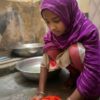
In the Al-Azraq camp in northern Syria, 10-year-old Abeer Al-Qaddour sits, browsing a colourful book with intense focus and curiosity. Nearby stands a bus, elegantly inscribed with the words 'The Cultural Bus'.

Why Does African Leadership Lack Coordination on Reparations?

Professor Jude Osakwe—a Nigerian scholar at the Namibian University of Science and Technology (NUST) and Continental Chairman of the Nigerians in Diaspora Organisation Africa (NIDOAF)—has reiterated the absolute truth over Reparations for Africa, noting that African governments have consistently expressed only 'emotional solidarity' over Reparations instead of tackling and addressing, with seriousness, this pertinent issue within the context of diplomacy.

Only 1 in 7 Countries is Led by a Woman– as Global Political Power Remains Dominated by Men

Across the world, women remain vastly under-represented in political leadership, with the most powerful decisions still overwhelmingly made by men. In 2026, only 28 countries are led by a woman Head of State or Government, while 101 countries have never had a woman leader, according to the latest data released by Inter-Parliamentary Union (IPU) and UN Women.

Public Flogging in Afghanistan Strips Women of Dignity

In the bone-chilling Afghanistan winter, a woman was dragged into a public square early this year and publicly lashed for a crime she may or not have committed. According to the ruling handed by the Taliban Supreme Court, the woman and the male culprit who was jointly accused of extra-marital affair received 30 lashes each and a one-year suspended prison sentence. The sentence was carried out in the presence of several local officials and residents in a province whose name is left out to protect the victim.

One in Four Migratory Species Under Threat, But Conservation Efforts Can Reap Rewards

Global wildlife is facing a deepening crisis as the latest United Nations assessment warns that nearly half of the world’s migratory species are in decline due to human activity, habitat destruction, and climate change.

« Previous PageNext Page »
*#*