Languages
Saturday, November 21, 2026



News and Views from the Global South


Education: Act Now, Don’t Wait for the Bill
School reopening doesn’t mean that education is back on course. For a start, schools remain closed in over 50 countries, affecting more than 800 million students. The poorest ones may never make it back to school, driven by poverty into child labour or early marriage. Distance learning has been out of reach for one third of the 1.6 billion students affected worldwide by school closures. They may disengage altogether if school closures continue.
Limited Liability: Profit Without Responsibility
Limited liability protection for shareholders in joint stock companies was introduced to encourage investments in them. However, it has encouraged irresponsibility, causing much harm while generating profits without responsibility. Limited liability limits responsibility Columbia Law School’s Professor Katarina Pistor has extended her critique of the legal system to emphasize the implications of such limited liability. Limited liability encourages shareholders not to pay attention to the harm corporations they invest in may do.
Low-cost Technology can Have Life-changing Impacts for Rural Women
Access to technology which is relatively inexpensive to deploy can have a life-changing impact for rural women, social scientist Valentina Rotondi told IPS.
Climate Change: New Threat to Nepal’s Rhinos
Nepal’s population of one-horned rhinoceros that survived hunting, a shrinking habitat and wildlife trafficking are now faced with a new threat: changes in their living environment due to a rapidly-warming atmosphere.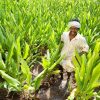
Why Food System Transformation Needs Water
The impact of Covid-19 on supply chains and food security has dealt a blow to the already faltering global development ambition of ending hunger.
Why a Zimbabwean Farming Project Failed: Lessons for Rural Innovation
Many countries in sub-Saharan Africa commit resources to promote agricultural innovations. This is based on the assumption that rural livelihoods are mainly agricultural and that the innovations will increase agricultural production and household income.
Q&A: Food Systems need to Mimic Nature
Despite the World Food Programme (WFP) being awarded the 2020 Nobel Peace Prize for its work in addressing global hunger, sustainable food systems expert Emile Frison believes a lot more needs to be done. This includes the rethinking of approaches to agricultural production, establishing deeper relationships between consumers and producers, and taking a wholistic approach towards socio-economic factors.
Food Citizenship: Innovative Partnerships for Healthy Food Systems
Food is high on the political agenda. The need to make food systems more resilient to external shocks like climate change and Covid-19 is now well acknowledged among states and other actors. Green, healthy, and inclusive food systems should become the new normal. But to make this happen we need to reshape the entire food system, with citizens driving bottom-up innovations.
Amid COVID-19, What is the Health of Civic Freedoms?
More than half a year after the World Health Organization declared the COVID-19 outbreak a pandemic, governments are continuing to waste precious time and energy restricting human rights rather than focusing on fighting the virus.
What Developing Countries Can Teach Us About How To Respond To a Pandemic
Nine months into the pandemic, Europe remains one of the regions worst affected by COVID-19. Ten of the 20 countries with the highest death count per million people are European. The other ten are in the Americas. This includes the US, which has the highest number of confirmed cases and deaths in the world.
UN Survives a World Turned Upside Down
As the United Nations plans to commemorate its annual UN Day, come October 24, Secretary-General Antonio Guterres is presiding over a world body which has remained locked down since last March because of the spreading coronavirus pandemic.
Is the IMF Encouraging World Financial Leaders to Walk Blindly Towards More Austerity?
This week the world’s Ministers of Finance and Central Bank Governors meet virtually at the 2020 Annual Meetings of the International Monetary Fund and the World Bank and decide on the fate of the world. This year’s gathering is particularly important, given that the world is confronting an unprecedented crisis. Governments are struggling to finance emergency care and urgent socioeconomic support to cope with the COVID19 pandemic.
High Tech, Low Labour?
In the glitzy Dolby Theater in Hollywood Heights, with stars dressed in hundred thousand-dollar garbs, Parasite—a film about inequality, class tension and the fault lines of capitalism—won big. I couldn’t help but recall South Korean director Bong Joon-ho’s earlier 2013 film, Snowpiercer.
Why We Need Trees to End to Poverty – Landmark Report
With extreme poverty (living on $1.90 a day) projected to rise for the first time in over 20 years, a new study has concluded that global poverty eradication efforts could be futile in the absence of forests and trees.
Disregarding Rights of Persons with Disabilities
The lack of consistency and a patchy approach undermines the Government of Nepal’s credibility in fulfilling the rights of persons with disabilities. One step forward and several steps back.
Global Poverty Soars– As Incomes of World’s Billionaires Hit New Highs
The phenomenal rise in extreme poverty -– for the first time in 20 years -- has been accompanied by an upsurge in the incomes of the world’s billionaires and the super-rich.
Working Animals’ Role in SDGs and Addressing Climate Change, Pandemic Crises
As we prepare to celebrate the 75th anniversary of the Food and Agriculture Organization of the United Nations (FAO), it is time to recognise the role of working animals in livelihood systems, addressing climate change and in human health, which has been overlooked for too long. The Working Animal Alliance seeks to change this.
Changing the Lives of Bangladesh’s Rural Girls by Giving them a Tertiary Education
Nila Kispotta, a 19-year-old rural girl from the Oraon ethnic community, has become a figure of exceptional achievement to the small, poverty-stricken village in Thakurgaon in northwest Bangladesh that she grew up in. Born into a family of daily wage earners, Kispotta dreamt of a different life. So when she enrolled in tertiary education to pursue a diploma in Nursing Science and Midwifery — she achieved something her family and community hadn’t even dreamed was possible.
Train Faith Leaders to Tackle Africa’s Mental Health Needs
The world is actually in the throes of two pandemics. The first is COVID-19. The second is the wave of stress and anxiety, depression and substance use it has unleashed around the world. Most mental health disorders are treatable.
The Urban Poor are Fighting Back Against COVID-19
For those who live in slums and informal settlements, the Covid-19 pandemic has brought to the forefront their greatest vulnerabilities. But they are fighting back; organising, and coming up with creative ways to protect their communities.
Improving People’s Lives with Digital Technology during COVID-19
Digital technology has been crucial in ensuring community and connection during the coronavirus pandemic and subsequent lockdowns. And its shown that collaboration between the private and public sector can ensure that digital technology continues to advance in a way that improves people’s lives under crises, experts said on Tuesday, Oct. 13.« Previous Page — Next Page »


Want to keep up with the latest news and views from the Global South? Sign up for IPS Daily News Report for daily emails with our top stories about international development, climate change, gender and more. (Formerly IPS TerraViva since 1993).

The Week with IPS

NEXT STOP - SDGs
Tracking global progress towards a sustainable world
Tracking global progress towards a sustainable world
