Languages
Saturday, November 28, 2026



News and Views from the Global South


Mixed Reactions to U.S. Withdrawal from Climate Deal
The United States is expected to withdraw from the landmark Paris climate agreement, prompting mixed reactions from civil society and political representatives.
Large Landowners Jeopardise Indigenous Revival in Brazil
The attack with guns and machetes that left at least 10 Gamela indigenous people wounded, in the northeastern state of Maranhão, highlighted the growing threats against the resurgence and survival of native people in Brazil.
Why Do International Financial Crises Happen?
International currency and financial crises have become more frequent since the 1990s, and with good reason. But the contributory factors are neither simple nor straightforward. Such financial crises have, in turn, contributed to more frequent economic difficulties for the economies affected, as evident following the 2008-2009 financial crisis and the ensuing Great Recession still evident almost a decade later.
A UN of the Future to Effectively Serve all Member States
Through a series of recent global agreements on sustainable development, climate change, sustaining peace, disaster risk reduction, and financing for development, Member States have provided a broad vision of the future they want. I am committed to advancing meaningful reforms to adapt the United Nations to this complex world, so that it can effectively serve all of its Member States in achieving that future and managing shared challenges and opportunities along the way.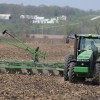
How to Produce More Food with Less Damage to Soil, Water, Forests
Massive agriculture intensification is contributing to increased deforestation, water scarcity, soil depletion and the level of greenhouse gas emission, the United Nations warns.
The Worsening Humanitarian Crisis in Syria
The cruel conflict in Syria continues to tear families apart, inflicts brutal suffering on the innocent, and leaves them pleading for protection and justice. I readily acknowledge that there have been reports of a significant drop in violence in some areas of the country, but such steps forward continue to be counter-weighted by the reality of a conflict that continues to devastate the civilian population.
Business Unusual: Valuing Water for a Sustainable Future
Valuing water is more than simply assigning costs to a scare resource - it is an essential step for transforming water governance to meet the needs of a prosperous future.
Proposed UN Pay Cuts Threaten Work Stoppage in Geneva
Facing significant reductions in US financial contributions from a politically-unpredictable Donald Trump administration, the UN Secretariat is gearing itself for a rash of austerity measures and budgetary cuts, including downsizing peacekeeping operations and cuts in development aid, reproductive health and overseas travel.
The ‘Water-Employment-Migration’ Explosive Nexus
Water--everybody talks about it, warns against its growing scarcity, excessive waste, the impact of climate change, the frequent severe droughts and so on. Now, a global action network with over 3,000 partner organisations in 183 countries comes to unveil the dangerous nexus between water, employment and migration, in particular in the Mediterranean region.
Africa Drives Global Action Against Mercury Use
With a new international treaty, an increasing number of African countries are committing to phasing out mercury, a significant health and environmental hazard.
Forty-Five Years Since Stockholm, Twenty-Five Years Since the Earth Summit and Five Years Since Rio+20
Over the past five years, I have written with a number of co-authors the history of the sustainable development movement at the global level prior to the first UN Conference on Human Environment held in 1972 through the 1992 Earth Summit and Rio+20 to the adoption of the Sustainable Development Goals and the Paris Climate Agreement. I like to think of these books as the ‘Vienna Café Trilogy’ after the café in the basement of the United Nations headquarters in New York, where many deals are done over coffee. Also, with deference to the Hitchhiker's Guide to the Galaxy: A Trilogy in Five Parts, this trilogy may also have future books.
Millions of Homes in Mexico Suffer from “Energy Poverty”
Energy poverty afflicts millions of homes in Mexico, with many social, economic and environmental impacts for the country.
Growing Unemployed Youth in Africa a Time Bomb, But…
There are nearly 420 million young Africans between the ages of 15 and 35 today. And it is estimated that within ten years, Africa will be home to one-fifth of all young people worldwide.
Valuing Water Beyond the Money
Amid the worst drought in a century, South Africans are kick-starting a global consultative process to agree on the values of water in a bid to ensure more equitable use of the finite resource.
Alert Over Lethal Virus Affecting Popular Tilapia Fish
A highly contagious disease is spreading among farmed and wild tilapia, one of the world's most important fish for human consumption, the United Nations warns, adding that though not a human health risk, Tilapia Lake Virus has large potential impact on global food security and nutrition.
Brazil Drives New School Feeding Model in the Region
“I am going back to Panama with many ideas,” said Gilda Montenegro, a nutritionist with the Panamanian Education Ministry, after getting to know the school feeding system in the city of Vitoria, in central-eastern Brazil.
Asia: 260 Million Indigenous Peoples Marginalised, Discriminated
Asia is home to the largest number of indigenous peoples on Earth, with an estimated 260 million of a total of 370 million original inhabitants worldwide. In spite of their huge number-equaling half of the combined population of Europe-- they are often victims of discrimination and denial of their rights.
Time To Focus On ‘Hidden Hunger’
As World Hunger Day May 28 approaches, it is time for us all to redouble our efforts to reach the goal of Zero Hunger by prioritizing the battle against micronutrient deficiency. If the international community pulls together this year to incorporate proven solutions such as biofortifying crops into the UN framework for sustainable development, we could reduce malnutrition on a truly global scale.
Formalising Informal Trade – Good for African Women?
Women constitute the largest share of informal traders in Africa–about 70 per cent in Southern Africa and more than half in other parts of this vast continent made up of 54 states, home to over 1,200 billion people.
In a “World of Plenty,” G7 Must Fight Famine
World leaders must step up and take action in fighting famine to prevent further catastrophic levels of hunger and deaths, said Oxfam.
Why the G7 Must Fund Health & Nutrition
The G7 Summit, held annually among the leaders of the world’s most powerful economies (Canada, France, Germany, Italy, Japan, the United Kingdom, the United States, and the EU), plays an important role in shaping responses to global challenges—theoretically at least.« Previous Page — Next Page »


Want to keep up with the latest news and views from the Global South? Sign up for IPS Daily News Report for daily emails with our top stories about international development, climate change, gender and more. (Formerly IPS TerraViva since 1993).

The Week with IPS

NEXT STOP - SDGs
Tracking global progress towards a sustainable world
