Languages
Sunday, October 25, 2026



News and Views from the Global South
Education
Palestinian Children Deserve Education, not Ethnic Cleansing
World News are more or less currently fully occupied with the U.S. – Iran debacle and to a lesser degree the Gaza genocide, the on-going war in Ukraine, and to an even lesser degree the one in Sudan.
CHINA: ‘The Ethnic Unity Law Means There Is One Acceptable Way to Be Chinese’
CIVICUS speaks about China’s recently implemented Ethnic Unity Law with Gulchehra Hoja, a correspondent for Reporters Without Borders and a Uyghur activist and journalist known for her reporting on human rights abuses against Uyghur people in China.

Who picks up the tab for AI’s unbridled genius?
For the last few years, Artificial intelligence has been making increasingly intrusive demands for our attention. It burst onto the scene like a child prodigy, enthralling us with feats of brilliance. With consummate ease, it removed drudgery from our tasks and began helping us achieve our personal and workplace objectives.
ARMENIA: ‘Anti-LGBTQI+ Discourse Is Increasingly Tied to Anti-democratic Narratives’
CIVICUS discusses disinformation campaigns targeting the LGBTQI+ community in Armenia with Hripsime Kizogyan, Executive Director of Pink Armenia, a community-based organisation that defends the human rights of LGBTQI+ people and advocates for policy change.
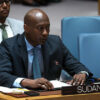
Sudan’s War Economy: Funded by Gum Arabic and Gold
In the three years since the outbreak of the Sudanese Civil War, the humanitarian crisis has deteriorated significantly, with the United Nations underscoring a blatant disregard for international humanitarian law among warring parties. This includes the deliberate targeting of civilians in residential areas, widespread sexual violence, and attacks on critical infrastructure that have hindered aid efforts and pushed communities to the brink of collapse. To manage rising military expenses, the warring parties have increasingly relied on the exploitation of trade routes and territories, prompting humanitarian experts to express concern about a persistent, self-sustaining “war economy.”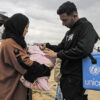
Ongoing Need for Humanitarian Assistance in the Occupied Palestinian Territory
On Monday July 20, a team from the United Nations Office for the Coordination of Humanitarian Affairs (OCHA) visited two displacement sites in Gaza where they found two family tents decimated by domestic fires. This incident is indicative of the increasing frequency of domestic fires in Gaza.
Cockroach Protests: How India’s Youth Movement Led to Minister’s Resignation
On July 25, after 50 days of protest at Delhi's Jantar Mantar, Union Education Minister Dharmendra Pradhan resigned.
Global AI Governance Cannot Wait As the Digital Divide Widens
Throughout July 2026, various United Nations (UN) bodies and global experts have underscored the need for increased comprehensive artificial intelligence (AI) governance. Although AI yields significant potential gains for global development, persistent structural barriers continue to impede equitable access and deepen the digital divide.
How Farmers Are Learning About Restoring Soils and Scaling Agroecology in Kenya
At Yumbuni Village in Kenya’s Makueni County, farmers from Vihiga and Kakamega counties have travelled over 560 kilometres to join their colleagues in Kathonzweni Ward and see the progress of experiments being carried out on different homemade organic fertilisers and other farm inputs.
A License Is Not a Teacher
Ask why so many Indian classrooms struggle, and the answers arrive in the language of audit: Too few trained teachers, too many vacancies, weak colleges of education and low accountability. Each of these is real, and each matters. Yet none of them explains a quiet confession a veteran teacher made to me, years into her career, holding a teacher training degree all the while. “Only this program”, she said, “made me realize what my prior training had left out”. The program she was referring to is a small teaching preparation program in Gurugram, North India called I Am A Teacher, or IAAT.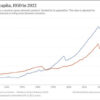
The Tale of Two Countries: Elite Stake and Development
Philippines was the most advanced Southeast Asian country with the highest per capita GDP until about the early 1960s. Its per capita GDP in purchasing power parity terms were about the same as South Korea’s and above that of Thailand in the early 1970s.The Nobel Laureate economist, Gunnar Myrdal, did not have much hope for “disease infested” Indonesia when in 1968 he published his famous Asian Drama: An Enquiry Into the Poverty of Nations. But Indonesia surged ahead since the late 1960s with growth acceleration exceeding that of Philippines; thus, eventually overtaking Philippines in GDP per capita in the mid-1980s. What factors separated Indonesia from Philippines?
UN Raises Alarm Over A Sharp Rise in Human Rights Abuses and Cholera-Related Deaths in Sudan
Throughout 2026, the humanitarian crisis in Sudan has deteriorated significantly, prompting the United Nations (UN) to raise alarm over the escalation of human rights violations. Persistent clashes between the Sudanese Armed Forces (SAF) and the Rapid Support Forces (RSF) continue to cause mass civilian casualties, drive widespread displacement, and obstruct the delivery of life-saving aid. As a result, war-torn communities are being pushed further into catastrophe, struggling with severe shortages of essential basic services and the rapid spread of infectious disease.
Women Peacebuilders: The Missing Voices at the Negotiating Table
 For most individuals, the process of peace starts with the signing of a ceasefire or an agreement among politicians. However, those who live in regions experiencing violence understand that peace is made long before politicians meet at the negotiating table. Peace is created among communities by people who work everyday to ensure that no violence takes place, and that disputes are sorted out.
Ebola Outbreak Could Cost Africa $3.6 Billion and Threaten Nearly One Million Livelihoods
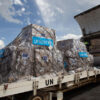
A new assessment from the United Nations Development Programme (UNDP) warns that the Ebola outbreak could cost Africa USD 3.6 billion, push 985,000 people into poverty, and put 300,000 jobs at risk.
Middle East Conflict Fallout Pushes Countries toward US$1 Trillion Fossil Fuel Subsidy Bill, warns UN Development Programme
Developing countries’ efforts to tackle the ongoing effects of conflict in the Middle East carry a high price that leaves little room for critical investments in education, health and other development priorities, according to a new report by the UN Development Programme (UNDP) released today.
Agency Cannot Be Decreed
India's new education policy asks a great deal of its teachers. The National Education Policy of 2020 and its NISHTHA (National Initiative for School Heads' and Teachers' Holistic Advancement) training scheme, want teachers to be more than deliverers of syllabus. They are to be empowered professionals, agents of change who shape the future of children and, the policy says, of the nation itself. It is a generous and welcome ambition.
Universities Join Hands to Enhance Agroforestry Research for Mitigating Climate Change
A team of universities, led by Addis Ababa University, has joined forces to implement a four-year Intra-Africa academic mobility project aimed at strengthening agroforestry research and education for climate change mitigation.
GHANA: ‘This Is Bigger than Lgbtqi+ Rights – It’s about the Kind of Society We Want to Be’
CIVICUS discusses Ghana’s anti-LGBTQI+ law with Leila Lariba, Executive Director of One Love Sisters Ghana, a community-driven organisation that advances human rights, social inclusion and wellbeing for Muslim LGBTQI+ people in Ghana.
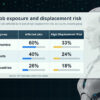
AI Will Destabilize Jobs, the Middle Class and the Welfare State Unless We Act in Time
Artificial intelligence (AI) promises remarkable gains in productivity, science, medicine and education. But it is also poised to wipe out millions of jobs, hollow out the middle class, and drain the tax revenues that pay for hospitals, schools and pensions. The process has already begun, and the time to act is running out.
From Rotten Tomatoes to AI: Ugandan Commonwealth Youth Award Winner Takes Aim at Hunger Across Africa
Before anyone called her an innovator, before artificial intelligence entered the conversation, before solar-powered cold rooms, before the language of sustainable development, Shifra Ainomugisha knew food loss in its painful form.
Dwindling Humanitarian Aid Devastates the Rohingyas in the World’s Largest Refugee Camp
Nearly nine years after the violent persecution of the Rohingya minority population in Myanmar and the following mass exodus of refugees, over 1.2 million Rohingya currently reside in neighbouring Bangladesh, where they face immense challenges. With the United Nations (UN) recording significant shortfalls in global humanitarian funding, alongside Bangladesh’s diminishing ability to support these populations, experts warn of a deepening humanitarian crisis.« Previous Page — Next Page »





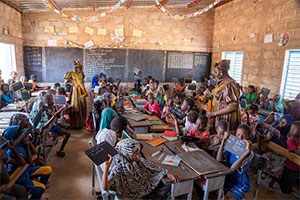 Two teachers work in a classroom in Forces Vives School in Dori, Burkina Faso. Credit: UNICEF/UNI978361
Safe and uninterrupted education is a fundamental right for all children. Education is paramount to global development, as it has been proven that investing in education – especially for girls and children – contributes significantly to economic growth and prosperity. Although more than 1 billion children go to school, many are subjected to conditions that are not conducive to a proper learning environment, including makeshift facilities, a lack of supplies, violence in classrooms, inadequate sanitation, untrained instructors, and widespread school closures. Since 2015, there have been immense gains in education with an increase of 109 million children in school. However, as of 2023, 272 million children are still out of school.
High poverty levels in developing countries also impede children’s access to a proper education. For example, from the early to mid 2000s, Sub-Saharan African nations witnessed a dramatic decline in trained teachers due to inadequate funding in the education sector. Furthermore, major cuts to United States international aid threaten an estimated 23 million additional children's access to education, as USAID‑funded school programmes across Africa and Asia face closure.
Various other factors contribute to the decline of education, notably hunger, which has increased as conflict and climate change interfere with global food production and dissemination. Meanwhile, certain social and cultural practices also impede children’s access to education, with gender inequality, discrimination, child labour, and child marriages preventing millions of children from attending school. Economic conditions such as the inaccessibility of higher education also affect disenfranchised communities across the world. In extreme situations, such as warfare where educational facilities are destroyed in their totality, notably in Gaza and Sudan, entire generations of children might grow up without access to education. Rebuilding educational infrastructure is a long and arduous process, especially when violence persists across generations, and this significantly stunts the development of societal prosperity and stability.
IPS is dedicated to telling the shocking truths about worldwide education through impassioned opinion pieces and comprehensive articles, highlighting global issues that impede worldwide education and the courses of action being taken by organizations such as UNICEF and Education Cannot Wait.

The Week with IPS

NEXT STOP - SDGs
Tracking global progress towards a sustainable world
Tracking global progress towards a sustainable world
