Languages
Wednesday, September 30, 2026



News and Views from the Global South
Africa

How Community Radio Is Powering Tanzania’s Climate Resilience
At dawn in the mangrove-choked Rufiji estuary, paddles from wooden canoes slice through still waters as a soft voice drifts across the tide.
Thousands Gather in Nairobi as Science Meets Diplomacy for Planet Protection
“There will never be a better time than now to invest in a stable climate, thriving ecosystems, and resilient lands, or in sustainable development that delivers for all,” said Amina J. Mohammed, the deputy Secretary-General of the United Nations, during the opening plenary of the seventh meeting of the UN Environment Assembly (UNEA-7) taking place from December 8 to 12, 2025.
Farmers Earn While Reviving Native Forests Through a Blockchain-Powered App
For years, Morris Onyango had been trying to reforest his degraded land on the shores of River Nzoia, in Siaya county, 430 kilometers from Kenya’s Capital, Nairobi. But every time he planted trees on his farm, his efforts bore little fruit, as floodwaters would not only wash away his tree seedlings but also fertile topsoil on his land.
Africa’s Industrial Future is Within Reach: What we Need now is Intentional Investment
Africa enters 2025 at a pivotal moment in its development. The ambition to transform the continent’s economies through sustainable industrialization, regional integration, and innovation is clearer than ever, and is picking up pace. The foundations are being laid. Industrial strategies are expanding, regional integration is progressing, infrastructure projects are advancing, and a young, dynamic private sector powers local economies.
In Zimbabwe, School Children Are Turning Waste Into Renewable Energy-Powered Lanterns
When going home after school, Monica Ben not only takes with her a pen and exercise books but also a lantern to light the dark room and completes her daily homework in Mashonaland East province.
Fresh Lens For Nuanced Multifaceted Climate Solutions Needed
“I see more philanthropic support aligning with systems thinking, linking climate stability, biodiversity protection, Indigenous leadership, and community resilience,” says Michael Northrop, Program Director at the Rockefeller Brothers Fund.
From Village Vision to Vital Innovation: How One Student is Revolutionizing Healthcare in Malawi
In the quiet hills of Chamhanya Gondwe village in Malawi’s Mzimba district, a young boy once watched his community struggle with limited access to healthcare.
Vulnerable Populations Will Suffer With UNAIDS Early Closure
“It’s like adding fuel to an already burning fire,” says Aditia Taslim. “We have not recovered from the impact of the US funding cuts earlier this year, and closing down UNAIDS prematurely will only make things worse, especially for key populations and other criminalized groups, including people who use drugs,” Taslim, who is Advocacy Lead at the International Network of People Who Use Drugs (INPUD), tells IPS.
Africa’s Critical Minerals Poised to Power Global Green Energy Transition
Although Africa holds more than 30 per cent of the world’s critical green minerals—including cobalt, lithium, manganese, and rare earth elements vital for building batteries, wind turbines and solar panels— this has not translated into prosperity for the continent.
Authorities Urged to Take Lawful Measures to Stop Mass Abductions in Nigeria
On the morning of 17 November 2025, darkness cloaked Maga town in the Danko/Wasagu Local Government Area, Kebbi State, until gunfire shattered the silence. It was around 4 am when armed attackers stormed the Government Girls Comprehensive Secondary School, firing into the air to terrify residents before heading to the staff quarters. There, they killed two, including Hassan Yakubu, the school’s Chief Security Officer and then abducted 26 female students.
Burkina Faso: Three Years of Broken Promises
Three years ago, Captain Ibrahim Traoré seized power in Burkina Faso with two promises that have proved hollow: to address the country’s deepening security crisis and restore civilian rule. Now he has postponed elections until 2029, dissolved the independent electoral commission and pulled the country out of the Economic Community of West African States (ECOWAS) and the International Criminal Court (ICC). Burkina Faso has become a military dictatorship.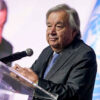
South Africa’s G20 Presidency: Diplomatic Victory, but a Weak Final Declaration
US president Donald Trump’s efforts to derail a successful wrap-up of the G20 summit in Johannesburg failed. Trump boycotted the meeting and the US told other countries through diplomatic channels not to sign a communiqué. Nevertheless, the 19 remaining countries and regional organisations signed a 30-page declaration.
Trump’s Threat of ‘Military Action’ in Nigeria Stokes Religious Tensions
Diplomatic relations between Nigeria and the US have continued to sour after US President Donald Trump threatened 'military' intervention over what some American lawmakers have called “Christian genocide” in Africa’s most populous country.
Zanzibar’s Battle to Save Endangered Turtles Intensifies as Global Study Exposes Deadly Microplastic Threat
On a warm morning at Matemwe, a small crowd gathers behind a rope barrier as the sand begins to tremble. A tiny head pushes through a soft mound of earth, then another, and another. Within minutes, the shallow nest—protected for weeks by a ring of wooden stakes and mesh—comes alive with the rustle of dozens of hatchlings. Volunteers crouch nearby, recording the emergence time and shading the small creatures with their hands to protect them from swooping gulls.
From COP28 to Belém – Climate Security is Health Security
Around the world, the climate crisis is fast becoming the biggest public-health threat of the century. Extreme heat now kills more Europeans than any other natural disaster. Floods in Asia displace millions and contaminate water supplies. Mosquito-borne diseases once confined to the tropics are appearing in southern Europe and the United States.
Beyond Buzzwords: COP30’s Opportunity to Deliver on Sustainable Food Systems
The language of agricultural sustainability changes like the seasons—from “climate-smart” to “regenerative,” “agroecological,” and “nature-positive.” Each term reflects good intentions, but the growing list risks duplication, confusion and delays.
Africa has a Debt Crisis: Momentum from G20 in South Africa can Help Find Solutions
The end of South Africa’s G20 presidency does not mean the end of its ability or responsibility to promote the issues it prioritised during 2025. It can still advocate for action on some of these issues through its further participation in the G20 and in other international and regional forums.
Civil Society Warns of New Land Grabs as World Bank Pushes for Tenure Reforms in Africa
As the COP30 negotiations intensify in Belém, Brazil, civil society organizations and research experts have called out major financial institutions for promoting foreign interests in controlling Africa's land by formalizing land tenure and seeking to convert Africa's land into industrial farms or carbon markets.
Why Climate Finance Is Vital for the Implementation of NDCs in Africa
Funding cuts from the United States, the United Kingdom and Europe have left a funding gap in climate change programmes across Africa.
Why Food and Agriculture Should Be at the Centre of COP30 Agenda
As the COP30 entered its second week in Brazil, the urgency to tackle climate change has never been greater, as is the appetite to feed a growing world population.
Pan-African Activist Advocates for Climate-Resilient Food, Education Systems at Belém Talks
“I am the founder of the ‘I Lead Climate Action Initiative,’ which is a Pan-African movement that carries out grassroots-based climate action to address the climate crisis in Africa. We advocate for the restoration of Lake Chad, the world’s largest environmental crisis through research and engagement,” says Adenike Titilope Oladosu.« Previous Page — Next Page »


The Week with IPS

NEXT STOP - SDGs
Tracking global progress towards a sustainable world
Tracking global progress towards a sustainable world
