Languages
Tuesday, September 29, 2026



News and Views from the Global South
Africa

Thousands of Kenya’s Smallholder Coffee Farmers Risk Losing EU Market as Deforestation Law Takes Effect
For the last twenty years, Sarah Nyaga, a smallholder farmer from Embu County in central Kenya, has farmed coffee. Like most across Kenya, she relies on the export market. A greater percentage of Kenya’s coffee ends up within the European Union market, but a new law threatens to disrupt what has been a source of income for thousands of farmers like Nyaga.
Guinea’s Path to Electoral Autocracy
In December, the dust settled on Guinea’s first presidential election since the military took control in a 2021 coup. General Mamady Doumbouya stayed in power after receiving 87 per cent of the vote. But the outcome was never in doubt: this was no a democratic milestone; it was the culmination of Guinea’s denied transition to civilian rule.
World Living Beyond Its Means: Warns UN’s Global Water Bankruptcy Report
The world has entered what United Nations researchers now describe as an era of Global Water Bankruptcy, a condition where humanity has irreversibly overspent the planet’s water resources, leaving ecosystems, economies, and communities unable to recover to previous levels.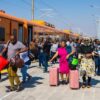
How Extreme Weather is Testing Tanzania’s $2 Billion Electric Railway Dream
On a rainy Wednesday morning, in Dodoma, the capital of Tanzania, the Standard Gauge Railway (SGR) terminal bustled with a steady flow of passengers. Women ushered toddlers along. Snack bags dangling on their hands. Tourists dragged wheeled suitcases across the floor. Students scrolled through smartphones as they returned to campus. Each had been attracted by the speed, reliability and comfort of the electric train.
What Next? United States Exits Key Entities, Vital Climate Treaties in Major Retreat from Global Cooperation
President Donald Trump has escalated efforts to further distance the United States from international organizations and entities focused on climate, the environment, and energy. This strategy is in step with his administration’s established approach to undermine and redirect funds and international cooperation away from climate and clean energy programs.
Excluding Food Systems From Climate Deal Is a Recipe for Disaster
As they ate catered meals, COP30 negotiators had no appetite for fixing broken food systems, a major source of climate pollution, experts warn. Food systems are the complete journey food takes—from the farm to fork—which means its growing, processing, distribution, trade and consumption and even the waste.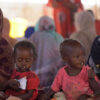
Sudan’s War Nears 1,000 Days as Violence and Hunger Reach Unprecedented Levels
As Sudan approaches 1,000 days of civil war, late December and early January saw a brutal escalation of violence, with drone strikes hitting areas at the center of the country’s deepening hunger crisis.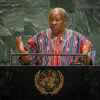
Africa Squeezed Between Import Substitution and Dependency Syndrome
Squeezed between import substitution and dependency syndrome, a condition characterized by a set of associated economic symptoms—that is rules and regulations—majority of African countries are shifting from United States and Europe to an incoherent alternative bilateral partnerships with Russia, China and the Global South.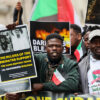
Sudan’s Crisis: Mass Killings Continue While the World Looks Away
Satellite images show corpses piled high in El Fasher, North Darfur, awaiting mass burial or cremation as the Rapid Support Forces (RSF) militia tries to cover up the scale of its crimes. Up to 150,000 El Fasher residents remain missing from the city, seized by the RSF in November. The lowest estimate is that 60,000 are dead. The Arab militia has ethnically cleansed the city of its non-Arab residents. The slaughter is the latest horrific episode in the war between the RSF and the Sudan Armed Forces, sparked by a power battle between military leaders in April 2023.
‘Zambia Has Environmental Laws and Standards on Paper – the Problem Is Their Implementation’
CIVICUS discusses environmental accountability in Zambia with Christian-Geraud Neema, Africa editor at the China Global South Project, an independent journalism initiative that covers and follows China’s activities in global south countries.
The Fight Against Femicide: Victories and Setbacks in 2025
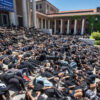
Hours before world leaders gathered in Johannesburg for the 2025 G20 summit in November, hundreds of South African women wearing black lay down in a city park for 15 minutes — one for each woman who loses her life every day to gender-based violence in the country. The striking visual protest was organised by a civil society organisation, Women for Change, which also gathered over a million signatures demanding the government declare gender-based violence (GBV) a national disaster. Hours later, the government acquiesced.
In Kenya, Smallholder Farmers Push Back Against Corporate Control of Agriculture
For the past two years, Samuel Ndungu, a smallholder farmer, has been growing organic food and supplying it to the local market in Githunguri, just outside Nairobi.
‘From the Moment They Enter Libya, Migrants Risk Being Arbitrarily Arrested, Tortured and Killed’
CIVICUS discusses migrants’ rights in Libya with Sarra Zidi, political scientist and researcher for HuMENA, an international civil society organisation (CSO) that advances democracy, human rights and social justice across the Middle East and North Africa.
Nigeria: Will Nnamdi Kanu’s Life Sentence End the Violent Agitation for Biafra?
On 20 November 2025, a Nigerian court in Abuja sentenced separatist leader Nnamdi Kanu to life imprisonment after finding him guilty of terrorism and several related offenses, bringing an end to a decade-long legal battle.
Day Laborers, Trapped in a Complex War Between M25 Rebels and the DRC, Return Home
Fulgence Ndayizeye, a Burundian bicycle taxi driver who used to cross the Congolese-Burundian border every day to support his family, wanted to return home. He and more than 500 other Burundians, including women, men, and children, stranded in Uvira on the border between the DRC and Rwanda, were finally allowed to return to their country on Sunday, December 14, 2025, by M23-Congo River Alliance (AFC) rebels after being stuck in the DRC due to an M23 rebel offensive that had taken the town a few days earlier.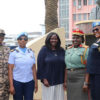
Namibia Leads the Way: Honouring 25 years of Women, Peace and Security
Last November, the streets of Windhoek came alive with the sound of drums and brass as a marching band led a procession of women from Namibia’s Defence and security forces.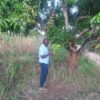
Farmers Can Now Measure and Benefit From Fruit Tree Carbon Trade
Farmers can now know and benefit from their contribution to climate change thanks to a formula that can be used to calculate the amount of carbon stored in fruit trees.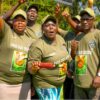
Kenyan Court Restores Seed Freedom: Landmark Ruling Boost for Food Security and Sovereignty
For years, smallholder farmers across Kenya have been engaged in a legal battle with the government over a law that criminalizes the practice of saving, sharing and exchanging indigenous seeds.
Refugees Forced to Fill Gaps as Funding, Power and Legal Recognition Move Out of Reach
The global refugee system is entering a period of deep strain. The delivery of protection and assistance is undergoing a transformation due to funding cuts, institutional reforms, and shifting donor priorities.
From Law to Lives Saved: How the Maternal Newborn and Child Health Bill Can Deliver Universal Health Coverage
For women in labour across Kenya, reaching a health facility, finding skilled health workers, and affording care can be a matter of life and death. These challenges are not rare, but daily realities for many families.
How Community Radio Is Powering Tanzania’s Climate Resilience
At dawn in the mangrove-choked Rufiji estuary, paddles from wooden canoes slice through still waters as a soft voice drifts across the tide.« Previous Page — Next Page »


The Week with IPS

NEXT STOP - SDGs
Tracking global progress towards a sustainable world
Tracking global progress towards a sustainable world
