Languages
Thursday, November 19, 2026



News and Views from the Global South
Africa
AFRICA: Threat of a Perfect Storm – AIDS and a Fresh Food Crisis
In November, the Food and Agriculture Organisation was just one of many voices warning that food prices have risen to levels last seen at the start of the 2007-2008 crisis. A majority of the countries most exposed to a repeat of that problem are in Africa, where vulnerability to food security is exacerbated by AIDS.
UGANDA: Carbon Finance May Not Benefit Forest Communities
Uganda has lost more than two million hectares of forest since 1990, mostly converted to farmland by a growing population of smallholders. Carbon finance through the REDD programme is often presented as one way to arrest this destruction, but only if the benefits clearly translate to the grassroots.
Gender-Based Violence: ‘Zimbabwe Police Officers Forget Themselves’
Tasha Ncube* has no kind words for the police. Early last month, the 31-year-old mother of two was beaten several times by her husband over what she says were small arguments. This was the first time in a marriage that has gone for years without any such occurrence.ZAMBIA: Drugs Kit Helps Mothers Protect Babies
A thousand babies are infected with HIV every day - in pregnancy, during birth and through breastfeeding. Close to 400,000 African children are infected with HIV every year.
SOUTHERN AFRICA: Watchful Eye on Deadly Stock Disease
Government spokesperson Dr Mohamed Bakari says Tanzania has contained an epidemic of viral disease that had affected the northern part of the country, mainly around Arusha, since the start of the year.SIERRA LEONE: (Misused) Key to Malaria Prevention
Lucky for Osman Conteh that one of his aunts disagreed with the family consensus that he had been stricken by an evil spirit. She insisted the twitching, incoherently babbling child be taken to the hospital rather than a witch doctor.
Slowly Winning Fight Against FGM in Northern Senegal
The harm done by female genital mutilation is still enormous in Podor, a city in the north of Senegal, say officials at the local hospital. While the practice is declining slightly, some religious leaders in the region still support it.Zambia Must Fulfill Promises to Children Living With AIDS
Less than one in four Zambian children who should be on life-saving anti-retroviral drugs is receiving them. The country planned to increase the number of children on ARVs from the present 20,000 to 120,000, but inadequate facilities pose a major stumbling block.
CLIMATE CHANGE: Don’t Look to South Africa for Leadership
South Africa is Africa’s largest economy and the continent's biggest emitter of greenhouse gases. The country’s emissions per capita are on par with those of the United Kingdom, and more than twice as high as China’s emissions by the same measure.
Prenatal Care Key to Reducing Maternal Mortality
Despite successive awareness campaigns, many Malian women see no need to attend pre-natal check-ups. Health workers say this results in an elevated rate of maternal and infant mortality.
Senegal Debates Merits of Ban on Begging
The face of the Senegalese capital has been transformed. The beggars who swarmed along its major arteries, especially in the centre of the city, its biggest markets and independence square are gone.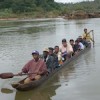
MADAGASCAR: New Livelihoods to Protect A River’s Life
The Nosivolo River has the greatest concentration of freshwater fish species in Madagascar. Strengthening protection of the river's biodiversity has involved transforming the livelihoods of local people.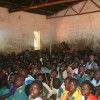
Promise of Elbow Room for Malawi Students
The announcement that 5,000 new classrooms will be built thanks to a $140 million World Bank loan would come as welcome news at the Chitowo Primary School - if only the children sitting on the floors, perched on doors and in windows, even taking lessons in the dust beneath trees in the yard could hear it.
UGANDA: ICT Boom for Economy, A Bust for Some Women
The rapid growth of the ICT market in Uganda has been greeted with optimism over its potential to boost the country’s development. But less attention is being paid to the increase in gender based violence due to the use of information and communications technology.
/UPDATE*/: Bypass Under Way At Mozambique Smelter
Aluminium giant BHP Billiton’s Mozal smelter has begun bypassing its fume treatment centres, emitting potentially dangerous fumes into the air without treating them first - despite a pending court case on the matter.
CONGO: Beninois Fishing Community Evicted
The Autonomous Port of Pointe-Noire has evicted 8,000 residents of a fishing village to make way for expanded facilities. The move is a blow to the community's livelihoods, as well as closing down the market that supplied the city's poor with affordable protein.MALAWI: Traditional Birthing House Rises From the Rubble
Cecilia Tomoka's birthing centre stood unused for three years before the 2009 earthquake flattened it. Now she's rebuilding the house - and her practice - as Malawi's government lifts a ban on traditional birth attendants.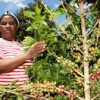
KENYA: A Brand New Constitution, But Can Women Enjoy Land Rights?
Mary Kimani wishes her husband were still alive. Holding her one-year-old son in one hand and a hoe in the other, she recounts with bitterness how she and her children lost their livelihood to her husband’s family.
ETHIOPIA: First Carbon Finance Spreads Green Over Highland
It has been decades since the people of the Humbo Woreda have been self-sufficient in food. A Clean Development Mechanism project - Ethiopia's first - is restoring the environment and sustaining livelihoods along with it.
ECONOMY-ZIMBABWE: Consumers May be Happy But Workers Aren’t
South African retail giant Pick-‘n-Pay increased its stake from 25 to 49 percent in TM Supermarkets – Zimbabwe’s largest grocer – in October in a deal worth about 13 million dollars. But, while the champagne corks pop in the boardroom, employees are not upbeat.
ENVIRONMENT-TANZANIA : Protecting the World’s Most Expensive Tree
With the snow-capped peak of Mount Kilimanjaro providing a backdrop under simmering tropical sunshine, a group of women in Mijongweni village break into song.« Previous Page — Next Page »


The Week with IPS

NEXT STOP - SDGs
Tracking global progress towards a sustainable world
Tracking global progress towards a sustainable world
