Languages
Tuesday, October 20, 2026



News and Views from the Global South
Africa

Laureates Call For Moonshot Innovation Effort to Avert Hunger Catastrophe
Neglected indigenous crops, rich in nutrition and resilient to climate change, are key to tackling global hunger only if governments invest in research and development (R&D) to tap the potential of such innovations. More than 150 Nobel and World Food Prize Laureates are calling for investment in moonshot technologies to realize the potential of innovative solutions such as these hardy crops, warning that without swift action, there is a "food insecure, unstable world.”
Unlocking SDG Success: How Better Data Can Develop Africa
That one in three Africans will not be counted as countries failing to meet census deadlines is a huge setback for development planning.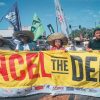
Developing Countries are Being Choked by Debt: This Could be the Year of Breaking Free
The debt disaster is back. Indeed, the aid agency Cafod reports that developing countries today face “the most acute debt crisis in history”.
Sudan’s Humanitarian Crisis Expected to Worsen in 2025
As the Civil War rages on in Sudan, the nationwide humanitarian crisis continues to worsen. Armed conflict has caused an escalation in civilian casualties and displacement in the past few months. Additionally, famine looms in the nation’s most conflict-impacted areas, which is exacerbated by tightened restrictions that impede humanitarian aid deliveries. Despite numerous calls for a cessation of hostilities by the international community, relief efforts are severely underfunded.
The most Secret Memory of Men and the Disgraceful Condemnation of Two African Authors
In 2021, the Senegalese novelist Mohamed Mbougar Sarr became the first writer from sub-Saharan Africa to be awarded the Prix Goncourt, France’s oldest and most prestigious literary prize.
Tanzania’s Disaster Preparedness: A Nation on Edge
As the dust settled over Kariakoo’s bustling streets, Halima Abdallah’s voice trembled through the cracks of a collapsed four-story building. “Help me, please! I don’t get air,” she gasped, trapped under the rubble. For four hours, rescue workers scrambled to locate her. Their efforts, hampered by the lack of proper equipment, relied on tools hastily borrowed from a private company. By the time they reached her, it was too late. Abdallah had died.
Who Will Save Nigeria’s Coastal City on the Brink of Extinction?
In 2021, Ojajuni Olufunsho, a 53-year-old resident of Ayetoro, a town along the Atlantic coast, southwestern Nigeria, saw her home swept away by the encroaching sea. What was once a spacious 10-room house, a sanctuary for Olufunsho and her five children, was swallowed by the relentless force of rising sea waters.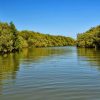
Innovative Financing to Unlock Africa’s Blue Economy
Securing new financing for global good has become more challenging than ever. Negotiations at the recently-concluded COP16 on Nature and Biodiversity failed to reach an agreement on establishing a fund to support the implementation of the Framework for Nature agreed in 2022 under the Montreal-Kunming agreement.
Japanese Bank Criticized for Financing Mozambique LNG Project Blamed for Displacement
Climate and environmental activists from Japan have criticized the Japan Bank for International Cooperation (JBIC) for financing the controversial Mozambique Liquefied Natural Gas (LNG) project to the tune of USD 3 billion in a loan signed in July.
Museum of Modern Art Set to Launch in Cotonou, Showcase Beninese Artists
Construction of the new Museum of Modern Art is underway in Cotonou, Benin’s largest city. The museum, along with three others being built throughout the country, are part of the Beninese government’s extensive plan to ramp up the nation’s tourism industry and preserve its culture. It is expected to open at the end of 2026.
Did Togo Reforms Entrench President Gnassingbé’s Power?
In May 2024, Togo's President Faure Gnassingbé signed a new constitution, transitioning the country from a presidential to a parliamentary system. Under this new framework, lawmakers are responsible for electing the president.
African Public Transport Struggles To Match Urban Growth
As the population in African cities grows, governments are struggling to provide sustainable public transport solutions, conditions that have led to gridlock in major business districts.
Interlinked Solutions Key to Tackling Biodiversity, Water, Food, Health and Climate Change, says IPBES
Biological diversity is on the decline worldwide, and current approaches to address its loss have been piecemeal and ineffective in tackling the crisis facing nature—this is despite estimates that over half of global GDP (USD 58 trillion of economic activity in 2023) is generated in sectors that are moderately to highly dependent on nature, a new report by the Intergovernmental Platform on Biodiversity and Ecosystem Services (IPBES) finds.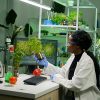
How an African Bioeconomy Can Strengthen Agrifood Systems in the Context of a Changing Climate
From increased pests and diseases to lower crop yields and extreme weather events, the adverse impacts of climate change on agriculture in Africa cannot be overstated.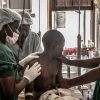
Bridging the Gap in Africa’s Surgical Care Crisis
For decades, preventable deaths, lifelong disabilities, and disfigurements presented devastating consequences for over 90% of the population in Africa, where surgical care remains largely out of reach.
Small Island States Put Faith in International Court’s ‘Wayfinding’ Advisory Opinion
The “crazy, weird and at some point (what seemed like) insurmountable” plan to ask the International Court of Justice for an advisory opinion on the obligations of UN member states regarding climate change was a success, Vishal Prasad, a representative for the. Pacific Islands Students Fighting Climate Change (PISFCC) said at a post-hearing press conference today (December 13).
Intra-Regional Relations the Key To Sustainable Development in the Horn of Africa
The Horn of Africa holds the resources and potential for lasting development and resilience. The countries in the subregion and development partners need to come together to invest in regional cooperation and resource management.
Escalation of Violence in Sudan Raises Concern of Nationwide Collapse
On December 9, a wave of bombardments hit a market district in Sudan, killing at least 127 people. Over eight barrel bombs were launched on the North Darfur town Kabkabiya, marking the latest attacks on densely populated areas that occurred throughout the course of the Sudanese Civil War. Both the Rapid Support Forces (RSF) and the Sudanese Armed Forces (SAF) have received immense criticism from humanitarian organizations for committing abuses against civilians that constitute violations of international humanitarian law.
Once Scattered by Colonialism, Today United in Urgent Pursuit of Climate Justice
The Seychelles consider the ongoing public hearings at the International Court of Justice (ICJ) both timely and critical “for the people of the small island developing state in the middle of the Indian Ocean,” Flavien Joubert, Minister for Agriculture, Climate Change and Environment of the Seychelles, told the court today.
Nature Can Help Africa Make the Most of COP29 Outcomes
Despite mixed reactions to the outcomes of COP29, Africa has the opportunity to take the lead in harnessing nature to tackle the effects of climate change and secure a resilient future.
Water Shortages Hit Zimbabwe Towns as Country Struggles To Overcome Impact of El Niño
At a borehole not far from Mpopoma High School in Bulawayo, Zimbabwe’s second largest city, 48-year-old Sakhile Mulawuzi balances a white 25-liter bucket of water on her head as she holds another 10-liter blue bucket filled with water. She trudges these back home along a narrow pathway leading to her house in Mpopoma, one of the high-density areas here.« Previous Page — Next Page »





The Week with IPS

NEXT STOP - SDGs
Tracking global progress towards a sustainable world
Tracking global progress towards a sustainable world
