Languages
Friday, November 20, 2026



News and Views from the Global South
Africa

AFRICA: Raising the Profile of Gender-Based Violence
Imagine you are a journalist; you get a tip for a story about a sexual assault on a ten-year-old girl, and pitch it to your editor.
DEVELOPMENT-AFRICA: Women in Pursuit of Knowledge
While Africa is still far from having adequate capacity for scientific innovation, women are more and more present in the field of research for the continent's sustainable development.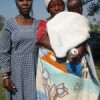
DRC: Respect and Protect Civilians
A government offensive against rebels in the eastern Democratic Republic of Congo that began in January has dramatically increased sexual violence in the provinces of North and South Kivu.HEALTH-AFRICA: Family Planning: Expand Role For Private Sector
Dwindling donor support in the face of rising contraceptive demand, combined with diminishing government budgets could make already widespread shortfalls in the provision of contraceptives worse. African reproductive health experts are suggesting that the private sector could be the key to filling the gap.RIGHTS-GAMBIA: Hydara Six Convicted on Sedition Charge
A high court judge in Gambia has convicted six Gambian journalists on charges of defamation and sedition.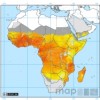
HEALTH-AFRICA: Better Tools to Target Malaria
Roughly a billion dollars a year is spent fighting malaria. Using this money most effectively calls for a detailed understanding of exactly who is at risk - enter the Malaria Atlas Project (MAP).
SWAZILAND: Govt in Court Over Property Rights
In a battle for gender equality, well-known Swazi women’s rights activist Doo Aphane has taken government to court. Aphane is contesting legislation that prohibits her from registering property in her maiden name jointly with her husband.
RIGHTS: Outspoken Activists Defend Africa’s Sexual Diversity
The second World Outgames, held in the Danish capital, offered up a veritable smorgasbord of sport, politics and arts while celebrating sexual and gender diversity. But it also reminded participants that bigotry against lesbian, gay, bisexual and transgender (LGBT) people, sometimes culminating in violence, remains a scourge across the world.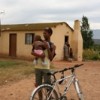
HEALTH-SOUTH AFRICA: Wheeling and Healing
Every weekday morning, a stylish procession leaves the offices of MaAfrika Tikkun NGO in Delft, Cape Town; bumps and jolts through the gravel entry gates; then hits the tar and scatters into every corner of the township...
AGRICULTURE: Cultivating Rural Prosperity in Cameroon
Emilie Nyate has a two million CFA smile on her face these days. She's one of the beneficiaries of the Roots and Tubers Market- Oriented Programme, known better by its French acronym of PNDRT, which is transforming the lives of small-scale farmers in Cameroon.ZAMBIA: NGO Bill Still Inspires No Confidence
As the Zambian parliament resumes, civil society organisations (CSOs) have come out strongly to oppose the Non-Governmental Organisation (NGO) Bill, which seeks to regulate their operations.
HEALTH: Fighting AIDS in Conservative Mauritania
Campaigners against HIV/AIDS in Mauritania face an uphill task to put their messages across, especially those that deal with safer sex and condom use. Campaigners have to cut corners in order to avoid angering the country's powerful religious clerics.ENERGY-CAMEROON: Dam Project Questioned
Construction has begun on a new dam at the confluence of the Lom and Pangar rivers in Cameroon. The government is pushing the project as key to addressing an energy shortfall, allowing for economic growth; observers believe the plan may only increase the country's vulnerability to drought.HEALTH-AFRICA: TB Vaccine In The Pipeline
For the first time in eighty years, a new Tuberculosis (TB) vaccine has entered the efficacy stage of a clinical trial. While the developers are optimistic about the outcome, lung health and TB experts are warning against being overly excited.CAMEROON: Fears for Forest as Dam Construction Begins
Crouched on a low wooden stool in front of his mud hut in the village of Pangar, Alain Selembe puffs away at his clay pipe, his gaze lost in the surrounding forest, quite oblivious to the noise made by his two playing daughters. All he hears is the rumbling of bulldozers opening up a 30 kilometre road from Deng Deng village to the confluence of the Lom and Pangar rivers, where the government plans to construct a new dam.RELIGION-NIGERIA: Poverty, Frustration Fuel Sectarian Violence
The sectarian violence which broke out in several parts of northern Nigeria at the end of July has more to do with popular anger and frustration with prevailing economic conditions than religion, say religious experts and Muslim groups. Concerns have also been raised about the reaction of security forces.
TANZANIA: Solutions to Dar's Water Problems in the Pipeline
In the nine months since she moved to the Dar es Salaam neighbourhood of Kinondoni, Anna Christopher has only seen water running from her taps once.FINANCE: Africa Wants Greater Voice at IMF
Civil society in Kenya has urged the International Monetary Fund (IMF) for greater representation within its decision making boards and the formation of a dispute resolution body.WATER-TANZANIA: Who Pays the Piper?
When John Rubara* and his family moved into their new house in Dar es Salaam's Tabata Kimanga, a fast-growing middle-income neighbourhood in Temeke district, the water company disconnected their supply because the previous owner was in arrears.
HEALTH-AFRICA: Early ART: A Stitch in Time…
A global call to put people living with HIV on antiretroviral therapy (ART) at an earlier stage of their illness is intensifying, but most developing countries, especially in Africa, are struggling to meet the current recommendations.
ECONOMY-RWANDA: Credit for Women's Development
In early July, Rwandan officials announced a new programme that aims to strengthen women's economic capacity by providing more access to credit and enabling them to start income generating projects.« Previous Page — Next Page »


The Week with IPS

NEXT STOP - SDGs
Tracking global progress towards a sustainable world
Tracking global progress towards a sustainable world
