Languages
Friday, November 20, 2026



News and Views from the Global South
Africa
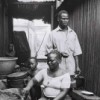
ECONOMY-NIGERIA: Fears of Further Pain
With no formal education, Mama Ibeji may not be tracking the global economic crisis in the newspapers. But from her little roadside restaurant in Makoko, a Lagos suburb, she can tell that all is not well with the Nigerian economy.
ENVIRONMENT-MALAWI: Elephants Out of Harm’s Way
A South African capture team has almost completed the translocation of a herd of elephants from the Phirilongwe forest reserve located in a communal management area in southern Malawi.
POLITICS-SOUTH SUDAN: Women Ready To Take Their Place
When the women of South Sudan welcomed the signing of the Comprehensive Peace Agreement (CPA) in 2005, they were cognizant of the fact that true democracy will be realised only when their human rights are realised.
RIGHTS-GAMBIA: Who Killed Deyda Hydara?
Six of the seven Gambian Press Union (GPU) officials and journalists arrested last week have now been freed on bail. The journalists still face serious charges including "conspiracy to publish with seditious intention".
ECONOMY-ZAMBIA: Hard Times on the Copperbelt
Nowhere in Zambia is the impact of the global financial crisis being felt harder than in the copper and cobalt-rich province of the Copperbelt.RIGHTS-NAMIBIA: 'Cut, Cut Again and Now Tie Tightly'
Anna Shikongo* wanted many more children, but five-month old Johannes, perched on her lap, will forever be her lastborn. She was sterilised by doctors at a government hospital. Now she is ready to take the government to court.DEVELOPMENT-ZIMBABWE: Investor Absence Fuels Retrenchments
Forty-year-old Thelma Dube was this month told by her long-time employer to stay home. She will be called back to work when business picks up. Her husband got the same instruction, as did hundreds of other workers at the company Textile Mills in Zimbabwe’s second largest city.DEVELOPMENT: Investment in Small Farmers Crucial in Africa
Attempts to alleviate poverty and hunger and boost African economies are futile if the needs and potential of small-scale farmers in the region are ignored and the issue of trade barriers remains unaddressed.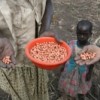
AGRICULTURE-AFRICA: Seeking Diversity, Resilience and Farmer Control
The Alliance for a Green Revolution in Africa (AGRA) claims that its "stress breeding", high-yield seed program and its emphasis on grassroots farmer input will boost agricultural production among poor, small scale farmers. But NGOs and environmentalists say AGRA’s Programme for Africa’s Seed System (PASS) is essentially a top-down, corporate driven approach that further threatens food security on the continent.
POLITICS-SUDAN: 'Darfur Was Just A Place Where Evil Lived'
Analysing the colonial and historical roots of the violence in Darfur, Mahmood Mamdani concludes that the crisis in Darfur is not genocide, but a fight for land, triggered by drought, which has been racialised by outside powers.
RIGHTS-SOUTH AFRICA: Xenophobia Still Smouldering
"My worry is that my children are going to be slaves because they won't have anything. These foreign people come to South Africa with nothing, but tomorrow he has cash, third day he owns a shop and fourth day he has a car. Where do these foreign people get this money?"
Q&A: ‘The Cake is Not Enough’
Gerald Mooi owns a business renting out pool tables for functions across the city of Cape Town area.
POLITICS-GABON: Will Bongo’s Death Signal a New Chapter?
As Omar Bongo Ondimba, the Gabonese president who died at age 73 in Barcelona on Jun. 8, is buried in Franceville in the south-west of Gabon on Thursday, his 41-year-reign as absolute ruler of this oil-producing country of 1.5 million has received mixed reviews.HEALTH-KENYA: Family Planning Not Only For Women
In a makeshift room inside an unfinished building in the Manyatta slums in the Western Kenyan city of Kisumu, the neighbourhood’s men regularly congregate to discuss community matters, usually in the presence of the area chief.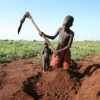
AGRICULTURE-AFRICA: Questioning Old Traditions
Inefficient production, bad infrastructure, poor access to markets, a lack of capital investment: the challenges facing smallholder farmers across Africa are many. A 'green revolution' which appears to be gaining ground in Africa seeks to change all this.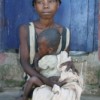
MADAGASCAR: Hunger Stalks Drought-Stricken South
The southern part of the island of Madagascar is suffering severe drought and famine. Lack of rainfall during the summer season has destroyed the country’s main harvest in March and April. Half a million Malagasy have little or no access to clean water and food.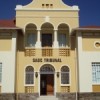
ZIMBABWE: 'Let Us Farm, It's Our Job'
A regional tribunal in Namibia has referred a controversial Zimbabwean land case to the next Southern African Development Community Summit of Heads of State, rejecting a last-minute application for postponement by Zimbabwe on Jun. 5.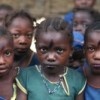
EDUCATION-AFRICA: The Other Crisis
The World Economic Forum on Africa has just concluded in Cape Town. If government leaders and captains of industry called for an eight trillion dollar bailout for the continent’s beleaguered education system - like the one found for the world’s biggest bankers - it went unreported.Q&A: The Key is Economic Growth for People
Countries around the world have committed themselves to reach eight Millennium Development Goals (MDGs) by 2015. MDG 8 seeks to develop a global partnership for development, including sustainable debt and an open, rule-based and non-discriminatory system of trade and finance.
HEALTH-MOZAMBIQUE: Scant Progress With Paediatric HIV
Christina M.* looks worried as she cradles one of her sick twin babies. The mother of five already lost twins and another baby to illness soon after childbirth a few years ago.HEALTH-KENYA: Two Dollars And Change: Enough To Save a Mother’s Life
At the age of 14, Zulekha Mumma delivered her first child. At 21, the birth of her seventh child killed her. She died from excessive bleeding in her home in Nyalenda, a slum on the outskirts of Kisumu city in western Kenya, some 400 kilometres from Nairobi.« Previous Page — Next Page »


The Week with IPS

NEXT STOP - SDGs
Tracking global progress towards a sustainable world
Tracking global progress towards a sustainable world
