Languages
Friday, November 20, 2026



News and Views from the Global South
Africa
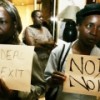
POLITICS-ZIMBABWE: Women Demand Movement On Talks
Over 300 women gathered outside the Rainbow Towers Hotel in Harare on the morning of Oct. 27, dressed mostly in black and white. They were there to protest the prolonged impasse over the allocation of Cabinet ministries among Zimbabwe’s rival parties.
EAST AFRICA: Trade Opportunities Turn Out To Be Death Traps
New trade opportunities after 20 years of fighting in Southern Sudan have turned out to be death traps for Ugandan traders because of violence and physical intimidation by the military and civilians alike.ECONOMY: EU Involvement in DRC Mining Project Draws Protest
The involvement of the European Union in a mining project in the Democratic Republic of Congo (DRC) has drawn a chorus of protest from local and international human rights advocates. They say the project is rife with problems relating to transparency and accountability.HEALTH-DR CONGO: Malaria Remains Biggest Killer
With almost 200,000 people dying of malaria each year in Democratic Republic of Congo (DRC), the disease remains the country's biggest killer.WEST AFRICA: Primary Health Care Key to MDGs
None of the 16 nations of West Africa will achieve the Millennium Development Goals (MDG) of reducing child mortality or improving maternal health without serious efforts to improve their health care systems, according to the World Health Organization (WHO).
AFRICA: Financial Crisis May Increase Pressure for Debt Repayment
The collapse of the financial markets may force the World Bank, the International Monetary Fund (IMF) and the United Nations Development Programme (UNDP) to come down hard on African countries to repay their debts because the huge rescue packages for collapsing banks will need to be recuperated.
SOUTHERN AFRICA: More Debt But Still No Development
Shupikai Machinya, a Zimbabwean cross-border trader who attended the recent Southern Africa Social Forum in Manzini, Swaziland, is one of the many delegates who wanted to understand just how a country ends up in debt.
KENYA: Biofuels Boom and Bust
The Kenyan government has hailed bio-diesel as an innovation that combines green politics with poverty reduction. But recent drops in biofuel prices have caused concern about the sustainability of alternative fuel production.
MINING-WEST AFRICA: ECOWAS Stirs Up Trouble With MOU
The Economic Community of West African States has taken the unprecedented step of inviting Oxfam America to coordinate the drawing up of a mining code for the region. The decision has infuriated some civil society organisations.AFRICA: Socialists Call For Reparations
The first West African conference of the African Socialist International has ended in Freetown, with delegates calling for reparations to be paid to Africans for 400 years of slavery.
DEVELOPMENT-CAMEROON: Sweet Deal For Bee-Keepers
Paul Mboui's family will soon move into the attractive new bungalow he is building. Then he will rent out his present compound as a warehouse to Guiding Hope, the honey trading company that has made him prosperous.
RIGHTS-SIERRA LEONE: Reparations Stretched Thin
"Eight years ago my husband threw his haversack on his back and bade us goodbye. My two kids and I came out of the house and watched him leave. Water was dripping from our eyes uncontrollably; it was as if we were already mourning his death. He was bound for the war front."
POLITICS-SWAZILAND: A Woman With Swagger
The writing is on the wall. "WANTED - Men who Believe that Wives are not for Beating," reads a poster on Nonhlanhla Dlamini's office wall.HEALTH: Swaziland About To Eliminate Malaria
Hot on the heels of Mauritius, health experts predict Swaziland will be the second country in the Southern African Development Community (SADC) to eliminate malaria.
Q&A: Fistula Turns Women Into Outcasts
Women suffering from obstetric fistula in Malawi received free medical care to reverse their condition during the country’s Fistula Week.DEATH PENALTY-NIGERIA: 'Forced Confessions' Condemn Hundreds
Amnesty International says that hundreds of those awaiting execution on Nigeria's death row did not have fair trials and may therefore be innocent.ECONOMY: Usual Suspects Eyeing Zimbabwe for Massive Deregulation
As the global financial crisis unfolds and more questions are asked about excessive deregulation, the World Bank and others are preparing economic policy prescriptions that will throw open Zimbabwe’s economy to the whims of the world markets.HEALTH-SOUTH AFRICA: New HIV Vaccine Trials Raise Hopes
After two HIV vaccine trials were halted for safety reasons last year, a new trial is set to commence within the next few months in South Africa and the United States. Scientists will test a new vaccine formula produced in South Africa. It will be the first time a HIV vaccine manufactured in a developing country will be trialed in the developed world.
POLITICS-MALAWI: The Bold and the Beautiful
The reigning Miss Malawi, Peth Msiska, has hit the campaign trail, not seeking another crown but to be voted into Parliament in her country’s general elections in May 2009.POVERTY-AFRICA: Leaders Cannot Close Their Ears
Eight years ago, the leaders of 189 countries pledged to work towards achieving the Millennium Development Goals, eliminating extreme poverty by 2015. The Stand Up, Take Action Campaign mobilises millions of people around the world to press for action to make this a reality.
TRADE-AFRICA: Customs Union to Be Launched at COMESA Summit
Following the signing of a power-sharing agreement in Zimbabwe on September 15, the country seems to be growing in confidence. Harare has announced that it will now host the 13th Common Market for Eastern and Southern Africa (COMESA) summit in the resort town of Victoria Falls.« Previous Page — Next Page »


The Week with IPS

NEXT STOP - SDGs
Tracking global progress towards a sustainable world
Tracking global progress towards a sustainable world
